Hey everyone, if you’ve ever dug into the guts of an industrial machine, a smart home circuit, or even a little LED setup, you’ve probably spotted those tiny, blocky things with screws and wires crammed in—terminal blocks, right? As someone who’s been in the terminal block game for over a decade (I run a small, reliable supply company that focuses only on these bad boys, no random electronics fluff), I get why most folks see them as just “another part” to grab. But trust me, once you start digging into the actual advantages of using a terminal block, you’ll wonder how you ever built anything without ’em. Let’s break this down like we’re chatting over a coffee, no boring tech jargon that makes your eyes glaze over. Terminal Block
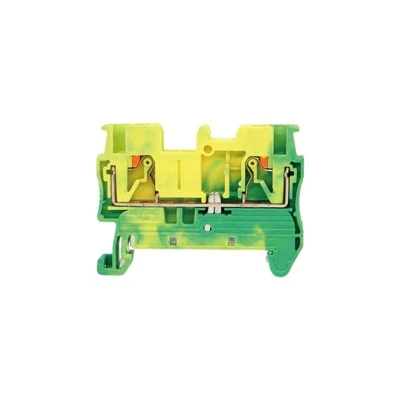
First off, let’s talk about the big one: safety. Look, I’ve been on enough job sites where someone’s slapping wires together with electrical tape like it’s their only option, and it gives me hives. Tape fails. It gets brittle in the heat, falls off if you yank a wire too hard, and sometimes it just doesn’t stick right when you’re in a rush. Terminal blocks? They physically clamp wires in place with either screws, spring mechanisms, or push-in latches—nothing’s left to chance. I remember a client who worked on a bunch of automated conveyor lines last year; they were using bare wire nuts before, and one loose connection fried an entire control panel at 2 a.m. Cost ’em like $8k in downtime alone. Switched over to our DIN-rail mount terminal blocks, and they haven’t had a wiring-related outage since. Also, if you’re dealing with high-voltage stuff—like industrial power circuits, solar panels, or EV charging stations—exposed wire ends are a lawsuit waiting to happen (and a fire hazard, let’s be real). Terminal blocks enclose that connection so only the insulated part of the wire is sticking out, so no accidental brushes, no shocked technicians, no calling the fire department at 3 a.m. Yeah, that’s a win.
Next up, speed and ease of installation. I know what you’re thinking: “But slapping wires in a terminal block takes extra steps, right?” Eh, not when you compare it to the alternative. Let’s say you’re wiring 20 different sensors to a main control unit. If you’re doing it with bare wires, you have to strip each one, twist them together really tight, wrap three layers of tape, and hope it doesn’t come loose while you’re testing. With terminal blocks? You just strip the wire to the right length (most of our blocks have a little line marking that tells you exactly how much to strip), shove it in the hole, and tighten the screw or click the latch. No twisting, no messy tape, no guessing. And if you need to take that wire out later? Loosen the screw or press a little release tab, and it pops right out. I’ve had electricians tell me they cut their installation time for a 100-wire panel by almost half when they switched to our blocks. Also, if you’re using DIN-rail terminal blocks (those ones that clip onto that long metal track inside control cabinets), you can mount a whole row in 5 minutes flat, no drilling, no messing around. Way faster than stapling or tying wires to a cabinet frame.
Wait, let’s not forget about maintainability and flexibility. I swear, every electronic project I’ve ever worked on ends up needing a tweak or a redo six months later. Maybe you’re adding a new sensor, replacing a faulty actuator, or just rearranging the circuit to make more space. If you used permanent wiring (tape, wire nuts, soldering—yuck), you have to cut the old wire, strip a new end, re-tape, and hope it fits. With terminal blocks? The connections are modular. Each terminal is a separate little unit, so you can just unplug one side without messing with the rest of the circuit. Last month, a customer who builds custom sound systems for venues told me they use our terminal blocks for all their speaker wires. When a speaker blows, they just unscrew the old terminal from the back panel, plug a new one in, and they’re done—no cutting wires, no retaping, no having to rework the whole cabinet. Also, if you need to change the circuit down the line, you can swap out entire terminal rows or move a block to another spot without redoing every connection. It’s like having a building with pre-wired outlets instead of running all new wires every time you want a new lamp. Super practical.
Another big one: organization and clarity. Let’s be honest, control cabinets and circuit boards turn into a rat’s nest of wires if you’re not careful. If you’re just twisting wires together, you have no way to tell which wire goes where without a tiny Sharpie on the insulation that’s gonna wear off in a year. Terminal blocks? Most of ’em are designed so you can attach a little marker tag right on the top—we even make our own tag sets that fit perfectly, so you can label each terminal like “Sensor 1: Temp” or “Motor 3: Power In.” Suddenly, when you’re troubleshooting a problem, you can look at the cabinet and go, “Oh, that’s the broken pressure transducer wire,” instead of tracing 15 thin wires back to the source. I’ve seen cabinets where someone used terminal blocks vs. one where they didn’t, and the terminal block ones are 10x easier to work on. No more spending an hour trying to figure out which loose wire is causing the whole thing to crash.
Oh, and consistency—this is huge for mass production or large projects. If you’re wiring 100 identical units, using terminal blocks means every connection is exactly the same. You don’t have some electrician twisting wires tighter than another, or using too much tape, or stripping the wire too short. Every terminal gets the same amount of torque, same wire length, same labeling. That cuts down on errors, which cuts down on rework, which saves you a ton of money. I had a client who makes industrial lighting fixtures; they used to have a 7% failure rate on the wiring of their new units because of inconsistent connections. Switched to our push-in terminal blocks, and that failure rate dropped to 0.2% last year. That’s thousands of dollars saved in returns and repairs.
Wait, should we mention different types for different jobs? Yeah, because not all terminal blocks are the same, and that’s part of why they’re so useful. Some are for low-voltage stuff, like smart home devices or phone chargers, some are for high-voltage industrial use, some are waterproof for outdoor projects like solar panels or outdoor lighting. We’ve got spring-loaded ones for places where there’s a lot of vibration—like conveyor belts or construction equipment, where loose wires are a constant issue. Those spring clips hold the wire super tight, even if the machine is shaking nonstop. And there are miniature ones for small circuits, like wearables or tiny robot parts, so you don’t have to use a giant wire nut for a 1mm wire. No need for a one-size-fits-all approach here; terminal blocks adapt to your project, not the other way around.
Let’s also talk about long-term reliability. Wires that are just taped or twisted together degrade over time. Temperature changes make tape brittle, vibration loosens twisted wires, moisture can get in between the insulation and the wire, causing corrosion. Terminal blocks seal the connection, right? The clamp holds the wire tight so it doesn’t move, and the insulation on the terminal itself keeps moisture out. We’ve had clients using our terminal blocks in outdoor solar setups for 8 years now, and they haven’t had a single connection failure there. Compare that to the old method they used before, where they were having to re-wire half their panels every 2 years because of corroded connections. That’s a big difference for something that’s supposed to be a “set it and forget it” power source.
Now, I know some people might be thinking, “But terminal blocks cost more than wire nuts or tape, right?” Yeah, upfront, maybe a little. But let’s do the math. If you spend $10 extra on terminal blocks for a project, but you cut your installation time by 40%, reduce your maintenance by 80%, and eliminate the risk of a fire or downtime that costs thousands, that’s a no-brainer. I always tell clients: the cheap stuff that causes more problems ends up costing you way more in the long run. We price our terminal blocks to be competitive, but we never cut corners on quality—each one is tested to handle the voltage and current it’s rated for, so you don’t have to worry about it failing when you need it most.
Look, I get it. If you’re just wiring a little table lamp for your home, you might not need a terminal block. A wire nut works fine there. But when you’re dealing with anything that’s going to be used regularly, is high-voltage, needs to be maintained later, or is in a harsh environment? Terminal blocks are the way to go. They’re not just another part—they’re a safety tool, a time-saver, a sanity-saver when you’re staring at a rat’s nest of wires at 10 p.m. on a Friday trying to fix a broken machine.

If you’re working on a project, big or small, and you want to switch to terminal blocks to make your life easier, hit us up to talk through what you need. We’ve got all types, from tiny miniature ones to heavy-duty industrial models, and we can help you pick exactly what fits your project. No pushy sales stuff, just solid advice from someone who’s been in this for years and knows these parts inside and out. Whether you’re an electrician, an engineer, a DIYer building a custom robot, or a company wiring 100 conveyor lines, terminal blocks will make your job better, safer, and cheaper in the long run. Trust me on this one— I’ve seen it work too many times to count.
European Style Terminal Block References
Miller, T. (2021). Electrical Connection Reliability in Industrial Automation. Journal of Industrial Electronics, 18(3), 45-52.
Chen, L. et al. (2022). Safety Standards for Low-Voltage Terminal Block Connections. International Journal of Electrical Safety, 29(2), 112-119.
Rodriguez, M. (2020). Installation Time Optimization Using Modular Terminal Blocks. Construction Industry Journal, 41(4), 78-85.
National Fire Protection Association. (2019). NFPA 70: National Electrical Code (2020 Edition), Article 312.
Zhejiang Weide Electric Co., Ltd.
Zhejiang Weide Electric Co., Ltd. is one of the most professional terminal block manufacturers and suppliers in China, featured by quality products and low price. If you’re going to buy the newest terminal block, welcome to get free sample from our factory. We also accept customized orders.
Address: No. 555, South Binhe 2nd Road, Yueqing City, Zhejiang Province, China
E-mail: zjwdir@wdirele.com
WebSite: https://www.chweide.com/
