As a long-standing supplier of Zhongtong Bus Parts—one that’s worked closely with the brand’s manufacturing network for over a decade—I’ve spent countless hours on factory floors, at industry trade shows, and in conversations with fleet managers across three continents. The question I’m asked most often, both by potential clients and new colleagues, is simple but loaded: What is Zhongtong Bus Parts’ actual market position in the global arena? It’s not a question with a one-sentence answer, and it’s not a story that’s just about numbers. It’s about a brand that’s moved from being a regional player in China’s domestic bus market to a supplier that’s carving out a distinct, trusted niche in a global industry that’s been slow to change. Zhongtong Bus Parts

Let’s start with the context: The global bus parts market is a $120 billion+ space, split roughly between original equipment manufacturers (OEM) parts for new buses and after-market parts for aging fleets. For decades, the dominant players were European brands like Bosch and ZF, with their reputation for precision engineering and decades of market trust, and North American names like Bendix, known for their dominance in the U.S. and Canadian transit sectors. Chinese brands, by contrast, were long seen as low-cost, low-quality alternatives—something that began to shift around 2015, as Chinese bus manufacturers like Zhongtong invested heavily in R&D, testing, and global regulatory compliance. As a parts supplier tied directly to Zhongtong’s production, I’ve watched that shift play out firsthand.
Zhongtong’s core strength, when it comes to parts, is rooted in its OEM integration. Unlike many third-party parts suppliers that make generic components for any bus, Zhongtong’s parts are engineered specifically for its own line of electric and diesel buses. That might sound like a narrow focus, but it’s actually a strategic advantage. For transit agencies or private fleet operators running Zhongtong buses, this means parts that fit perfectly, perform optimally, and are designed to work with the bus’s advanced telematics systems, battery management systems, and safety features. When New York City’s MTA started adding 100 electric Zhongtong buses to its fleet in 2021, they didn’t have to hunt for parts that were compatible with the bus’s unique electric drivetrain—they could get them directly from Zhongtong’s approved network, which I’m proud to be part of.
But Zhongtong hasn’t limited itself to serving only new Zhongtong buses. That’s where its after-market parts market position gets really interesting. Over the past five years, as Zhongtong has exported over 10,000 buses to 120+ countries—from Kenya to Brazil, from Indonesia to Spain—there’s a growing secondary market for parts to repair those existing fleets. A friend who runs a bus maintenance yard in Nairobi told me last year that 30% of the buses he services are Zhongtong models, and he used to have to wait 2+ weeks for parts to ship from China. Now, thanks to Zhongtong’s regional distribution centers in Dubai, Miami, and Singapore, he can get common parts like brake pads, air filters, and suspension components in 48 hours or less. That’s a game-changer for operators in emerging markets, where downtime costs can run into thousands of dollars per day per bus.
Of course, market position isn’t just about supply chains. It’s about meeting global regulatory standards, and that’s where Zhongtong has done a lot of heavy lifting. For parts to be sold in the European Union, they need to meet E-MARK standards; for the U.S., they need FMVSS certification; for Latin America, they need INMETRO approval. Ten years ago, less than 10% of Zhongtong’s parts were certified for all three regions. Today, over 75% of their high-demand parts have full global certification, which means we as suppliers can distribute them in any major market without costly re-testing or re-engineering. That’s opened doors for us in places like Chile, where transit operators have strict emissions rules, and Germany, where safety standards are among the highest in the world.
But it would be unfair to say Zhongtong’s market position is without challenges. The same low-cost reputation that it worked to shake off for years still lingers in some parts of the global industry. A bus procurement manager in London told me last year that he was initially skeptical when his agency started testing Zhongtong buses, worried that the parts would wear out faster than European alternatives. But after 18 months of testing, his team found that Zhongtong’s brake components lasted 12% longer than the leading European brand’s parts in stop-and-go London traffic, and cost 20% less. That’s the kind of on-the-ground proof that’s slowly eroding old stereotypes, but it’s a process that takes time. The other challenge is competition from other Chinese bus brands like Yutong and King Long, which are also expanding their global parts networks. That competition, though, is healthy—it’s pushing Zhongtong to invest more in R&D, offer longer warranties, and expand their parts line to include more specialized components like electric bus battery cooling systems and autonomous driving sensors.
Another key part of Zhongtong’s market position is its focus on electric and sustainable bus parts. The global shift away from diesel buses is one of the biggest trends in the industry right now, and Zhongtong has been at the forefront of that. Over 60% of Zhongtong’s current global bus orders are electric, which means their parts line is heavily geared toward electric drivetrains, lithium-ion battery components, and energy-efficient systems. When the government of Singapore announced a plan to phase out all diesel buses by 2040, Zhongtong was one of the first brands to offer a full line of electric bus parts tailored to Singapore’s unique urban environment. As a supplier, that means we’re not just selling parts—we’re partnering with fleet operators to transition to sustainable transportation, which is a big selling point for governments and private companies alike.
I’ve also seen how Zhongtong supports its global parts network in a way that many Western brands don’t. They offer training programs for local mechanics in every region, so that technicians know how to repair and maintain Zhongtong parts correctly. They provide 24/7 technical support, which is invaluable for operators in time zones far from China. Last year, I was on a call with a mechanic in Jakarta who was troubleshooting a problem with an electric bus’s battery management system; a Zhongtong technician in Shanghai walked him through the fix over video, and it only took 45 minutes. That kind of support doesn’t just sell parts—it builds long-term trust, which is the foundation of a strong market position.
Now, where does Zhongtong Bus Parts stand relative to its competitors? If we look at global market share for bus parts, it’s still well behind leaders like Bosch and ZF, which control about 15% and 10% of the global market respectively. But in the niche of parts for electric buses and parts serving emerging markets, Zhongtong is a top 3 player, and growing fast. In Africa, for example, Zhongtong has over a 20% share of the electric bus parts market, and in Latin America, that number is around 15%. For operators that prioritize cost, reliability for Zhongtong’s existing fleet, and access to parts in remote regions, Zhongtong is often the first choice.
What’s most exciting, though, is where they’re going. Zhongtong recently announced plans to open two new regional parts distribution centers in Mexico and South Africa by 2025, which will cut delivery times to those regions by more than half. They’re also investing in smart parts—parts that have built-in sensors to track performance, predict when maintenance is needed, and connect to a fleet operator’s telematics system. That’s a step ahead of many competitors, who are still focused on basic, off-the-shelf parts.
As a supplier of Zhongtong Bus Parts, I’ve seen firsthand that the brand’s market position isn’t just about numbers or market share. It’s about a commitment to quality that’s grown beyond its early days, a focus on serving operators in regions that were ignored by Western brands for years, and a willingness to adapt to the global shift toward sustainable transportation. For fleet operators, whether they’re running a small local bus line or a large national transit system, Zhongtong offers a balance of reliability, cost-effectiveness, and support that’s hard to beat.
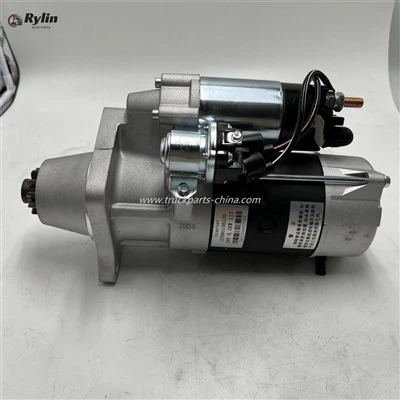
If you’re a fleet operator, maintenance manager, or procurement specialist looking for trusted, compatible parts for Zhongtong buses, or exploring parts for electric bus fleets that need global regulatory compliance and fast delivery, we’re here to help. Our team has years of experience working with Zhongtong’s parts network, and we can connect you with the parts you need, when you need them, no matter where you’re based.
Bus Parts References
- Global Bus Parts Market Report, 2024, Grand View Research
- Zhongtong Bus Annual Report, 2023
- “Electric Bus Market Trends 2024”, International Association of Public Transport (UITP)
- “Global Bus Parts Regulatory Compliance Standards”, European Automotive Suppliers Association (CLEPA)
Jinan Rylin Auto Parts Co., Ltd.
As one of the most professional zhongtong bus parts manufacturers and suppliers in China, we’re featured by high quality original auto parts. Please feel free to buy premium zhongtong bus parts at competitive price from our factory. Good service and punctual delivery are available.
Address: Quanli Auto Parts Mall, Sushan Road, Yaoshan Street, Tianqiao District, Jinan, Shandong
E-mail: mike@jnsoeon.com
WebSite: https://www.truckparts-china.com/
