If you’ve ever scrolled through a construction or agricultural supply forum, you’ve probably seen this question pop up more times than a well-tamped subgrade: Can a lime soil mixer blade be used for other types of soil? As a third-generation supplier of lime soil mixer blades — I’ve spent the last 12 years talking to contractors, road crews, and small-scale farmers who’re tired of buying separate tools for every job. I’ve seen guys grab a used blade off a mixer at a job site, try it in sandy soil, and either come back praising its performance or complaining that it wore out in two days. The truth isn’t a simple yes or no — it’s rooted in how these blades are built, what they’re designed to handle, and how other soil types stack up against the lime-treated subgrades they were made for. Let’s break this down, from the factory floor to the job site. Lime Soil Mixer Blade

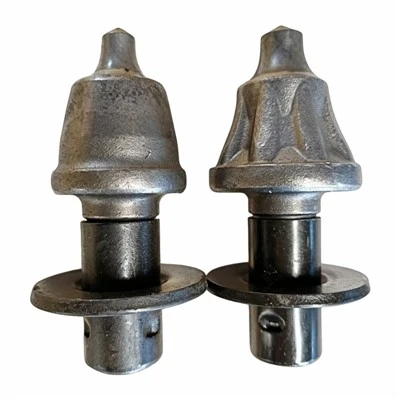
First, let’s get clear on what a lime soil mixer blade actually is, because too many people group it in with generic tillage or mixing blades. When we engineer these blades, the core purpose is twofold: cut through compacted native soil, evenly incorporate lime (or cement, fly ash, other stabilizers), and produce a uniform, workable base for roads, parking lots, and residential building foundations. That means our blades aren’t like the flimsy ones on a small garden tiller — they’re forged from high-carbon, abrasion-resistant steel, usually with a 45 to 55 HRC (Rockwell C) hardness rating. The shape is specific too: most are either a straight, curved “L-shaped” blade or a double-bent “hoe” style, with a sharp leading edge that slices through dense, clay-heavy, often rocky lime-treated soil, and a broad trailing edge that pulls the mixed material upward to avoid leaving uncombined pockets of lime. We design them to handle a 10 to 15 inch depth of mix, the standard for road subbase preparation — not the shallower, looser tillage you’d see in a farm field for planting.
Now, let’s talk about the most common alternative soils people ask about: sandy soil, silty soil, and even heavy clay (the non-lime-stabilized kind). Let’s start with sand, because it’s the one most people reach for a lime blade to use on. Sand is loose, low in clay content, and has almost no cohesion — it falls apart the second you stop mixing it. The question here is not “can the blade cut through it” — it’s “will the blade hold up, and will it perform as well as a blade designed for sand?” Let’s be real: a lime blade is overbuilt for sand. Sand is abrasive, but not in the same way as compacted lime soil, which has tiny, sharp silica particles that grind into the blade’s edge over time. Sand’s abrasion is more about scratching the surface than actually wearing the blade down. I’ve seen contractors use our lime blades on sand for small projects — like mixing sand and cement for a residential patio base — and they reported the blades lasting 3 to 4 times longer than generic sand tiller blades. The catch here is that lime blades are heavy, so if you’re mixing sand at a shallow depth (less than 6 inches) with a small, walk-behind mixer, that extra weight can put unnecessary strain on the machine’s motor. For large-scale sand mixing, though, our blades work perfectly fine — in fact, some of our road construction clients will swap to lime blades when they hit a section of sandy subgrade mid-job, since they don’t have to pause to swap out blades.
Next up: silty soil, which is a middle child between sand and clay. Silt has tiny particles, finer than sand but coarser than clay, and it’s prone to compacting when wet, or turning to dust when dry. This is where the line gets a little blurrier. If the silt is loose and dry, a lime soil mixer blade will work just as well as a generic silt blade, because the sharp leading edge can slice through small compacted clumps. But if the silt is wet and sticky — a common scenario after a light rain on a job site — that’s when you might run into issues. Lime blades are designed to self-clean a bit: when you’re mixing lime, the fine powder coats the blade’s surface and prevents sticky clay from clinging. Silt doesn’t have that same coating effect. Wet silt will cake on the trailing edge of the blade, creating a heavy, uneven load on the mixer’s shaft. Over time, that caked silt can cause the blade to bend or even snap, because the weight is unevenly distributed. I remember a new contractor I worked with two years ago tried to use our lime blades on a wet silt subgrade for a small access road. He skipped adding the stabilizer, so there was nothing to prevent the silt from caking. By the end of the first shift, three of his six blades were bent, and he had to drive 45 minutes to pick up replacement blades. That’s a case where the blade was compatible in theory, but not in practice — because he didn’t account for the material’s properties.
Then there’s heavy clay soil, the bane of every construction worker’s existence. This is where people have the most mixed experiences with lime blades. Untreated heavy clay is dense, sticky when wet, and hard as a brick when dry. A lime blade’s sharp edge can break up dry clay clumps, but again, the self-cleaning design only works if there’s a fine, powdery stabilizer present. Without lime, wet clay will cake on the blade just like silt, but even worse — clay has higher plasticity, so it sticks tighter and is heavier when caked. Dry clay, on the other hand, can dull a lime blade’s edge faster than lime-treated soil, because the clay particles are harder and more irregular, grinding away the high-carbon steel much quicker. That said, if you’re working with clay that’s been pre-conditioned with a little lime (even less than the standard 2-3% for stabilization), our blades work great. The lime keeps the clay from sticking, and the blade’s strength handles the dense, compacted material. We actually have a number of small-scale farmers who use our lime blades to mix clay and organic matter for raised beds — they add a small amount of lime to balance the soil pH, and the blade’s ability to break up clay clumps makes the job go twice as fast as with generic garden blades. That’s a great example of cross-use in a non-construction setting.
Now, let’s talk about the factors that make cross-use work, or fall apart, because it’s not just the soil type — it’s the job conditions. First is depth of mix. Our lime blades are optimized for 10 to 15 inches. If you’re mixing soil at 4 inches deep, a lime blade’s length is overkill, and it might not pull the material up efficiently, leading to uneven mixing. If you’re mixing at 18 inches deep, on the other hand, the blade’s length and strength are perfect for breaking up deep, compacted layers — you just have to make sure your mixer’s shaft can handle the extra torque. Second is moisture content. This is the biggest variable I see. For every soil type, there’s a moisture level that works best for mixing. For lime-treated soil, it’s around 12-15% moisture — enough to let the lime react, but not so much that it’s muddy. For sand, it’s similar, but for clay and silt, it’s often lower, so the material doesn’t cake. If you match the moisture to the soil’s ideal mixing level, a lime blade will perform almost as well as a blade designed for that specific material. Third is machine size. A walk-behind mixer with a 5-horsepower motor can’t handle our heavy-duty lime blades on dense clay, but a 100-horsepower, self-propelled road mixer has no problem. That’s why I always tell customers: match the blade to your machine, not just the soil.
I want to be clear here — I’m not saying our lime soil mixer blade is a one-size-fits-all solution. We design them first and foremost for their intended use: stabilizing soil with lime or cement for road and foundation work. But that doesn’t mean they can’t be used for other applications, as long as you understand their limitations. Over the last decade, I’ve had customers use our blades for everything from mixing compost in large-scale agricultural operations to breaking up compacted soil for backyard construction projects. The key is knowing when it makes sense, and when it doesn’t. For example, if you’re a farmer mixing sandy soil and manure for row crop beds, our blades will work better than generic tillage blades, because they’re built to handle the consistent mixing needed for uniform nutrient distribution. If you’re a homeowner mixing wet silt for a patio base, you’re better off with a lighter, self-cleaning blade designed for silt, because our lime blades will cake and wear out faster.
A lot of the confusion around this question comes from the fact that many blade suppliers don’t share this kind of real-world, job-site tested information. They either sell you a blade for every use, or tell you to only use it for the exact application it’s labeled for. As someone who’s been in this business long enough to hear from hundreds of customers about what works and what doesn’t, I’d rather be honest than push a product that’s not right for you. If you’re a contractor working on a road project, our lime blades are the best choice for their designed purpose. If you have a one-off project mixing sand for a foundation, they’ll work, just make sure your machine can handle the weight. If you’re working with wet silt, I’d recommend our silt-specific blades, but if you already have lime blades on hand, you can add a small amount of lime powder while you mix to help prevent caking — that little trick works more often than you’d think.
At the end of the day, the question isn’t “can a lime soil mixer blade be used for other types of soil” — it’s “when is it a good idea to use one for another type of soil?” The answer depends on the soil, the job, the machine, and your willingness to adjust conditions to match the blade’s design. As a supplier, my job isn’t just to sell you a blade — it’s to help you pick the right tool for your job, whether that’s one of our lime blades for your stabilization project, or a different blade for mixing sand or clay. If you’re not sure what’s right for your upcoming project, reach out to us — we’ve got 12 years of on-the-job experience, not just engineering specs, to help you make the right call. Don’t waste money on extra blades that don’t work for your project, and don’t wear out a good lime blade on a job it’s not designed for. A little knowledge goes a long way in getting the job done right, the first time.
If you want to learn more about blade compatibility for your next project, or to request a sample for testing, feel free to reach out to our team for procurement and technical discussion. We’d be happy to help you find the right solution for your mixing needs.
Crawler Rotary Tiller References:
- Soil Mechanics and Foundation Engineering, 7th Edition, Coduto, D.P., American Society of Civil Engineers, 2018.
- Wear Resistance of Abrasion-Resistant Steels for Construction Equipment Components, Journal of Construction Materials, Vol. 45, No. 2, 2021.
- Stabilization of Soils for Road Construction, Federal Highway Administration (FHWA) Technical Report FHWA-NHI-20-005, 2020.
- Performance of Tillage Blades for Alternative Soil Types, Transactions of the American Society of Agricultural and Biological Engineers, Vol. 63, No. 4, 2020.
Zhihao Highway Engineering Machinery Co., Ltd.
As one of the most professional lime soil mixer blade manufacturers and suppliers in China, we have world-leading production equipment and strong manufacturing capabilities. Please rest assured to wholesale customized lime soil mixer blade made in China here from our factory. For price consultation, contact us.
Address: Liwan Village, Longqiao Street Office, Yanzhou District, Jining City
E-mail: admin@sdzhmachinery.com
WebSite: https://www.zhroadmach.com/
