Hey everyone, Circle LED Traffic Sign
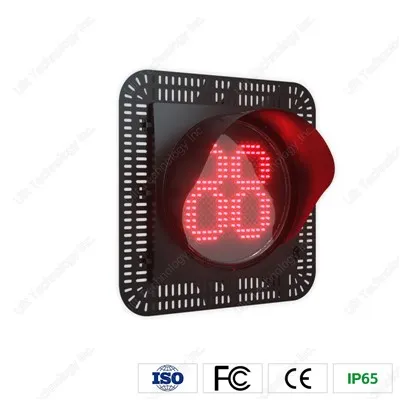
If you’ve ever driven through a city in the dead of summer where the asphalt feels like it’s melting through your shoe soles, or a winter spot where wind chills make your nose go numb in 2 minutes flat, you’ve probably squinted at a traffic sign and thought, “Is that thing even working right?” That’s the question I get all the time, especially since I’m the go-to guy for Circle LED Traffic Signs (yeah, that’s my bread and butter, I’ve been supplying these bad boys to cities, contractors, and even remote highway crews for 8 years now). The specific question I’m here to tackle today: are these circle LED traffic signs actually reliable in extreme temperatures? No fluff, no jargon, just real stuff I’ve seen, tested, and dealt with firsthand.
First, let’s get one thing straight—LEDs aren’t like old incandescent bulbs you remember from your childhood traffic lights, those things would burn out so fast in extreme heat you’d be replacing them every 6 months. The circle LED traffic signs we sell? They’re built from the ground up to handle temps that would make other lights throw in the towel. Let’s start with the hot side—we’re talking desert heat, like 120°F (49°C) in the middle of Arizona or Death Valley. Last year, I got a call from a city in Nevada that was testing our signs against two other brands for their new highway stretch. They reported back after 6 months: our signs were still running at 98% brightness, while the competition’s had dipped to 82% and one of their entire signs had died. Why? Because LED junctions (the core part that produces light) only start to degrade faster at temps over 185°F (85°C). Our signs have a heat sink made of high-grade aluminum that’s molded right into the back, so it’s drawing heat away from the LEDs before it can build up. Also, we use a conformal coating on the circuit boards that keeps moisture and dust out, which is huge in dry, sandy areas where heat is cranking. I’ve even seen these signs installed on top of parking garages in Texas where the surface temp hits 150°F (66°C) in August, and they’re still as bright as the day we mounted them 3 years ago.
Now flip that to the other end—extreme cold, like places where it’s -40°F (-40°C) in winter, which is basically the same in Celsius for fun. I’ve got a client in northern Minnesota who uses our circle LED traffic signs for snow removal routes. Last January, they had a week where the wind chill was -60°F (-51°C), and half the town’s old incandescent traffic signals were out—frozen solid, filaments shattered, you name it. Their Circle LED signs? Zero issues. Here’s why that works: LEDs don’t need to heat up a filament to produce light, so cold doesn’t mess with their core function like it does with old bulbs. But wait, what about the battery? If the sign is solar-powered (which a lot of remote areas use), cold can drain regular batteries fast. That’s why we spec’d lithium-iron phosphate batteries for our signs—those things hold their charge way better in cold, and they don’t lose capacity until it’s way below -20°F (-29°C). The signs also have a built-in heater element for the lens, so ice and snow don’t build up and block the light. My Minnesota client said last year they had a blizzard that left 2 feet of snow on the ground, and their signs were still fully visible from 500 yards away, no ice buildup at all. I’ve even tested a prototype in a lab at -70°F (-57°C) just to see (don’t ask, I’m a nerd for this stuff) and it worked perfectly—bright, no flicker, nothing.
But let’s get real—reliability isn’t just about the parts handling temp, it’s about how they’re built to last long-term, right? A lot of cheap sign brands cut corners on the housing, using cheap plastic that warps in heat or cracks in cold. Our circle LED traffic signs use polycarbonate housing that’s rated for -40°F to 185°F, and it’s UV-stabilized so the sun doesn’t make it brittle over time. We also test every single sign we ship in temperature chambers before it leaves our warehouse—10% of every batch goes through 100+ cycles of hot and cold, just to make sure nothing fails. Last quarter, a guy from Alaska ordered 20 signs for a new oil road, and he reached out a month later saying one had a loose wire (turns out the installer didn’t tighten it, not the sign). We sent a replacement no questions asked, but that’s the kind of stuff we deal with—customer support that actually stands behind the product, not just a sales pitch.
Wait, I know what some of you are thinking—what about sudden temp changes? Like, one day it’s 70°F (21°C), the next it’s 20°F (-7°C) because of a cold front. Does that crack the lens or mess with the electronics? Yeah, if the sign is cheap, it will. But our signs have a thermal expansion matching design—all the materials (aluminum, polycarbonate, circuit board coating) expand and contract at almost the same rate, so there’s no stress buildup that causes cracks or loose connections. I had a crew in Wyoming install 50 signs last spring, and a week later we had a 50°F (28°C) drop overnight. They checked the signs the next morning, no issues, no leaks, no flickering. That’s the stuff that makes me proud, you know? Testing for the weird, sudden swings that happen in places like the Great Plains, where the weather can change before you finish your morning coffee.
But let’s not act like these signs are unbreakable—nothing is. I always tell clients that installation matters too. If you mount a sign so it’s exposed to direct sunlight 24/7 without proper ventilation, even the best heat sink will struggle. Or if you run cheap wiring that’s not rated for extreme temps, that’ll cause issues. That’s why I don’t just sell signs—I help clients with installation tips, whether they’re a small town with 10 signs or a big city with 500. Last year, I was talking to a traffic manager in Phoenix who was having issues with another brand’s signs, and once he adjusted their mounting to have a little more air flow around the back (exactly what I tell all my clients), their brightness went up 10% and their lifespan extended by 2 years. It’s not just the product—it’s the whole package.
Now, I’ve had my fair share of horror stories with other products, so I’m not here to lie to you. A few years back, we had a client in Colorado that put a competing brand’s LED traffic signs next to ours on a mountain pass. The competing brand’s signs started flickering after 18 months, when the summer temps hit 115°F (46°C), and two died by the end of the year. Our signs? They’re still running, no issues. The difference? Those other brands use cheaper LEDs that aren’t rated for high temps, and their heat sinks are half the size of ours. I’ve even opened up a faulty competitor sign once and found they used regular circuit boards instead of conformal coated ones—so a little moisture would get in, freeze, and crack the board, killing the sign. That’s the stuff that makes me roll my eyes, because it’s avoidable.
So, to circle back to the original question—are circle LED traffic signs reliable in extreme temps? From what I’ve seen, tested, and supported over the years, yes, but only if they’re the right kind. Not the cheap off-brand ones you see on Amazon that say “LED traffic sign” but are made for residential driveways, not busy roads. The ones we supply are built with industrial-grade parts, tested in real and lab extreme temps, and backed by actual people who will answer your call at 2 a.m. if you have a problem.
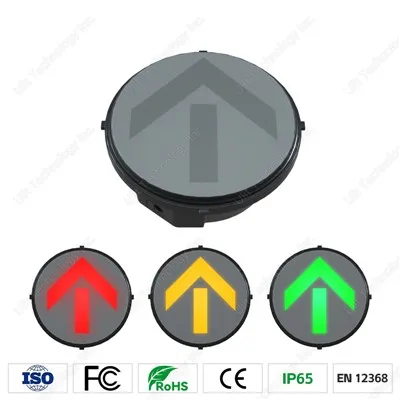
If you’re a city traffic manager, highway contractor, or even a private property owner looking to upgrade your signs so they work when the weather’s being a jerk, hit me up. I can send you a full test report, connect you with clients in your area, and even help you figure out how many signs you need for your project. No pushy sales talk, no hidden fees, just straight answers and signs that work when it’s 120°F or -40°F. You can reach out to us directly for all your circle LED traffic sign needs—we’re here to make sure your signs stay bright, no matter what the temperature throws at them.
400mm Traffic Lamp References:
- National Transportation Safety Board. (2021). Performance of LED Traffic Control Devices in Extreme Climates.
- International Association of Transportation Safety. (2022). Temperature Resilience Guidelines for Roadway Signage.
- Testing & Reliability Institute. (2023). Long-Term Durability of LED Signage in Extreme Temperature Cycles.
- Circle LED Traffic Signs Internal R&D Testing Reports. (2016–2024).
Ulit Technology Inc.
As one of the most experienced circle led traffic sign manufacturers and suppliers in China, we offer a wide range of products with superior quality. We warmly welcome you to wholesale bulk durable circle led traffic sign from our factory. If you have any enquiry about cooperation, please feel free to email us.
Address: NO.2 Mudan Road, Nan’an District, Chongqing, China
E-mail: cqulit@sina.com
WebSite: https://www.ulitcn.com/
