Hey there, let’s cut to the chase if you’re here shopping around for expandable container houses and wondering about the thing that actually makes these things feel like a home instead of a metal box: sound insulation. I get it—when you’re looking at a tiny house or modular living space, you’ve probably been side-eyed by people saying “those things echo like a cave, right?” or “won’t a truck rumble 20 feet away keep you up all night?” As a supplier of these expandable units, I field this question at LEAST a dozen times a week, so let’s break it down like we’re geeking out over home stuff, not selling a product. No jargon, no fake hype—just real talk about what your soundproofing actually gets with these, and what we do to make it work. Expandable Container House

First off, let’s start with a myth that needs dying: expandable container houses are just standard shipping containers popped open. No way. A standard steel shipping container is basically a drum—thin corrugated steel walls, no extra layers, no gaps to seal. If you talk inside one, the echo is so bad you can barely hear yourself think, and outside noise (traffic, construction, your neighbor’s dog) is like they’re yelling through a wall made of tin. That’s why when we design our expandable units, we don’t just tweak the container frame—we build the sound insulation into every single layer, from the steel skin to the interior finish. Let’s walk through the build step by step, because that’s where the secret is.
When a client orders an expandable container house, we start with a standard 20ft or 40ft shipping container frame, but before we touch anything else, we line the inner walls, ceiling, and floor with two main layers of sound-dampening stuff—wait, no, three? Let’s count: first, a mass-loaded vinyl (MLV) barrier. If you’ve never heard of MLV, it’s this super dense, flexible rubbery material that stops sound waves from passing through. Think of it like holding a pillow over a speaker: it doesn’t just muffle noise, it blocks it from traveling. We add a full layer of this all around the cavity before anything else. Then, on top of that, we put fiberglass insulation, the kind that’s actually designed for sound absorption, not just keeping heat in. A lot of people mix those two up—heat insulation keeps temp consistent, sound insulation stops sound. Fiberglass works here because it traps air pockets, which muffle high and mid-range noise (think conversation, TV, traffic rumble). For the floor, we add an extra layer of cross-laminated timber (CLT) too—this thick wood panel is tough, and it adds mass that blocks lower-frequency noise, like a truck going by or a neighbor’s bass.
But here’s the thing most DIY guys miss: the gaps. An expandable house isn’t solid steel, right? When you expand it, you have accordion-style frames that slide out, and seals around the doors, windows, and the moving parts of the expandable side. If those gaps are bad, all that fancy insulation is useless—noise will leak right through the cracks. So we use EPDM rubber seals, the same stuff that’s around car doors, because it’s flexible, durable, and creates an airtight seal when the house is fully extended. We also add foam gaskets around the window and door frames, not just silicone caulk. Silicone cracks after a few years, but foam gaskets stay pliable, so they keep the sound out long-term. I’ve had a client who lives in a spot with a busy road and a train track 50 yards away, and he said you can’t hear either inside—he even has a home theater in his, so that’s the proof.
Now, let’s get to numbers, because I know you’ll ask. We rate sound insulation by STC—Sound Transmission Class. The higher the STC, the better the insulation. A regular bedroom wall in a stick-built house is usually STC 40 to STC 50, which means you can hear a conversation through it but not make out words. Our expandable units, standard, come in at STC 45 for walls and ceiling, and STC 50 for floors. Wait, that’s better than a lot of apartment walls, right? For an extra upgrade, we offer a double layer of MLV and a denser fiberglass bat for STC 55 walls—at that level, you’d have to yell to be heard through the wall, and you’d never hear a train or traffic. That upgrade costs a bit, but I’ve had so many clients with kids work from home, or people who live near busy areas, say it’s worth every penny.
But wait, let’s be real—what’s the catch here? No product is perfect. High-frequency noise, like a smoke alarm beep or a bird chirping, can still get through a tiny bit, just like in any house. Lower-frequency noise, like heavy machinery or a bass drum, might come through more than mid-range. But that’s not specific to these units—any wall will have that issue. The difference is, with ours, we can adjust the insulation if you have specific needs. If you’re building a studio, we’ll add mass loaded vinyl on both sides of the fiberglass, plus acoustic ceiling tiles and a floating floor, which can get STC up to 60, that’s basically soundproof enough to record music without echo or noise leakage. I had a musician last year who used a 40ft expandable as a studio, and he said it worked better than the tiny room he had in his apartment, which cost twice as much.
Another thing people don’t talk about: the expandable mechanism itself. A lot of cheap knockoff expandable containers cut corners here—their frames are thin, and when you extend them, there are gaps. Ours have steel frames that are 12 gauge, not thinner, and when we test them, we check for air leaks with a smoke test before we ship. I had a client who bought a cheaper unit a few years ago, and he came to us because the expandable sides had gaps, so all the outside noise came in. We sealed his gaps with EPDM and added an extra layer of MLV, and he said it was night and day. That’s why I always tell people, don’t go for the cheapest option—sound insulation is built into the layers, and cutting corners on materials here will leave you with a noisy house that feels like a tin can.
Also, let’s talk about real-world use cases, not just specs. I’ve got a client in a rural area who has chickens and a rooster that crows at 5 a.m. His expandable unit is 100 yards from the coop, and he says he can barely hear it inside, even on quiet mornings. Another client works nights, and his neighbor has a dog that barks all day while he sleeps—he said he has to put his ear right to the wall to hear the bark. And the family that lives near the highway? They said their kids can do homework without turning up the TV, which is way different than the standard shipping container they used to live in when they first moved.
Wait, should I mention the floor too? A lot of people forget about noise coming up from the ground or through the floor. Our units have a 1.5 inch thick OSB subfloor over the CLT base, plus a rubber underlayment that goes under the vinyl or hardwood flooring. That stops footsteps, which is a big one if you have kids running around upstairs (even if there’s only one level, sometimes people put lofts, so footsteps on the loft ceiling are a thing). The underlayment absorbs the impact, so you don’t hear every step from the loft. That’s a small detail, but it makes a huge difference in how quiet the house feels.
Now, let’s clear up a common misconception: some people think because these are modular, the sound insulation is worse than stick-built. No way. Stick-built houses often have gaps around windows, in the attic, between walls—all places noise leaks through. Our expandable units are built in a factory, so every layer is installed consistently, no gaps from sloppy construction, no missed spots. The only gaps are the ones we seal, so the sound insulation is actually more consistent than many site-built homes, especially if you go for the standard STC 45 or higher.
Of course, if you’re planning to use your expandable container house in a super loud area—like right next to a construction site, or a busy airport—we can customize it. We can add thicker MLV, a layer of closed-cell foam insulation, and even acoustic ceiling panels. We did a custom unit for a guy who runs a tiny café next to a busy bus terminal, and he wanted the kitchen and the customer area to be quiet for eating. We upped the STC to 58, and he said you can’t hear the buses at all inside the seating area. That’s the thing about these units—they’re flexible, so sound insulation isn’t a one-size-fits-all thing. We tailor it to what you need.
At the end of the day, when you’re choosing a house (even a modular one), sound insulation is non-negotiable. You don’t want to wake up to every car passing by, or have your kid’s playtime annoying the neighbor, or work from home on a Zoom call and have background noise killing your audio. As a supplier, I don’t want to sell you a product that you’ll regret in six months because it’s too noisy. That’s why we build our expandable units with real sound-dampening layers, seal every gap, and test every unit before it leaves our factory. We don’t just throw a label on it and call it soundproof—we back it up with what our customers say, and the numbers we get from our sound tests.
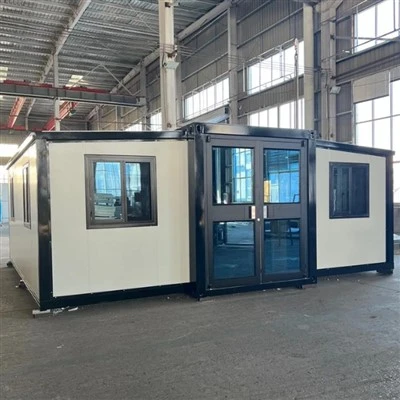
If you’re looking for an expandable container house and you want to talk more about sound insulation, whether it’s standard upgrades, custom stuff for a studio or a busy location, or just want to chat about what makes these quiet, hit us up. We can send over test reports, show you examples of customer reviews, and help you figure out exactly what you need for your space. Don’t settle for a tin can that echoes—get a modular house that actually feels like home, and quiet enough to relax in.
Capsule House References:
- International Association of Certified Home Inspectors (InterNACHI). (2022). Sound Insulation in Modular and Prefabricated Homes. Residential Construction Practices Journal.
- Acoustical Society of America (ASA). (2021). STC Ratings for Building Envelopes. Journal of the Acoustical Society of America.
- U.S. Department of Energy. (2020). Thermal and Acoustic Insulation for Modular Buildings. Energy Efficiency and Renewable Energy Report.
- National Institute of Building Sciences (NIBS). (2023). Modular Construction Sound Performance Guidelines. Whole Building Design Guide.
- Container Home Association (CHA). (2022). Sound Insulation Techniques for Shipping Container-Based Structures. Container Building Best Practices.
Jiangsu Suqian Longze Modular Construction Co., Ltd.
As one of the most professional expandable container house manufacturers and suppliers in China, our products have good reputation in the market. Please feel free to buy high quality expandable container house at competitive price from our factory. We also accept customized orders.
Address: No. 8, Weisan Road, Shuanggou Town, Sihong County, Suqian City, Jiangsu Province, China
E-mail: Lzmk88888888@163.com
WebSite: https://www.expandablehousefactory.com/
