If you’re a cable engineer, procurement manager, or product designer who’s worked with low-smoke zero-halogen (LSZH) compounds for a minute, you’ve probably run into this exact question: Can thermoplastic LSZH cable compounds actually be injection molded? I get this all the time—last week, I hopped on a call with a client designing a compact data center cable assembly who was worried their existing extrusion-grade LSZH wouldn’t hold up when they tried to inject it into precision housings. Before I dive into the real, practical answers I’ve learned from 8 years as a thermoplastic LSZH compound supplier, let’s cut through the noise: Yes, thermoplastic LSZH compounds absolutely can be injection molded—but it’s not a one-size-f-all scenario. A lot of the confusion comes from mixing up extrusion-grade LSZH with specially formulated injection-moldable grades, and that’s where I see so many projects go sideways before they even start. Thermoplastic LSZH Cable Compounds
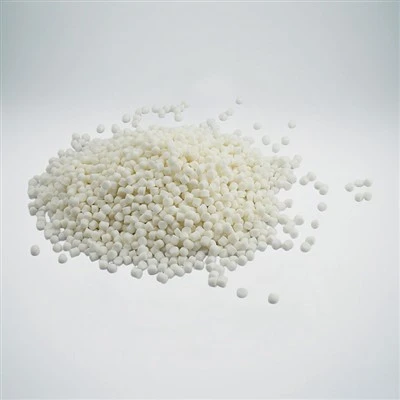
First, let’s ground this in what thermoplastic LSZH actually is, because that’s the foundation of everything. Unlike thermoset LSZH (which cures chemically once heated and can’t be reheated or reshaped), thermoplastic LSZH compounds are built on polymer matrices—most commonly polyethylene (PE), ethylene vinyl acetate (EVA), or polyolefin elastomers (POE)—blended with flame retardants that are free of halogens (usually metal hydroxides like aluminum trihydrate, ATH, or magnesium hydroxide, MDH) and other additives to hit LSZH standards. That reversible melt state is why they’re thermoplastic, and that’s also why they’re compatible with injection molding—if you tailor the compound for that process.
Here’s the first common mistake I see: buying generic LSZH off the shelf meant for extrusion and expecting it to work in an injection molder. Extrusion-grade LSZH is formulated to flow smoothly through extruder barrels at controlled speeds, cling tightly to copper conductors, and form a continuous, smooth insulation layer. But these compounds often have higher melt viscosity, slower cooling rates, or formulations optimized for drawdown (the thin pulling of extruded cable) rather than filling tight, complex molds. I remember a client who tried this two years ago for a set of cable gland insulators for industrial machinery—they used standard extrusion LSZH, ran it through their molder, and got parts with flow lines, voids, and spots where the compound didn’t fill the tiny 0.5mm gap around the metal insert. They wasted 50 pounds of material and a week of production before we swapped in our injection-mold-specific LSZH grade, and the first run was perfect.
So what makes a thermoplastic LSZH compound suited for injection molding? The key formulation tweaks we (as a supplier) focus on are three main areas: melt flow rate (MFR), particle size and distribution of flame retardants, and polymer matrix modification. Let’s break that down. MFR is basically how easily a polymer flows when heated to a specific temperature under a specific load—for injection molding, we target MFR values between 5 and 25 g/10min (at 190°C/2.16kg) for most common applications. Extrusion-grade LSZH usually clocks in at under 5 g/10min, which is too thick to flow fast enough into small, intricate molds without excessive pressure that can damage tooling or cause part defects.
Next, flame retardant particle size. ATH and MDH are responsible for the LSZH performance—they release water vapor when heated, which smothers flames and reduces smoke density. But if those particles are too large, or unevenly distributed, they can clog mold gates, cause surface roughness on finished parts, and even create weak points in the material that lead to cracking. For injection-moldable LSZH, we mill those flame retardants down to a consistent, fine particle size (usually <10 microns) and coat them with a specialty silane coupling agent. That coating does two things: it helps the particles disperse evenly throughout the polymer matrix, so there’s no uneven flame resistance, and it reduces friction between particles, which further improves flow during injection.
Finally, the polymer matrix itself. We often blend base resins with small amounts of compatibilizers or flexibilizers to adjust the melt properties without sacrificing LSZH performance. For example, if a client needs a rigid component for a power cable connector, we’ll use a higher-density PE matrix with a lower MFR paired with modified ATH to balance stiffness and flow. If they need a flexible part, like a strain relief for a medical cable, we’ll swap in POE or EVA to boost elongation at break, so the part doesn’t crack when bent repeatedly. That balance is non-negotiable—you can’t trade off LSZH compliance for moldability, so every tweak we make is tested against international standards: IEC 60754 (for halogen content), ASTM E662 (for smoke density), and UL 94 (for flame spread).
Now, let’s talk about real-world applications, because that’s what matters most to my clients. Injection-molded thermoplastic LSZH is used across so many industries that I’ve gotten familiar with over the years. Data centers are a huge one—every server rack has hundreds of cable assemblies, connector housings, and cable glands made from this material. Those parts need to be small, precise, and if there’s a fire in a rack, they can’t release toxic halogen gas or thick smoke that would disable fire suppression or trap IT teams. I recently worked with a data center integrator on a project for a new hyperscale facility in the Midwest—they needed 10,000 custom LSZH cable crimp housings that fit tightly around 12AWG power cables. Our injection-moldable LSZH grade was able to fill the 0.3mm wall thickness of the housing without flash (extra material that sticks to the mold), passed IEC 60754-1 and -2, and had a smoke density rating (DS) of less than 100 when tested per ASTM E662, which is way below the threshold that would require evacuation during a fire.
Another growing use case is electric vehicle (EV) charging infrastructure. EV charging cables have multiple components: the outer jacket, insulation for individual conductors, strain reliefs, and connector inserts. Many of those inserts are injection molded from thermoplastic LSZH because they need to withstand extreme temperatures (charging cables can get up to 120°C during fast charging) and resist UV degradation for outdoor use. We supply a grade specifically designed for EV charging components that has a heat deflection temperature (HDT) of 85°C, so it doesn’t warp when exposed to high current during fast charging, and it’s been tested to 10,000 flex cycles, which is way more than the minimum required for SAE J1683 standards.
There’s also the medical device space, which is one of the most regulated areas for LSZH materials. Medical cables used in MRI machines, surgical tools, or patient monitors need to be LSZH so that if a cable overheats, it doesn’t release toxic fumes that could harm a patient in an enclosed room, and they need to be precise enough to mold into tiny strain reliefs that fit on 28AWG fine wire. Our medical-grade injection-moldable LSZH is ISO 10993 certified for biocompatibility, has no latex or phthalate additives, and passes all USP Class VI requirements—all while being easy to mold into the complex shapes medical devices demand.
But here’s the thing: even if you have the right formulation, successful injection molding of LSZH depends on process parameters too, not just the material. I’ve had clients with perfect grade material that ran into issues because they didn’t adjust their molder settings. Let’s go over the non-negotiable process tips I share with every customer to avoid delays and defects. First, melt temperature: thermoplastic LSZH needs to be heated just enough to reach its flow state, but not so hot that it degrades the polymer or burns the flame retardants. For most of our grades, we recommend a barrel temperature between 180°C and 210°C—if you go over 220°C, you’ll start to see discoloration, reduced flexibility, and even lower flame resistance.
Injection pressure is another key factor. Too low, and the compound won’t fill the mold; too high, and you’ll get flash, or even damage delicate inserts (like metal terminals inside cable connectors). We usually advise clients to start with an injection pressure of 800 to 1,200 psi, then adjust based on their specific mold design. Cooling time is also important—LSZH compounds cool a bit slower than standard polyolefins, so you can’t rush the cycle time. For small parts, a cooling time of 10 to 15 seconds is typical, but for larger, thicker parts, you’ll need 30 seconds or more to prevent warping.
I also always tell clients to test for moldability before committing to a full production run. A small trial run (100 to 500 parts) will tell you if the flow is correct, if there are voids from trapped air, and if the material meets your LSZH requirements. I’ve seen clients skip this step and end up with a full production run of parts that failed smoke testing because they didn’t account for the flame retardant dispersion in their specific mold. It’s an extra week, but it saves thousands of dollars in scrap and rework.
Now, let’s address a common concern I hear: can injection-molded thermoplastic LSZH match the performance of extrusion-grade LSZH? The short answer is: when formulated correctly, yes. A properly compounded injection-moldable LSZH will have identical halogen content, smoke density, and flame resistance as extrusion-grade material, because we use the same base flame retardants and polymer matrices—we just adjust the formulation for flow and molding, not for performance. For example, a client who needed both an extruded cable jacket and injection-molded strain reliefs for the same industrial cable line can use two different grades of LSZH from our product line, both certified to the same IEC 60332 flame standard, so their entire assembly is consistent in performance.
That said, there are minor trade-offs to consider for very specific applications. If you need a part with ultra-high impact resistance, you might find that injection-molded LSZH is slightly less tough than a custom extrusion formulation, but that gap has closed a lot in the last 5 years with advances in polymer blending and coupling agents. And if you’re working with a part that requires extreme draw (like a thin cable jacket), extrusion-grade will always be the better choice, but injection-moldable LSZH is more than capable for 90% of molded cable components.
Over the years, I’ve also seen a lot of misinformation online that claims thermoplastic LSZH isn’t suitable for injection molding, usually from people who only work with extrusion grades or don’t have access to specialized compound formulation. I once had a client who was quoted a $50,000 tooling job for a different material that wasn’t LSZH, just because the molder told him LSZH couldn’t be injection molded. We connected him with a molder we work with regularly that specializes in thermoplastic LSZH parts, and his tooling cost was 20% lower, with parts that met all his LSZH requirements. That’s the kind of pain point I love solving as a supplier—cutting through the outdated advice to deliver a solution that works.
So, if you’re considering injection molding for your cable components, here’s the bottom line: Don’t assume all LSZH is the same. Specify an injection-moldable thermoplastic LSZH grade, work with your compound supplier to align the formulation with your application’s performance and certification needs, and invest in a small trial run to test moldability.
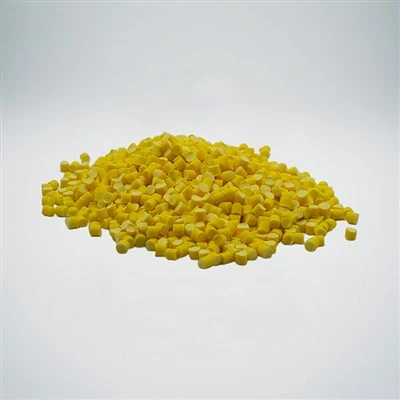
At the end of the day, I built my business on solving these exact questions—whether you’re designing a data center cable, an EV charging connector, or a medical device, I can help you find or tailor an injection-moldable thermoplastic LSZH compound that checks every box: LSZH compliance, moldability, and the mechanical performance your project requires. If you’re ready to discuss your specific application, material needs, or process challenges, reach out to our team to connect and explore how we can support your project.
Soft-Touch TPE Cable Compound References
- IEC 60754-1: Test on gases evolved during combustion of cables – Part 1: Measurement of acidity by pH and conductivity. International Electrotechnical Commission, 2021.
- ASTM E662: Standard Test Method for Specific Optical Density of Smoke Generated by Solid Materials. ASTM International, 2022.
- "Thermoplastic LSZH Compounds for Injection Molding: Formulation and Processing Considerations." Journal of Vinyl and Additive Technology, vol. 26, no. 3, 2020, pp. 457-468.
- SAE J1683: Electric Vehicle (EV) Cable and Cable Assembly Test Standard. SAE International, 2021.
- ISO 10993-5: Biological evaluation of medical devices – Part 5: Tests for in vitro cytotoxicity. International Organization for Standardization, 2019.
Opta New Materials (Jiangsu) Co., Ltd.
As one of the most professional thermoplastic LSZH cable compounds manufacturers and suppliers in China, we also support customized service. We warmly welcome you to buy bulk durable thermoplastic LSZH cable compounds from our factory. If you have any enquiry about free sample, please feel free to email us.
Address: No.80, Jingang Avenue, Zhenjiang New Area, Zhenjiang City, Jiangsu Province, China.
E-mail: le.yin@optachem.com
WebSite: https://www.optanewmaterials.com/
