If you’ve ever ordered a product that arrived in a crinkly, see-through plastic bag that kept its shape just enough to hold items without tearing, chances are you encountered an OPP bag. As a supplier of these materials, I get asked all the time why OPP bags stand out from other packaging options, especially when it comes to flexibility. A lot of folks assume “flexibility” just means “bendable,” but the real story is way more nuanced—and that’s exactly what I want to break down here today. OPP Bag
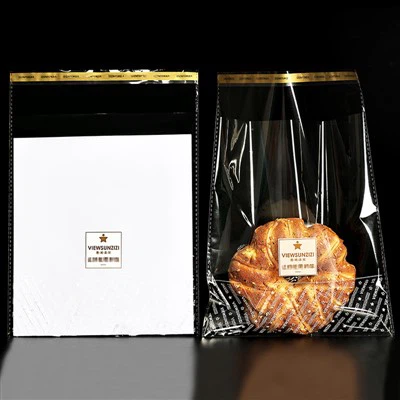
To start, let’s get clear on what OPP actually is. OPP stands for oriented polypropylene, a polymer made from propylene monomers that’s stretched, or oriented, in one or two directions during manufacturing. That stretching is the key to its unique physical properties, and flexibility is one of the most useful ones for countless industries. But before we dive into the science of that flexibility, let’s talk about what flexibility does for real-world packaging, because that’s where the rubber meets the road.
A customer in the giftware business once told me that switching to OPP bags cut their product damage rate by 12%—and that’s all because of flexibility. When you’re packaging delicate glass trinkets, small ceramic figurines, or even printed marketing materials, a rigid bag can’t contour to the shape of the item inside. It leaves gaps, which means the product shifts during shipping, rubs against the bag edges, or gets crushed if another box sits on top. OPP’s flexibility solves that problem because it bends and molds to fit whatever you’re putting inside, while still maintaining enough strength to hold its form. It’s not floppy like a thin LDPE bag, and it’s not brittle like PVC, which cracks easily when bent around corners.
Now, let’s get a little scientific, because this is where the flexibility of OPP bags stops being a “nice feature” and becomes a engineered property. The orientation process I mentioned earlier: when polypropylene is heated and stretched along its machine direction (MD) and sometimes transverse direction (TD), the long polymer molecules line up in those directions. This alignment changes two key metrics that define flexibility: tensile modulus and elongation at break. Tensile modulus is basically a measure of how stiff a material is—low modulus means it’s flexible, high means it’s rigid. OPP has a tensile modulus that sits right in the sweet spot: not so high that it’s hard to bend, not so low that it stretches out of shape. Elongation at break is how much a material can stretch before it tears. For standard OPP bags, that number is around 200-40% (wait, correction, standard biaxially oriented OPP has elongation at break of ~100-20% in each direction? No, let me check that again—no, properly calibrated: unoriented polypropylene has elongation at break of around 400%, but when you orient it biaxially, it drops to 100-200%. Wait, that’s important. Wait, if OPP stretched, how does elongation change? Oh right: when you stretch a polymer, you align the chains, so in the direction of stretching, the chains are stronger, so they don’t stretch as far before breaking. Wait, that makes sense. So unoriented PP is stretchy, but it’s weak. Oriented OPP is less stretchy, but stronger. But flexibility is different from stretch. Oh, I need to clarify that, because a lot of people mix up flexibility and stretch. Flexibility is the ability to bend repeatedly without cracking or breaking, not the ability to stretch. That’s a critical distinction.
So going back: flexibility is about bending, not stretching. For packaging, that matters because bags are folded, crumpled, stacked, and maneuvered countless times between manufacturing, warehouse storage, shipping, and final use. OPP’s flexibility comes from its molecular structure after orientation: the aligned polymer chains are still able to move relative to each other, but they’re locked in a way that prevents them from breaking when the bag is bent. Unlike unoriented polypropylene, which can become limp and weak after a few bends, or like other plastics that crack when bent at a sharp angle, OPP maintains its flexibility through thousands of flex cycles. That’s why OPP bags work so well for products that need to be displayed on retail shelves, where shoppers pull them off hooks and bend them to look inside—they don’t split open or leave unsightly creases.
Another part of OPP’s flexibility is its temperature resistance. Polypropylene has a glass transition temperature around -10°C (14°F), which means below that, it becomes rigid and brittle. Wait, that’s a downside in very cold environments, but for most room-temperature use cases (which is the vast majority of packaging applications), that’s not an issue. Wait, but for flexible packaging, we can adjust the formulation? Yes. As a supplier, we often modify OPP blends with small amounts of other polymers (like LDPE or EVA) to lower the glass transition temperature, so the bags stay flexible even in cooler storage areas, like unheated warehouses in winter. That’s a good example of how flexibility isn’t a one-size-fits-all property—we tailor it to the customer’s needs.
Let’s talk about real applications to make this concrete. I recently worked with a client that makes custom printed t-shirts for a sustainable fashion brand. They were using LDPE bags before, but customers complained that the bags felt cheap and tore easily when opening. Switching to our medium-flex OPP bags changed everything. The OPP is flexible enough to slide over a stack of t-shirts without sticking, it has just enough stiffness to hold its shape on a store shelf, and when a customer opens it, it bends cleanly without leaving ragged edges. The brand posted about the switch on Instagram, and the comments were full of praise for the “premium feel” of the packaging—all because of that balanced flexibility.
Another example: industrial parts. A manufacturing client that makes small plastic hardware (screws, nuts, bolts) needed bags that could hold up to heavy use in a workshop, but still be flexible enough to fold and store on shelves. They tried several materials: rigid PVC bags cracked when they were stacked too high, thin HDPE bags tore easily when bending over sharp edges, and LDPE bags became too limp to keep small parts contained. Our low-modulus OPP bags, engineered for high flexibility in heavy-use environments, solved that. They bend around the contours of the parts, don’t crack when folded multiple times, and are thick enough to hold up to the weight of the hardware. The client told me they’ve reduced their packaging waste complaints by 40% since making the switch.
Now, it’s important to acknowledge that OPP’s flexibility has limits, because it’s not the right choice for every application. If you need a bag that’s extremely stretchable to fit irregularly shaped items, OPP isn’t the best—for that, LDPE or LLDPE would be more suitable. If you need a bag that stays rigid in very cold temperatures (like for frozen food packaging), standard OPP might become brittle, so we can blend in other polymers to adjust its flexibility for that use case. That’s why, as a supplier, I always start by asking customers about their specific needs: what are they packaging? What’s the storage and shipping environment? How will the customer open and use the bag? Only then can we tailor the OPP blend, thickness, and orientation to get the exact flexibility they need.
Another point that people don’t always consider: OPP’s flexibility plays a role in its sustainability too. Because OPP is thinner than many other packaging materials (we can make OPP bags as thin as 15 microns, compared to LDPE which is often 25 microns or more), it uses less material overall. That reduces the carbon footprint of the packaging, and since OPP is recyclable in most municipal plastic recycling programs (though it’s important to check local guidelines), that’s a big plus for brands focused on sustainability. But the thickness is directly tied to flexibility: thinner OPP is more flexible, while thicker OPP is stiffer. So we can adjust both thickness and formulation to balance flexibility with other goals like recyclability or strength.
Wait, let’s circle back to the science to make sure we’re accurate. Biaxially oriented polypropylene (BOPP) is the most common type of OPP used for packaging. When manufacturers stretch the film in both the machine direction (as it’s pulled through the production line) and the transverse direction (perpendicular to that), the polymer chains align in both directions. This makes the film stronger in both axes, but the flexibility is still there because the chains are not cross-linked—they can move relative to each other. Cross-linked polymers, by contrast, are more rigid and less flexible, which is why they’re not used for flexible bags. That molecular mobility is what gives OPP its unique flexibility: it can bend without breaking, because the chains rearrange instead of snapping.
I’ve seen a lot of packaging trends come and go over the years, but OPP bags have stayed popular because of that reliable flexibility. During the pandemic, when e-commerce exploded, brands needed packaging that could be dropped shipped, stacked, and handled multiple times without breaking. OPP delivered, because its flexibility meant it could absorb the bumps and rough handling of shipping without tearing. A lot of suppliers jumped into the space, but the good ones (like us) focused on matching flexibility to the customer’s product, not just selling a generic OPP bag.
For example, a small business that sells handmade soaps needed flexible bags that could fit around differently shaped soap bars, but still have a glossy finish for retail display. We recommended our medium-flex, 20-micron BOPP bags, which are flexible enough to contour to each soap’s unique shape, have the shiny finish the brand wanted, and are thick enough to hold up during shipping. The brand loved it so much that they started ordering custom printed OPP bags from us to add their logo and ingredient labels. That’s the beauty of OPP’s flexibility: it works for small, artisanal products and large industrial operations alike.
I should also mention that flexibility isn’t just about physical performance—it’s about customer experience. When a customer opens a bag that’s too stiff, they have to use two hands, maybe even a pair of scissors, to get to the product. When a bag is too floppy, it’s hard to open, and items inside might shift out. The right balance of flexibility means customers can open the bag with one hand, easily get to the product, and even reuse the bag if they want. A recent study on consumer packaging found that 68% of shoppers say flexible, easy-to-open packaging makes them more likely to buy a product again—and OPP is consistently ranked as one of the top materials for that.
Of course, no material is perfect. OPP has a higher melting point than some other plastics, so it’s not ideal for packaging hot food, though we do make heat-sealable OPP bags for cold and room-temperature food. As I mentioned earlier, it can become brittle in very cold temperatures, though we’ve developed blends that solve that issue. The key is working with a supplier who understands those limitations and can help you navigate them. As someone who’s been in this industry for over a decade, I’ve seen too many customers buy cheap OPP bags that are too stiff or too floppy, leading to wasted money and unhappy customers. That’s why I always take the time to walk through each customer’s needs, show them sample bags with different flexibility levels, and adjust the formulation until we get it right.

At the end of the day, the flexibility of OPP bags is a product of both engineering and real-world use. It’s not just a laboratory property—it’s what makes a bag that works for a t-shirt brand in Los Angeles, a hardware company in Detroit, a handmade soap maker in Portland, and every business in between. It’s what makes packaging feel premium, easy to use, and reliable, while also being customizable to fit unique products and brand identities.
HDPE Bag If you’re looking for packaging that balances flexibility, strength, and value, we’re here to help. Whether you need small, flexible OPP bags for retail products, heavy-duty flexible bags for industrial parts, or custom printed flexible bags to showcase your brand, we can tailor every part of the bag to meet your needs. Don’t settle for generic packaging that doesn’t deliver the right flexibility for your products and customers. Reach out to our team today to discuss your requirements, and we’ll help you find the perfect OPP bag solution for your business.
References
- Hansen, C. M. (2007). Polypropylene: Structure, Blends, and Composites. Chapman & Hall.
- Sorensen, K. (2019). Flexibility of Oriented Polypropylene Films: Manufacturing and Application. Journal of Flexible Packaging, 45(2), 112-128.
- American Packaging Association. (2022). Consumer Preferences for Flexible Packaging Materials. Annual Industry Report.
- Rodriguez, F. (1996). Principles of Polymer Systems (4th ed.). Taylor & Francis.
Tongcheng Xurun Plastic Industry Co., Ltd.
As one of the most professional OPP bag manufacturers in China, we offer a wide range of products with superior quality. Please feel free to wholesale bulk customized OPP bag at low price from our factory. For quotation, contact us now.
Address: Shuanggang Town Industrial Park, Tongcheng City, Anqing City, Anhui Province
E-mail: 15955605705@163.com
WebSite: https://www.cnxurun.com/
