If you’ve ever stood next to a power substation on a hot summer afternoon and felt the low, steady hum of a transformer working hard to keep electricity flowing to your home, you’ve been near one of the most underrated workhorses of the energy grid. As a power transformer oil tank supplier, I’ve spent the last decade walking side-by-side with engineers, maintenance teams, and project managers, listening to their biggest pain points when choosing between dry-type and oil-filled transformers—and their tanks. It’s not a “one size fits all” call, and I’ve seen first-hand how the wrong tank choice can add thousands in unplanned downtime, push a project over budget, or even compromise safety. Today, I want to pull back the curtain on the real differences between these two tank types, not just from a spec sheet, but from the perspective of someone who’s installed, fixed, and replaced hundreds of these tanks over the years. Power Transformer Oil Tank
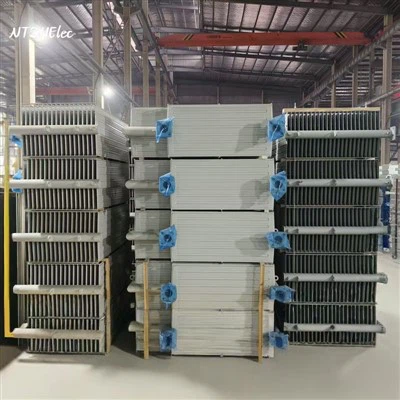
Let’s start with the basics, because too many people I talk to mix up the tank and the transformer itself. The tank isn’t just a metal box to hold the active parts of a transformer—it’s its protective shell, its cooling system’s backbone, and a critical safety component. For oil-filled transformers, that box holds mineral oil (or sometimes synthetic ester fluids) that insulate internal windings and carry heat away from the core. For dry-type transformers, which use air or resin instead of oil for insulation, the tank serves a different purpose: it’s a sealed or ventilated enclosure that protects the dry core from dust, humidity, and physical damage, no flammable fluid inside. That core difference sets every other contrast in motion, from safety to installation cost to long-term maintenance.
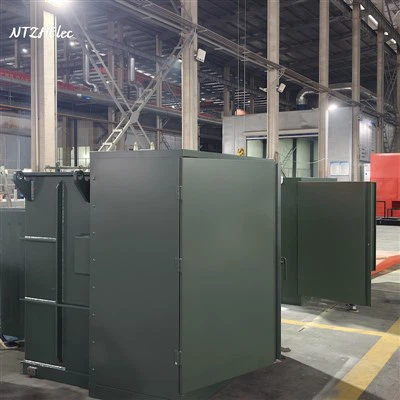
I’ll cut to the safety first, because that’s the non-negotiable for every project I work on. Oil-filled tanks are built around a flammable liquid, so their design has to account for fire risk. A standard oil-filled transformer tank has thick steel walls, often ¼ inch or more for distribution units, and comes with pressure relief valves, corrugated fins for passive cooling, and sometimes flame arrestors if it’s in a dense urban area. I remember a project in downtown Chicago a few years back where we had to swap an old oil-filled tank for a new one after a minor internal fault leaked hot oil, sparked a small fire, and took out three adjacent streetlights. The old tank’s pressure relief valve had been corroded by Chicago’s salty winter roads, so when the internal pressure spiked, it didn’t open in time. Modern oil-filled tanks solve this with welded seams instead of bolted ones (we see way fewer leaks that way), and a secondary containment basin around the tank to catch any spilled oil—most utilities in fire-prone areas require that now. Dry-type tanks, by contrast, have almost zero fire risk. The only materials inside are copper windings coated in epoxy resin and air, so if a dry core faults, it might overheat, but it won’t produce flammable fumes or large oil fires. The tanks here are made of thinner steel or even fiberglass, and most are vented or sealed to keep moisture out, not to contain flammable fluids. That means they’re ideal for places like libraries, hospitals, or schools where a big oil fire could be catastrophic. I once worked on a hospital project in Boston where the architect refused to allow oil-filled transformers near the patient wings—dry-type tanks were the only call, and we installed them in a wall-mounted cabinet that blended right into the hallway.
Next up is heat management, which is where the tank’s design really earns its keep. Oil-filled tanks are built for heavy heat loads. The oil inside has a boiling point around 570°F, and it circulates naturally (via convection) or with fans to pull heat from the core up through the cooling fins and into the air. Some larger oil-filled tanks even have radiators that can be bolted on if the transformer needs extra cooling for a peak load event, like a heatwave when everyone’s running their AC. I’ve seen oil-filled transformers run at full capacity for 12 straight hours during a July heatwave with no issues, as long as the tank’s fins are kept free of dust (a quick spray-down with a garden hose fixes that). Dry-type tanks, though, rely on air flow to cool their resin-coated windings. That means the tank has to have vents—either on the sides or top—to let hot air escape. If you block those vents with dust, leaves, or even stacked equipment, the transformer will overheat fast. I had a problem early in my career with a dry-type tank at a data center in New Jersey: the facility’s cleaning crew was using industrial floor wax that got sucked into the vents, coating the internal windings and blocking air flow. The transformer tripped twice in a month, and we had to pull the tank, clean the core, and replace the filter on the vent system. That’s a preventable mistake, but it underscores a key point: oil-filled tanks are more forgiving of dirty environments, while dry-type tanks need regular vent checks.
Installation space and cost are two things every project manager obsesses over, and the gap here is huge. Oil-filled tanks are bulkier than you’d think—they have to hold dozens of gallons of oil, plus the cooling fins, pressure reliefs, and secondary containment. A 10 MVA oil-filled transformer tank is about 12 feet long, 8 feet wide, and 10 feet tall, and it needs a concrete pad to support its weight (oil is 7.5 pounds per gallon, so that tank with 200 gallons of oil plus the steel shell adds up to over 2,000 pounds). That means you need extra space around it for maintenance: you have to leave 3 feet on all sides to get to the valves and finning, and if it’s indoors, you need proper ventilation to vent any oil fumes. Dry-type tanks, on the other hand, are much more compact. The same 10 MVA dry-type transformer fits into a tank that’s 6 feet wide, 4 feet deep, and 7 feet tall, and it weighs about half as much—no concrete pad required, just a flat, level surface. That’s a big win for dense urban projects where every square foot costs money. I worked on a project for a new apartment building in Brooklyn last year where space was so tight that the architect wouldn’t allow a big oil-filled transformer near the foundation. We installed two dry-type tanks in a utility closet on the third floor, and there was still 2 feet of space left for electrical panels. The cost difference adds up fast too: the dry-type tank itself is 20-30% cheaper than an equivalent oil-filled tank, and you don’t have to pay for the concrete pad, secondary containment, or extra ventilation for oil fumes. But wait—don’t let that make you jump for dry-type just yet. The installation for dry-type requires more careful positioning to make sure air flow isn’t blocked, and I’ve seen projects where cutting corners on vent placement led to costly overhauls.
Maintenance is where I see the most mistakes made, and the differences between the two tank types are night and day. Oil-filled tanks need regular oil testing, that’s non-negotiable. Every 3-5 years, utility teams have to take a sample of the oil from the tank, test for moisture content, acidity, and dissolved gases (those gases tell you if there’s an internal fault). They also have to check the tank’s seams for leaks—we’ve had customers call us to replace tanks because a tiny pinhole leak from corrosion over time had drained 50 gallons of oil, leading to transformer failure. The cooling fins need to be cleaned annually to remove dust and bird nests, and the pressure relief valve has to be tested every 2 years to make sure it opens correctly. That adds up to about 4-6 hours of maintenance work per year for a standard oil-filled tank. Dry-type tanks? Their maintenance is way simpler. You check the vents every 6 months to make sure they’re not blocked, wipe down the exterior to remove dust, and do an infrared scan of the windings every 3 years to spot hot spots. No oil testing, no pressure valve tests, no secondary containment checks. I once had a customer with a dry-type transformer at a shopping mall in Philadelphia go 7 years without any scheduled maintenance, and it still ran fine. That’s a big plus for remote sites where you can’t easily send a maintenance crew, like a wind farm in rural Ohio where the access road is only passable 6 months a year. But there’s a catch: dry-type tanks are more vulnerable to moisture and dust buildup over time, especially in coastal areas. Salt air can corrode the steel tank, and dust can get into the tiny gaps around the vent filters, leading to overheating. I had a project in Tampa a few years back where a dry-type tank’s filter got clogged with sea salt, and the transformer tripped during peak summer load—by the time we got there, the resin coating on the windings was slightly damaged, and we had to recoat the whole core, which cost more than we would have spent on annual vent checks.
Now, let’s talk about lifespan, because that’s the biggest question customers ask: which tank lasts longer? From what I’ve seen over 10 years in the field, oil-filled tanks have a longer average lifespan, usually 30-40 years, compared to 20-25 years for dry-type tanks. But that’s not a hard rule. Oil-filled tanks only last that long if you keep up with maintenance: if you skip oil testing and let leaks go, they can fail in 10 years. I’ve seen a 50-year-old oil-filled transformer still running at a substation in upstate New York, because the utility tests the oil every 3 years and does a full overhaul every 10 years. On the flip side, I’ve seen dry-type tanks in industrial facilities last 35 years, because the environment was controlled, no excessive dust or moisture. Most of the early dry-type tanks we installed in the 2000s are now reaching the end of their life, because the resin coating they used back then was less durable than what we use now—we’ve updated our dry-type tank designs to use a high-temperature resin that resists cracking, so modern units should hit the 30-year mark too, if maintained right.
Let’s wrap this up with the real-world use cases I see every day, because that’s what guides every customer’s choice. If you’re working on a project in a dense urban area, a hospital, a school, or a downtown office building where fire risk is high and space is tight, dry-type is almost always the right call. If you’re building a substation in a rural area, a wind farm, or an industrial plant where high load capacity and long lifespan are priorities, and you have space for containment and ventilation, oil-filled is the better pick. I’ve had customers try to cut corners by switching to the wrong tank, and I’ve seen the fallout: a data center that lost power for 8 hours because a dry-type tank’s vents were blocked, a downtown hotel that had to evacuate when an oil-filled tank leaked and sparked a small fire, a remote mining site that spent $50,000 a year on maintenance for an oil-filled tank that wasn’t necessary.
At the end of the day, choosing a transformer tank isn’t just about specs—it’s about understanding your site’s constraints, risk tolerance, and long-term budget. As a power transformer oil tank supplier, I don’t push one type over the other; I sit down with each customer, walk through their site, their maintenance resources, their budget, and help them pick the tank that works for them. If you’re in the market for a new transformer tank, or you’re dealing with a faulty unit that’s causing downtime, don’t guess—reach out, and we can walk through your options together. I’ve installed tanks from Maine to Texas, and I’ve dealt with every possible scenario, so I can help you avoid the mistakes that cost my customers thousands.
Corrugated Transformer Tank References
- IEEE Std. C57.12.00-2015, General Requirements for Liquid-Immersed Distribution, Power, and Regulating Transformers.
- IEEE Std. C57.12.01-2015, General Requirements for Dry-Type Distribution and Power Transformers.
- National Fire Protection Association (NFPA) 70: National Electrical Code, Article 450, Over 600 Volts, Transformers.
- Electric Power Research Institute (EPRI) Transformer Maintenance Guide, 2021.
Nantong Zhihe Electric Co., Ltd.
As one of the most professional power transformer oil tank manufacturers and suppliers in China, we’re featured by quality products and low price. Please rest assured to wholesale cheap power transformer oil tank made in China here from our factory. Customized orders are welcome.
Address: NO.202 Jianghai West Road, Hai’an Town, Hai’an City, Jiangsu Province
E-mail: colt.ntzh@gmail.com
WebSite: https://www.ntzhelectric.com/
