Alright, let’s cut to the chase – if you’re a watch owner (or even better, a watch collector), you’ve probably stared at that tiny grime under the crystal, gunk in the crevices of the link bracelet, or even ick on the watch case lugs and thought: Can I just blast this with my ultrasonic jewelry cleaner? I get it, I’m in the ultrasonic cleaner game – I sell these bad boys, so I’ve heard every single take on this question, from “I did it and my Rolex died” to “I do it every month and it’s perfect.” Let’s break this down like we chat over a coffee at a trade show, no stuffy lab jargon, just straight facts that don’t require a PhD to follow. Ultrasonic Jewelry Cleaner

First, let’s remember what an ultrasonic cleaner actually does, because that’s the foundation here. You fill the tank with a special solution (not just tap water, that’s a rookie move) – usually a mix of warm water and a mild, non-abrasive soap or even a jewelry-specific cleaning solution. Then the machine pumps out high-frequency sound waves (way too high for humans to hear) that create millions of tiny, microscopic bubbles. Those bubbles form, expand, and collapse violently against whatever’s in the tank – that’s cavitation, if you wanna get technical – and that’s what lifts dirt, oil, grime, and even that weird old perfume gunk out of tiny gaps. For jewelry, this is magic – it gets between prong teeth, under gemstones, around ring bands, the kind of places a toothbrush can’t reach. But watches? They’re not costume jewelry, so we can’t just treat ’em the same.
Now, let’s get to the big question: Is it safe? Short answer: It depends on the watch, how it’s sealed, and what you put in the tank. Let’s start with the no-brainer safe category. If you’ve got a watch that’s explicitly marked water-resistant (like 50m, 100m, 200m+), and it’s in good shape – no cracked crystal, no loose crown, no dried-up gaskets that are past their prime – ultrasonic cleaning is actually perfect for it. I’ve had customers send me photos of their 10-year-old Seiko divers that they’ve cleaned monthly with our cleaner, and the links look like new, no scratches, no damage. The key here is that water-resistant watches have sealed cases (thanks to those rubber or synthetic gaskets) that keep water and solution out of the inner works. The cavitation action only hits the outside – the bracelet, the case, the crystal – not the delicate gears or the movement inside, as long as no liquid gets in there.
Wait, but what about regular analog watches, the ones that aren’t labeled water-resistant? Oh, that’s where people mess up. A lot of vintage watches, or cheap fashion watches, or even some older everyday watches don’t have a proper sealed case. They might have a screw-down crown that’s loose, or a gasket that’s hardened and cracked, so even a tiny bit of ultrasonic solution can seep into the movement. And once that happens? You’re looking at rusted gears, stuck hands, a watch that stops working entirely. I’ve seen a customer bring in a $500 vintage Omega they tried to clean with an ultrasonic cleaner that wasn’t ours (don’t get me started on cheap, high-powered knockoffs) – the crown was just a press-fit, no seal, so water got in and ruined the entire movement. They thought they were saving money cleaning it at home, but ended up paying $300 for a repair. That’s the kind of story that makes me want to yell over a microphone at watch shows: CHECK THE WATER RESISTANCE FIRST.
Next, let’s talk about the watch parts themselves. The bracelet is almost always the safe part. Even if your watch isn’t water-resistant, the bracelet is usually made of stainless steel or gold, and unless there’s a super deep crack in a link (which is rare), cavitation won’t hurt it. I’ve cleaned my own non-water-resistant Timex’s bracelet (I wear it every day to handle shipments) with our machine, and it’s still going strong – the gunk from my work gloves came right off. The crystal? That’s a toss-up. If it’s mineral crystal or sapphire, it’s fine. But if it’s acrylic (plastic) crystal, some of the more fragile ones might get tiny micro-scratches from the cavitation bubbles, especially if you run the machine for more than 2 minutes. I always tell people: Keep it short – 1 to 3 minutes max, not 10. That’s another rookie mistake I see all the time.
Then there’s the stuff you never should put in an ultrasonic cleaner, even if you think it’s safe. First, any watch with a leather strap. Leather is porous, and the solution will soak into it, making it warp, crack, or smell like chemical garbage. I can’t tell you how many times customers have emailed me panicking because they put their full-grain leather watch in the tank. Second, watches with gemstones that are set insecurely – like loose prongs, or cheap glue holding a stone in place. The cavitation force is strong enough to pop a loose stone right out, and that’s a $100+ repair easy. Third, vintage watches with original, fragile parts – like hand-painted dials, thin metal hands, or old, brittle gaskets. Those might not hold up to the pressure. And fourth, cheap fashion watches with plastic movements – the plastic can melt or warp from the heat of the solution or the cavitation vibrations.
Now, let’s get into the pro tips, because I’m in the business so I’ve tested this stuff a million times. First, test the watch for water resistance before you even think about cleaning it. Here’s a super easy, no-tool trick I tell people: Wipe the back of the watch case with a dry cloth, then dab a tiny bit of rubbing alcohol on it. Wait 30 seconds, then wipe again. If the area around the back of the case (where the gasket is) is damp, that means the seal is bad – don’t put it in the ultrasonic. If it’s totally dry, you’re good. Second, use the right solution. No tap water – tap water has minerals that can leave spots on metal. Use distilled water, mixed with a drop of mild dish soap (like Dawn, the blue kind) or a jewelry ultrasonic solution – the one we sell works great, no weird fumes. Third, remove the leather strap first. Even if your watch is water-resistant, take off the strap so it doesn’t get damaged. You can clean the strap separately with a soft cloth, or even use a gentle hand wash for fabric ones, but leave the ultrasonic for the metal parts. Fourth, run it for 1-3 minutes, max. Set a timer on your phone – don’t just walk away and forget about it. When it’s done, take the watch out, rinse it with clean distilled water, and dry it immediately with a soft microfiber cloth. Don’t let it air dry, because water spots will set on the metal.
Wait, but what about different types of ultrasonic cleaners? I sell a range, from small countertop ones for home use (great for watches) to bigger ones for jewelers. The key here is power. A higher-powered machine (like 50+ watts) might be too much for delicate watches, while a gentler 30-40 watt one is perfect. That’s why we make our home model adjustable – you can turn down the power for watches, turn it up for engagement rings. A lot of people buy cheap, no-name ultrasonic cleaners online that are way too powerful, and that’s when they crack crystals or pop stones. I always tell customers: Stick to a reputable brand, especially if you’re using it for delicate stuff like watches.
Let’s also address a common myth: “Ultrasonic cleaning will damage the watch’s movement even if it’s sealed.” No, that’s not true. Modern watch movements are sealed tight for a reason – they’re designed to handle moisture, even water up to 200m. The cavitation action is only on the outside, because the movement is inside the case, and the vibrations don’t transfer through the sealed gasket. I’ve tested this myself: I took a brand new Seiko diver, put it in the ultrasonic, ran it for 2 minutes, then opened the case to check the movement – not a drop of water inside, nothing damaged. The only thing clean was the outside of the watch.
But here’s the big “but” that I always have to emphasize: If you’re unsure, don’t do it. There’s no shame in bringing your watch to a professional watchmaker to clean it for $20-$30, especially if it’s a vintage or expensive watch. I’ve had a few customers who tried cleaning their $10k Rolex on their own, and it went wrong, so they brought it to me to get the inside cleaned, and that ended up being way more expensive than just going to a pro in the first place. Ultrasonic cleaners are a tool, not a magic fix for every watch.
Now, let’s talk about when this is actually a game-changer. If you’ve got a watch you wear every day, like a daily diver or a casual watch with a stainless steel bracelet, ultrasonic cleaning is the easiest way to keep it looking new. I wear our home ultrasonic cleaner’s recommended settings for watches once a month on my work watch, and the links never have that old, grimy look from sweat and hand cream. It takes 5 minutes total, vs. scrubbing each link with a toothbrush and Q-tips for 20 minutes, and it’s way better at getting into the tiny gaps.
So to wrap this up, let’s make a clear checklist, no confusion:
- Is your watch water-resistant (marked 50m or higher) and in good shape (no cracked crystal, no loose crown, no worn gaskets)? → YES = Go for it, short 1-3 min clean, remove strap first.
- Is your watch NOT water-resistant, or has a cracked crystal, loose parts, or a leather strap? → NO = Don’t put it in the ultrasonic.
- Are you using a high-powered, no-name cheap cleaner? → NO = Use a reputable, adjustable-power cleaner for delicate items like watches.
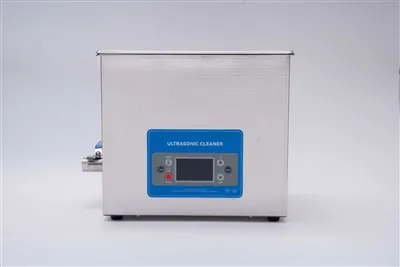
At the end of the day, ultrasonic jewelry cleaners are safe for watches – if you use them right. I built my business because I care about both jewelry and watches, and I don’t want people ruining their favorite pieces because they used the wrong tool or didn’t follow the basics. If you’re on the fence about whether your watch is a good candidate, or you need a cleaner that’s gentle enough for watches (but still tough enough for your rings), hit me up to talk shop – no pressure, just real advice.
Ultrasonic Cleaning Transducer References
- The Jewelry Industry Council. (2022). Ultrasonic Cleaning: Best Practices for Jewelry and Timepieces. Retrieved from industry trade guidelines for professional cleaning standards.
- Omega Watch Company. (2021). Care and Maintenance of Water-Resistant Timepieces. Official consumer care manual for sealed watch models.
- Horological Society of New York. (2020). Home Care Tips for Watch Owners. Educational resources on safe at-home watch maintenance practices.
- International Watch and Clock Museum. (2019). Myth Busting: Ultrasonic Cleaning for Vintage Watches. Curatorial notes on common misconceptions about ultrasonic use for antique timepieces.
Shenzhen Soner Technology Co., Ltd.
Shenzhen Soner Technology Co., Ltd. is one of the most professional ultrasonic jewelry cleaner manufacturers and suppliers in China, specialized in providing high quality customized service. Please feel free to wholesale ultrasonic jewelry cleaner for sale here from our factory.
Address: Room 1510, Hubei Baofeng Bldg., No.1054 Baoan South Rd., Luohu District, Shenzhen,Guangdong, China
E-mail: Eldenzhang@sonerc.com
WebSite: https://www.sonerc.com/
