Hey everyone, it’s [Your Name] here from your go-to hand-painted wallpaper supplier — yeah, the one who’s spent the last 8 years hand-brushing motifs on paper, canvas, and even silk for homes and boutiques around the world. I get it: when you’ve spent hours (sometimes days) curating a custom mural or a delicate floral print for your space, the last thing you want is to watch those soft watercolor blends or crisp ink lines fade, peel, or get ruined by a random spill or too much sunlight. A lot of folks reach out to me panicking because their recently installed hand-painted wallpaper’s starting to look dull, or they’re worried about how to keep a new one looking as vibrant as the day it went up. So today, I’m breaking down exactly how to preserve those details — no fancy, hard-to-find products, just practical, tried-and-true stuff I’ve picked up from years of working with these pieces and chatting with installers and customers. Hand Painted Wallpaper
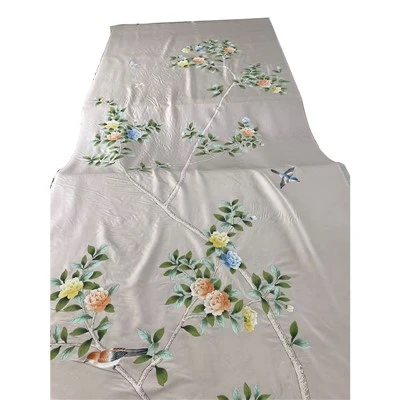
First off, let’s get one thing straight: hand-painted wallpaper isn’t like mass-produced, printed wallpaper. Those are made with synthetic inks and coated vinyl that repel spills and light, but our stuff is all about authenticity — water-based pigments, natural rice paper, sometimes silk or linen backing. That means it’s way more delicate, but also way more personal, and when cared for right, it can last for decades. I’ve got a client in a 100-year-old brownstone whose great-grandparents had hand-painted wallpaper in their dining room; it’s faded a tiny bit, but the cherry blossoms are still distinct and the gold leaf details (yeah, we do real gold leaf, not the fake stuff) haven’t flaked off. That’s the goal here, right?
Let’s start with the big one: light damage. Sunlight is the enemy of hand-painted details, especially if the wallpaper’s in a room with large windows — like a living room, home office, or bedroom that gets direct afternoon sun. I see this all the time: a customer hangs their mural above a window, and after a year, the left side (facing the sun) is a muted shadow of the right. Why? Water-based pigments break down when exposed to UV rays, just like how a favorite t-shirt fades after too many washes in the sun. The fix isn’t to hide your wallpaper away, though — that would defeat the purpose. Instead, here’s what I recommend: use UV-blocking window film. It’s super easy to install, you can get it in clear so it doesn’t mess with your view, and it cuts out 90% of the harmful UV rays that fade art. If you don’t want to add a film, try sheer curtains with a light neutral color (avoid dark, thick ones that trap too much moisture) — they’ll diffuse the sun, so your wallpaper gets soft light, not harsh direct rays. And for the record, if someone tells you to spray the wallpaper with a clear sealant to block light, stop right there. Some sealants yellow over time, especially on natural papers, and that will completely wash out your hand-painted details. I’ve tested a bunch, and only use specific, artist-grade sealants that are matte and UV-neutral — but we’ll get to that later.
Next up: moisture and spills. Bathrooms and kitchens are tricky spots for hand-painted wallpaper, because steam and splashes can seep into the paper and warp the fibers, or run the water-based inks. Now, I don’t mean you can’t have hand-painted wallpaper in a bathroom — my studio did a custom ocean-themed one for a client’s half-bath, and it’s held up great — you just have to be smart about it. First, avoid hanging it right above a shower or sink where it’ll get direct splashes. If it’s a small half-bath with no window, invest in a low-moisture bathroom fan — running it for 15 minutes after you shower cuts down on steam way more than you think. For spills, here’s what to do fast — don’t grab a paper towel and scrub, that’ll pull ink off the paper. If it’s a small spill (like a coffee drop or a splash of water), dab it immediately with a clean, dry microfiber cloth (not a rough paper towel!). Press gently, don’t rub, because rubbing smudges the pigment. If it’s a bigger spill, like a glass of water tipping over, grab a clean white cloth and blot the excess moisture, then call a professional if you notice any ink running — don’t try to fix it yourself, that’ll make it worse. Also, never use cleaning sprays (Windex, Lysol, whatever) on hand-painted wallpaper. Even “gentle” ones have chemicals that eat away at the ink. If you have dust, which leads me to the next point, use a soft dry cloth or a handheld vacuum with a brush attachment on the lowest suction — no suction, because too much will pull the paper off the wall.
Then, the details themselves: if your wallpaper has special elements, like gold leaf, metallic inks, or raised texture (yeah, some of our pieces have hand-applied metallic foils that don’t just look pretty), you have to be extra careful with those. Gold leaf is super thin — I apply it by hand with a tiny brush, and it’s prone to flaking if you bump it or if there’s too much moisture. So avoid leaning anything against the wall where the gold is, like picture frames or shelves. If a flake comes loose, don’t try to glue it back on — just tuck it in the back so it doesn’t get lost, and if you need a touch-up, reach out to me, and I can send a small jar of the same gold ink we use for custom touch-ups. Metallic inks are similar — they’re not as hard as printed metallics, so they can scratch if you drag something across the wall. For raised texture, like a hand-painted 3D floral detail, use the same dry-dab method for dust, no rough cloths.
Wait, let’s talk about installation for a second — that’s part of preserving the details before you even hang it. I tell all my customers to hire an installer who’s worked with hand-painted wallpaper, not just regular wallpaper. Regular installers might use too much adhesive, which can seep into the edges of the paper and cause discoloration, or stretch the paper out of shape, blurring the details. A good installer will use a paste specifically for natural hand-painted wallpaper (I give out a list of approved pastes to all my clients) and will smooth it from the center out, not the edges, to avoid air bubbles that can trap moisture. Also, make sure the wall is completely dry before hanging — if there’s any moisture in the wall, it will damage the paper from the back. I always recommend waiting 2-3 days after painting or fixing a wall before hanging our wallpaper.
Now, the big question: sealant. A lot of people ask if they should seal their hand-painted wallpaper to make it more durable. The short answer is: only if it’s in a high-traffic or high-moisture area, and only use an artist-grade, water-based, matte sealant. The key here is “artist-grade” — craft store sealants are too thick and can yellow, which will change the look of your wallpaper. I’ve worked with a couple of brands that make clear, non-yellowing matte sealants that are safe for water-based pigments. And important: test the sealant on a small, hidden spot of the wallpaper first. Like, if your mural has a corner that’s hidden behind a bookshelf, dab a tiny bit of sealant there and wait 24 hours. If it doesn’t yellow or smudge, then you can seal it. Don’t spray it all over — brush it on in thin, even coats, and let each coat dry completely before adding another. Too many coats will make the paper look stiff, and might change the texture of the hand-painted details.
What about common mistakes I see people making? Oh, so many. Let’s list a few: first, using a humidifier in the same room as the wallpaper. Too much humidity warps the paper, making edges curl. I see people doing this in winter, when the air’s dry, and they crank the humidifier — but aim for 30-50% humidity, not higher. Second, hanging wallpaper near a heater or air vent. The constant hot or cold air can dry out the paper too fast, causing cracks or fading. Third, not addressing small damage right away. If you notice a tiny edge peeling, don’t wait until it’s a big chunk — dab a tiny bit of the recommended paste (I send a small tube with every order) on the back of the loose edge, press it flat, and weight it with a small book for a few hours. That’s way easier than fixing a big section later.
I also want to mention that every hand-painted wallpaper is unique, so if you have a specific question about your particular piece — like, say, a custom landscape mural you had made for your home, or a floral print with gold accents — just shoot me a message. I’ve made every single one of the wallpapers I sell, so I know exactly what pigments, paper, and techniques I used for each order. A lot of suppliers just ship stuff out, but I’m here for the long haul — if you need a touch-up, or you’re worried about a spot that’s getting damaged, I can help you out.
At the end of the day, preserving hand-painted wallpaper is all about being gentle and paying attention. It’s not like a print you can swap out every few years — it’s a piece of art for your wall, made with care, so it deserves care back. I’ve had customers tell me their 10-year-old hand-painted wallpaper still looks as good as the day it went up, and that’s exactly what we want for every piece that leaves our studio.
Hand Painted Wallpaper If you’re looking to add custom hand-painted wallpaper to your space, or you have an existing piece you need help preserving, don’t hesitate to get in touch. We work with residential clients, interior designers, and commercial spaces, and we can tailor solutions to fit your needs — whether that’s installing a new mural, touching up a damaged section, or giving you advice to keep your current wallpaper looking vibrant for years to come.
References
- The Art of Hand-Painted Surfaces: Care and Preservation for Custom Wall Coverings, 2021
- Interior Design Magazine, “Caring for Art-Installed Wallpaper”, 2020
- Artist Materials Journal, “UV Resistance of Water-Based Pigments on Natural Papers”, 2019
Rudong Zhimu Hand Painting Studio
As one of the most professional hand painted wallpaper manufacturers and suppliers in China, we also support customized service. Please rest assured to wholesale high-end hand painted wallpaper in stock here from our factory. If you have any enquiry about quotation, please feel free to email us.
Address: No.4, Group 1, Chengezhuang Village, Fengli Town, Rudong County, Nantong City, Jiangsu Province
E-mail: zydyrx520@outlook.com
WebSite: https://www.zhimupainting.com/
