Hey everyone! Let’s cut to the chase—if you’re someone who’s either pregnant right now, a partner of a pregnant person, or even a midwife/obstetric nurse helping expecting families, you’ve probably seen those at-home fetal dopplers floating around online. They’re those little handheld devices that let you listen to your baby’s heartbeat in the comfort of your own home, right? I get it—when you’re 12 weeks along and your first appointment is still 2 weeks away, or you had a tiny scare earlier in the pregnancy, it’s so tempting to grab one just to ease that constant, nagging worry. But here’s the thing: I’m a fetal doppler supplier, and I get asked this question more than any other by customers, fellow expecting parents, even healthcare folks in passing—is a fetal doppler covered by insurance? Fetal Doppler
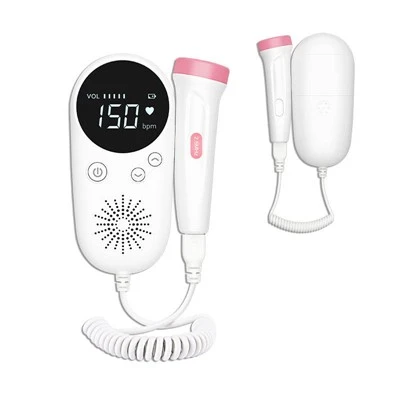
First, let’s ground this in actual facts, not just the random Google answers you’ll find on some mom blog. I see so many people mixing up two totally different things here: medical-grade fetal dopplers and the at-home consumer models you can buy without a prescription. That’s the biggest mistake people make when they’re trying to figure out insurance coverage. Let me break that down quick. Medical-grade dopplers are the heavy-duty ones your OB/GYN, midwife, or clinic uses during appointments. They’re calibrated for clinical use, have way higher accuracy, and are designed to be used by trained professionals only—they can pick up the fetal heartbeat as early as 8 to 10 weeks, no problem. The at-home ones? Most of them are consumer devices, not classified as medical equipment, and a lot of them won’t pick up a heartbeat until 16 to 20 weeks because they’re less powerful. That distinction is everything when it comes to insurance.
Now, let’s talk insurance. Most health insurance plans—whether it’s your employer-sponsored one, Affordable Care Act (ACA) plans, or Medicaid—cover medically necessary equipment related to pregnancy. But here’s the key word: medically necessary. Insurance companies only pay for stuff that a licensed healthcare provider says you need for your health. So if your doctor writes a prescription for a medical-grade fetal doppler because you have a high-risk pregnancy—like if you’ve had miscarriages before, or your pregnancy has a condition that requires monitoring your baby’s heartbeat regularly at home—then there’s a real chance insurance will cover at least part, if not all, of it. But it’s not a given, and there are hoops you have to jump through.
Wait, but what if you have a low-risk pregnancy and you just want an at-home doppler for peace of mind? I hate to break it to you, but that’s not medically necessary. Insurance plans don’t cover comfort items or things you’re just using to ease anxiety. I’ve had so many customers message me saying, “My friend got hers covered, why won’t mine?” and 9 times out of 10, their friend had a high-risk pregnancy and a doctor’s order, while they just wanted it for routine reassurance. That’s a huge difference.
Now, let’s get into the actual process if you do think you qualify for coverage. First, you have to talk to your OB or midwife, and make sure they’re willing to write a prescription for a medical-grade doppler. Not all providers will do that, even for high-risk cases—some prefer to have patients come in for regular monitoring instead. But if they do, the next step is to check with your insurance plan specifically, because every plan is different. Some plans have a list of covered medical equipment (called a DME list, or Durable Medical Equipment) that you can look up on their website or by calling their customer service line. When you call, don’t just say “do I cover a fetal doppler?”—be specific. Say “I’m a [your condition, e.g., 32 weeks pregnant with a history of preterm labor], my doctor prescribed a medical-grade fetal doppler for at-home monitoring, can you tell me if this is a covered DME?”
You might have to get prior authorization, too. That’s when your insurance has to approve the equipment before you buy it, otherwise they won’t pay. Prior authorization is super common for things like this, so don’t be surprised if that’s required. Also, keep in mind that even if they do cover it, you might have to pay a copay, coinsurance, or meet your deductible first. For example, if your doppler costs $200, your plan might cover 80% of that after you meet your $500 deductible, so you’d pay $160 out of pocket. That’s way better than paying the full $200, but it’s not free.
Now, let’s address the elephant in the room: I’m a fetal doppler supplier, so I want to be transparent here—we sell both medical-grade (for prescription use) and high-quality at-home consumer models. So I know that a lot of people who ask about coverage are looking at the at-home ones, which are way cheaper (usually between $50 and $150, compared to medical-grade which is $200 to $500). Those consumer models are almost never covered by insurance, full stop. They’re classified as over-the-counter (OTC) devices, not medical equipment, so insurance has no framework to pay for them. That’s just how the insurance industry works—they don’t cover OTC items unless it’s a specific exception, and I’ve never heard of a fetal doppler being that exception.
Wait, but I should also mention some common misconceptions that I hear all the time. A lot of people think “since fetal dopplers are FDA-cleared, insurance will cover them.” Nope—FDA clearance alone doesn’t mean it’s covered. The FDA clears medical-grade devices for specific uses, but insurance still requires that the use is medically necessary. Consumer dopplers might even have different FDA classifications, but again, they’re not for clinical use, so that doesn’t help with coverage. Another misconception: “Medicaid covers everything for pregnant people.” No, same rules apply—Medicaid requires proof of medical necessity for durable medical equipment, including fetal dopplers. I’ve had customers on Medicaid get coverage, but only after their doctor submitted a letter of medical necessity explaining why at-home monitoring was needed.
Let’s also talk about what happens when insurance denies coverage. I’ve seen this a lot too. If you get denied, first don’t panic. You can appeal the decision. What’s an appeal? That’s when you submit more information to your insurance plan, usually from your doctor, explaining why the doppler is medically necessary. For example, if you had a recent scare where you felt like you couldn’t find the heartbeat in the clinic, and your doctor says this device will let you monitor at home to avoid unnecessary urgent care visits, that’s a strong appeal letter. A lot of people don’t realize that you have a right to appeal, and many denials get overturned when you submit more supporting info from your provider.
Now, since I’m a fetal doppler supplier, I should also share some advice for anyone navigating this, from someone who’s worked with hundreds of pregnant people and healthcare providers on this exact issue. If you’re pursuing coverage, first: get a formal prescription from your provider that says medical-grade fetal doppler and lists the specific medical reason for it (like “history of fetal growth restriction, requires weekly at-home heartbeat monitoring”). Generic prescriptions won’t work for insurance. Second, check your plan’s DME provider list—if there’s a DME provider they work with, you might have to buy through them, but don’t just assume that means coverage is guaranteed. Third, if you’re buying an at-home model because insurance won’t cover the medical one, just make sure you’re buying a reputable brand (we have guidelines on our site for that, obviously, but that’s a side note) and don’t rely on it for medical decisions—always contact your provider if you can’t find the heartbeat, even with an at-home device.
Wait, also, I need to be real here: not every high-risk pregnancy will get coverage, and not every provider will write that prescription. I’ve had customers who’ve had to pay out of pocket for medical dopplers because their insurance denied their appeal, and that’s okay—we work with those folks, offer flexible payment plans, and help them through the process. And for people with low-risk pregnancies, at-home dopplers are totally fine if that’s something that helps with their anxiety, even if insurance won’t cover it. The key here is just being informed about what you’re getting and why you’re getting it.
Let me circle back to the original question one more time to make sure I covered all bases: Is a fetal doppler covered by insurance? The short answer is: only if it’s a medical-grade device, prescribed by a licensed healthcare provider, and deemed medically necessary for your pregnancy (so almost always only for high-risk cases). At-home consumer models are almost never covered, because they’re not classified as medical equipment. The long answer is that there are steps you can take if you think you qualify—talk to your provider, check your plan, submit prior authorization, and appeal if you get denied.
At the end of the day, I get it. Pregnancy is such a vulnerable time, and when you’re waiting for that first heartbeat, it’s normal to want anything that makes you feel in control. Whether you’re going through insurance or buying an at-home model out of pocket, just make sure you’re doing your research, not taking random advice from social media, and always looping in your OB or midwife if you have questions about what’s safe and necessary.
If you’re a pregnant person curious about your options, a provider looking for medical-grade dopplers for your clinic, or just have questions about coverage, feel free to reach out to our team to discuss your needs. We can walk you through prescription requirements, coverage steps, and help you find the right device for your situation.
Portable Blood Glucose Meter references
American College of Obstetricians and Gynecologists. (2021). Clinical Practice Guidelines for Fetal Monitoring During Pregnancy.
Centers for Medicare & Medicaid Services. (2022). Durable Medical Equipment Coverage Guidelines for Pregnancy-Related Devices.
Food and Drug Administration. (2023). Classification of At-Home Fetal Monitoring Devices.
National Association of Insurance Commissioners. (2022). Health Insurance Coverage of Maternal Healthcare Equipment.
Yiwu Trump Medical Products Co., Ltd.
As one of the most professional fetal doppler manufacturers and suppliers in China, we’re featured by quality products and good service. Please rest assured to wholesale advanced fetal doppler made in China here from our factory. We also accept customized orders.
Address: Room 428-429, 4th Floor of Comprehensive Building of Hetianxia E-commerce Park, No.16 Pinghu Road, Jiangdong Street, Yiwu City, 322000 Zhejiang Province, China
E-mail: sales01@trumpmedi.com
WebSite: https://www.trumpmedisupply.com/
