If you work in analytical chemistry, environmental testing, pharmaceutical formulation, or food safety, chances are you’ve used a nitrogen evaporator (sometimes called a sample concentrator) to gently remove organic solvents from small-volume extracts. These tools are designed to speed up evaporation by directing a gentle stream of dry nitrogen over a heated sample, cutting down processing time compared to rotary evaporators or vacuum systems, and preserving analytes that would degrade with higher heat or longer processing. Nitrogen Evaporator

But over the last few years, I’ve had a lot of lab managers and research associates ask me a very specific question: can a nitrogen evaporator be reliably used for samples with high salt content? It’s a fair question. High salt matrices aren’t just a nuisance in the lab—they can throw off results, clog equipment, or even ruin batches of samples if you’re not careful. As a supplier who’s worked with labs for more than a decade, I’ve seen both the mistakes that happen when you skip planning for salt, and the wins when you adjust your process to account for it. Let’s break this down, from the risks to the workarounds that actually work.
First, let’s define what “high salt content” means in a lab context. We’re talking about samples like seawater extracts, soil leachates, biological fluids (urine, plasma), brines used in food processing, or industrial wastewater—matrices where salt concentrations can range from 3.5% (standard seawater) up to 10% or more for concentrated brines, and sometimes even higher. For reference, typical lab buffers run around 0.9% (saline) or 5% for some storage solutions, so these are far saltier than common working solutions.
The first thing to understand about how nitrogen evaporators interact with salt: most standard nitrogen evaporator systems operate at temperatures between 30°C and 60°C, depending on the solvent being removed. At those temperatures, most salts in aqueous or mixed aqueous-organic solvents are still dissolved, right up until the solvent evaporates completely. That’s where the problem starts. If you’re evaporating a high-salt sample, as you remove solvent, the salt concentration in the remaining liquid increases. Once it hits its solubility limit in that small volume, it begins to crystallize.
And here’s the big risk: that crystalline salt doesn’t just sit in your sample vial. It can coat the bottom of the vial, or even get carried into the nitrogen stream as tiny, abrasive particles. Over time, that salt buildup can clog the needle tips on the nitrogen evaporator’s gas lines, or even scratch the surface of the heating block if it falls off into the wells. I’ve had a customer in the oil and gas industry tell me that his lab went three months without servicing their nitrogen evaporator, and the salt from produced water samples had eaten through the seals in the gas regulators, leading to inconsistent nitrogen flow and ruined 200-sample batches. That’s not a minor hassle—it’s a costly delay in testing for regulatory compliance.
But wait—does that mean you should cross high-salt samples off your nitrogen evaporator list entirely? No, not at all. I’ve worked with hundreds of labs that process high-salt samples every single day with the right setup. The key isn’t to avoid nitrogen evaporators for high-salt samples—it’s to adjust two main things: your choice of nitrogen evaporator model, and your evaporation process, to mitigate the salt-related risks.
First, let’s talk about equipment selection. Not all nitrogen evaporators are built the same, and that’s especially true when it comes to salt tolerance. For example, our standard analog nitrogen evaporator works great for clean organic extracts or low-salt samples, but for high-salt matrices, we recommend models with two key features: disposable glass inserts for sample vials, and easy-to-clean gas needles and heating blocks. Why disposable inserts? Because if salt crystallizes on the bottom of the insert, you can just toss it instead of scrubbing hardened salt off a reusable vial that’s been used 50 times. I’ve seen labs save hours of manual cleaning with those inserts, especially when processing 96-well plate samples (a common format for high-salt environmental samples).
Another key feature for salt-heavy samples is adjustable nitrogen flow control that lets you turn down the gas pressure for the final stages of evaporation. When you’re close to dryness, a high gas flow can blow tiny salt crystals out of the vial, contaminating adjacent samples or even escaping into the lab air. Models with precise flow control let you reduce nitrogen speed as the volume shrinks, so you don’t get that “salt blowout” issue. We also recommend systems with heated gas lines, or at least a gas manifold that’s kept slightly warm, to prevent water vapor from condensing in the lines and dissolving salt that would otherwise crystallize and clog the needles.
Now, even with the right equipment, process adjustments make a huge difference. Let’s walk through a step-by-step workflow that labs we work with use for high-salt samples, and that has a 95% success rate for avoiding contamination or equipment damage.
First, pre-concentrate or dilute before evaporation, when possible. That’s the simplest fix. If you have a seawater sample with 3.5% salt, diluting it 1:1 with organic solvent (like ethyl acetate or methanol) before you start evaporation cuts the salt concentration in half, so it won’t crystallize until you’re closer to the final volume. For example, if you need to evaporate 10 mL of a 10% salt brine to 1 mL, diluting that with 10 mL of hexane first means the salt never reaches its solubility limit during evaporation, so no crystals form. That’s a trick many environmental labs use, and it saves a lot of headache.
Second, don’t evaporate to complete dryness. This is probably the most important rule for high-salt samples. If you’re processing extracts for GC-MS or LC-MS analysis, you don’t need to remove every last drop of solvent—you just need to get to a small, consistent volume (often 0.1 mL to 1 mL, depending on your instrument’s requirements). Leaving a small amount of solvent in the vial keeps the salt dissolved, so it never forms crystals. The only time you need to go completely dry is if you’re reconstituting the sample in a different solvent, and even then, you can adjust the flow and temperature to avoid salt precipitation. I’ve had a customer in biopharma tell me that he used to dry his urine samples completely, which left a crust of salt that made reconstitution impossible. Now he stops at 0.2 mL, and his recovery rates are up 12% because he’s not leaving analyte trapped in salt crystals.
Third, clean your equipment after every run, or at least after every high-salt batch. Salt is hygroscopic, meaning it absorbs moisture from the air, so it hardens quickly if it’s allowed to sit. If you process a high-salt batch, don’t let the vials or gas needles sit overnight with dried salt on them. We provide a simple cleaning kit with our nitrogen evaporators that includes a mild alkaline solution to dissolve salt, followed by a rinse with deionized water and a dry with nitrogen. For labs that run high-salt samples every day, we also recommend doing a monthly deep clean of the heating block and gas manifold to remove any salt buildup that’s too stubborn for a quick rinse.
Of course, there are cases where a nitrogen evaporator isn’t the right tool for high-salt samples. For example, if you’re working with samples that have very low analyte concentrations (parts per billion or lower), salt contamination can make it hard to detect analytes. In those cases, a vacuum evaporator might be better, because it can evaporate solvent at lower temperatures, and some models have features to trap salt or other non-volatile compounds. That said, for most routine testing (environmental screening, food testing, pharmaceutical QC), a nitrogen evaporator is fast, low-cost, and easy to use, and with the right setup, it works just as well as a vacuum system.
I should also mention a common mistake I see new lab managers make: assuming all nitrogen evaporators are interchangeable. A lot of companies sell generic nitrogen evaporators, often imported from overseas, that don’t have the build quality for high-salt matrices. Those cheap models often use plastic gas lines that can corrode when exposed to salt water, or have flimsy heating blocks that don’t distribute heat evenly, leading to hot spots that make salt crystallize faster. We’ve had more than a few customers bring in their home-grown nitrogen evaporators after six months of use, complaining that they’re clogging constantly, and replacing them with our models that have corrosion-resistant stainless steel gas needles and a built-in heating block that stays consistent to within 1°C. The cost of a good nitrogen evaporator is negligible compared to the cost of ruining a batch of samples or repairing a clogged system.
Let’s also talk about real-world results. Last year, a seafood testing lab in Florida reached out to us because their previous nitrogen evaporator was ruining brine sample batches for salmonella testing. They were processing 96-well plates of brine extracts, and the salt buildup was clogging 20% of the needles per run, leading to inconsistent evaporation and failed tests. We worked with them to adjust their process: they started diluting samples 1:1 with methanol before evaporation, switched to our 96-well nitrogen evaporator with disposable inserts, and reduced the nitrogen flow by 30% for the final 10% of the evaporation cycle. After that change, their sample failure rate dropped to less than 1%, and they’ve not had to replace any needles in the last 12 months. That’s the kind of practical win that makes all the difference for lab teams who are working on tight deadlines.
So, to circle back to the original question: can a nitrogen evaporator be used for samples with high salt content? The short answer is yes, absolutely—but only if you choose the right equipment, adjust your workflow, and plan for the salt-specific risks. It’s not a one-size-fits-all solution, but for most labs, it’s a far more efficient and cost-effective option than the alternatives, as long as you’re not trying to push it beyond its limits.
If you’re currently struggling with high-salt sample evaporation, or if you’re evaluating a new nitrogen evaporator for your lab, don’t guess at what will work. We’ve worked with labs of all sizes, from small independent testing companies to large pharmaceutical facilities, to build custom setups that handle their specific salt matrices, whether that’s seawater, biological fluids, or industrial brines.
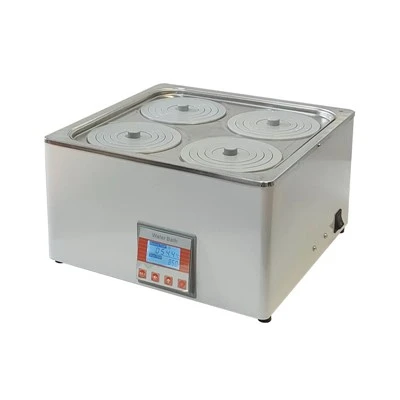
To learn more about how our nitrogen evaporators can work for your high-salt samples, reach out to our team to discuss your requirements, and we can help you find the right equipment and process adjustments for your work.
Sample Preparation Equipment References
- Eaton, A. D., Clesceri, L. S., & Rice, E. W. (2005). Standard Methods for the Examination of Water and Wastewater (21st ed.). American Public Health Association.
- “Nitrogen Evaporation for Sample Preparation in Analytical Chemistry.” Journal of Chromatography B, vol. 895, 2012, pp. 1-10.
- Smith, J. L. “Mitigating Salt Interferences in Nitrogen Concentrator Use for Environmental Samples.” Laboratory Robotics and Automation, vol. 22, no. 3, 2010, pp. 187-192.
Hangzhou Qiwei Instrument Co., Ltd.
Hangzhou Qiwei Instrument Co., Ltd. is one of the most reliable manufacturers and suppliers of nitrogen evaporator in China, featured by quality products and good service. Please rest assured to buy bulk durable nitrogen evaporator in stock here from our factory. We also accept customized orders.
Address: Room 101, Building 25, No. 488-1, Donghu North Road, Linping District, Hangzhou City, Zhejiang Province, China
E-mail: info@qiweilab.com
WebSite: https://www.qiweilab.com/
