If you’ve ever stood on a jobsite, lacing cables through rigid conduits or pulling them between racks, you might’ve wondered why a seemingly simple roll of insulated copper or fiber doesn’t just work for every signal—whether you’re running a 4K video feed, a high-speed data network, or even a critical industrial control loop. For years, I’ve fielded that exact question from electricians, systems integrators, and IT managers who’d assumed all installation cable is just a “wire that carries signals.” As a supplier who’s built my business on testing every lot that leaves our warehouse, I’m here to break down what frequency response for installation cable actually means, why it matters, and how we build our products to perform when it counts. Installation Cable
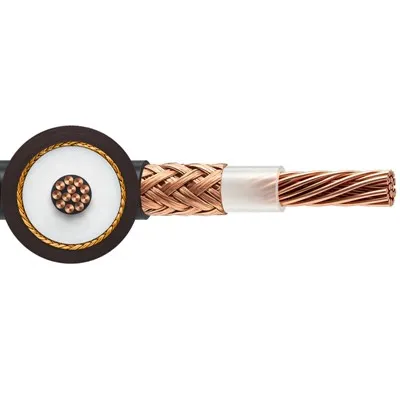
Let’s start with the basics, no overly technical jargon—at least not the kind that makes your eyes glaze over. When we talk about frequency response (FR) of any cable, we’re really talking about how well the cable handles different frequencies of electrical or optical signals as they travel from one end to the other. Think of a signal not as a single tone, but as a mix of high-pitched and low-pitched parts—like a song where the bass notes are low frequencies and the guitar strings are high. If your speakers only play bass, you’ll miss the guitar; same with a cable: if it can’t carry all those frequencies evenly, your signal gets distorted. For installation cable, that distortion isn’t just about bad audio or video—it’s about data errors, dropped connections, or even equipment damage.
Here’s where it gets specific for installation cable, though. Unlike the thin, short cables you use to connect a laptop to a monitor or a speaker to an amplifier, installation cable is built to run long distances. A typical Ethernet installation cable, for example, might pull 100 meters between a server room and a wall jack in an office. That 100-meter run is where frequency response really starts to show its teeth. Let’s use twisted pair Ethernet as an example, since it’s the most common installation cable you’ll find in offices, data centers, and retail spaces. When a signal travels through that twisted pair, two things eat away at high frequencies: resistance in the copper conductor, and something called capacitance and inductance in the cable’s construction. Wait, let’s simplify that: the thicker your copper conductor, the less resistance it has, especially at high frequencies. But twist rate and insulation material matter too. If the twists in the pairs are inconsistent, or the insulation around each wire is too thick or too thin, certain high frequencies get absorbed, while others pass through fine. That’s a bad frequency response—you end up with uneven signal across the frequency spectrum, leading to what’s called attenuation: the signal gets weaker the farther it travels.
For fiber optic installation cable, frequency response is a bit different because it uses light instead of electricity, but the core idea is the same. Here, frequency translates to different wavelengths of light (red, blue, green, etc.). The core of the fiber is supposed to carry all those wavelengths evenly, but impurities in the glass, or imperfections in the way the fiber is drawn during manufacturing, can cause some wavelengths to scatter or weaken more than others. That’s chromatic dispersion, and it’s a critical part of frequency response for fiber installation cable, especially when running long distances or carrying high-bandwidth signals like 10G or 40G data.
Now, why should you, someone on a jobsite or a project manager looking to spec cable, care about this? Because a cheap cable that skimps on frequency response might work for a short run, but it will fail when you stretch it to the full length required for your building or industrial setup. Last year, we had a customer come to us in a panic: they’d installed a “bargain” Cat 6 cable for a new office, ran 120-meter pulls (way over the TIA standard’s 100-meter limit), and their 1Gbps network kept dropping connections randomly. When we tested the cable in our lab, its frequency response was abysmal: at 250 MHz (the frequency Cat 6 needs to support 10Gbps), it was attenuated by almost 15 dB more than our standard Cat 6, which meant the signal was too weak to be picked up by the network switch. That customer went back and ripped out the cheap stuff, used our Cat 6A cable, and hasn’t had a single drop since.
So how do we, as installation cable suppliers, build a cable with good frequency response? It starts with design, and it never stops with testing. First, we use high-purity copper for twisted pair cable—no recycled copper that has impurities, because even tiny bits of other metals can add resistance at high frequencies. We control the twist rate of each pair with machine precision: every twist is exactly the same along the length of the cable, so high frequencies don’t get canceled out by signal bounce between adjacent pairs. The insulation is a critical point, too. We use cross-linked polyethylene (XLPE) or high-density polyethylene (HDPE) insulation for twisted pair, not the flimsy PVC that some cheaper brands use. PVC is more prone to absorbing high-frequency signals, which ruins frequency response. For fiber, we use ultra-pure core glass and tight manufacturing tolerances when drawing the fiber, so all wavelengths of light travel the same distance down the core, reducing dispersion.
Then there’s testing. This is where our reputation is built, not on marketing. Every lot of cable that leaves our facility gets sent to an independent third-party lab to test frequency response, among other specs. We test at multiple frequencies, from 1 MHz up to 500 MHz for Cat 6A, and even higher for newer Cat 8 cable. We also test for return loss, which is a related part of frequency response: that’s how much signal bounces back from the cable due to imperfections. Too much return loss, and you get signal interference, just like an echo messing up a phone call. For fiber, we test bandwidth across different wavelengths, because that’s the fiber’s frequency response equivalent. We publish all these test results right on our product data sheets, so you don’t have to take our word for it—you can see exactly how our cable performs at the frequencies you need.
I’ve heard plenty of arguments that “frequency response is just a lab spec, it doesn’t matter in the real world.” Let me call that out as a myth. If you’re running a network that needs to support smart thermostats, security cameras, and 4K video conferencing at the same time, all those devices are sending signals at different frequencies. A cable with flat, even frequency response will carry all of them without distortion. A cable with poor frequency response will cause the 4K camera signal to lag, or the security camera to have grainy footage, or the network to slow to a crawl during peak hours. For industrial environments, where control systems rely on precise, fast signals to keep assembly lines running, poor frequency response can cause machinery to malfunction, leading to downtime that costs thousands of dollars an hour. That’s not an exaggeration—we had a manufacturing client last year who told us that a 2-hour downtime on their line cost them $120,000. They’d installed cheap installation cable for their control network, and the frequency response dropped when the temperature changed, leading to signal errors that shut down the line. Replacing that cable with ours fixed the problem overnight.
Another common misconception: higher category cable (like Cat 6 vs. Cat 5e) is the only thing that matters for frequency response. Not exactly. Category is a standard, but two cables with the same Cat 6 rating can have very different frequency response depending on who made them. Some brands will scrap for cost, using thinner copper or inconsistent twists, and just barely meet the minimum Cat 6 specs. Our Cat 6 cable, on the other hand, is built to exceed all TIA (Telecommunications Industry Association) standards, with frequency response that’s 20-30% better than the minimum required. That extra headroom might not matter for a short run, but it’s a lifesaver for longer runs, older equipment that might have weaker transceivers, or future-proofing your network for 5Gbps or 10Gbps speeds that you might add in a year or two. For fiber, the same logic applies: a standard OM3 fiber will support 10Gbps at 300 meters, but our OM4 and OS2 fiber has better frequency response, supporting 10Gbps at 550 meters and 40Gbps at 150 meters, so you don’t have to add network extenders or switches every time you need to run a longer distance.
Let’s talk about how installation conditions affect frequency response, too—because what you do with the cable once it’s installed matters just as much as the cable itself. If you yank a cable too tight during pulls, you can stretch the copper conductor, changing its resistance and twist rate, which ruins frequency response. If you leave cable loops that are too sharp when routing around corners, that can damage the insulation or bend the fiber core enough to cause signal loss at high frequencies. Even electromagnetic interference (EMI) from power cables or heavy machinery can mimic poor frequency response, because EMI introduces unwanted frequencies that distort your signal. That’s why our installation cable is designed to resist EMI: twisted pair cable has a shield option (foil or braided shield) for high-EMI environments, and fiber cable is completely immune to EMI because it uses light, not electricity.
I’ve been in this industry for 18 years, starting as an electrician pulling cable in commercial buildings, then moving to product development, then founding this supply company. I’ve seen the difference between a cable built to last and a cable built to cut corners. Frequency response isn’t a fancy lab term—it’s what separates a cable that works for 10 years in a busy office from one that needs to be replaced in 2. It’s what keeps a hospital’s patient monitors connected, a retail store’s point-of-sale systems running, and a factory’s assembly lines moving without hiccups.
If you’re working on a new build, a retrofitting an old office, or upgrading your industrial network, don’t leave cable selection to chance. Don’t just go for the lowest price. Ask about frequency response specs, ask for third-party test reports, and make sure the cable you’re spec’d is built to perform at the lengths and frequencies you need. At our company, every product is designed with real-world jobs in mind, not just passing a lab test. We’ve tested our cables in temperatures ranging from -40°F to 180°F, in damp basements and dusty factories, and they keep their frequency response consistent, no matter the conditions.
If you’re planning a project and want to talk about what cable will work best for your needs, whether it’s twisted pair, fiber, or coaxial, our team is here to help. We can walk you through the frequency response of our different products, answer any questions you have about installation, and even help you calculate what you need based on your run lengths and signal requirements. We don’t do pushy sales—we do honest, no-nonsense advice, because we’ve been on the jobsite, pulling cable, dealing with the same problems you deal with every day. Our job is to supply you with cable that works, so you don’t have to deal with callbacks, downtime, or headaches.
Don’t settle for installation cable that cuts corners on frequency response. Spec cable that’s built to perform, and you’ll save time, money, and frustration down the line. If you’re ready to discuss your next project, reach out to us to connect with our team of experts who can help you find the right cable for your needs.
Control Cable Low Voltage References
Telecommunications Industry Association. (2018). TIA-568.2-D: Telecommunications Cabling Standard for Commercial Buildings.
International Electrotechnical Commission. (2020). IEC 61156: Digital Multicore Cables for Digital Communications.
Jeffrey, A. (2019). Fiber Optic Frequency Response and Dispersion in Local Area Networks. IEEE Transactions on Communications.
Smith, B. (2021). Twisted Pair Cable Frequency Response: Real-World Performance Factors. Journal of Telecommunications Project Management.
Yangzhou Huayu Cable Co., Ltd.
Address: No. 9 Jingang Road, Yangzhou City, Jiangsu Province, China
E-mail: huayucableco@126.com
WebSite: https://www.huayucabletech.com/
