Hey everyone, Aluminum Profile Processing Machine
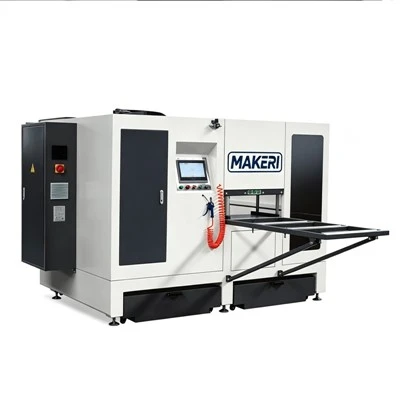
If you’re running a fabrication shop that works with aluminum profiles, you know how big a difference dialing in your processing machine’s parameters can make. Too tight, and you’re wasting material, dealing with burned edges, or ending up with parts that don’t fit right. Too loose, and you’re stuck with slow cycle times, inconsistent cuts, or even damaging your machine over time. As someone who’s been supplying aluminum profile processing machines for years, I’ve seen way too many operators guess their settings instead of actually understanding how to adjust them properly. Today, I’m breaking down the practical, actionable steps to tweak those parameters like a pro—no fancy engineering degree required.
First off, let’s get one thing straight: aluminum isn’t steel, brass, or any other metal you might be used to machining. It’s soft, prone to built-up edge (BUE) on tools, and heats up way faster when you’re cutting or milling it. That’s why the “one-size-fits-all” settings from a manual almost never work. Your machine’s age, the type of aluminum profile you’re using (extruded vs. solid, 6061 vs. 7075, for example), and even the tool you’re running will shift everything. I always tell new customers: start by gathering your three core variables before you touch a single dial. Those are material type, tool specs, and the final part’s tolerance requirements.
Let’s start with spindle speed—this is the first number most people mess up. Spindle speed is how fast your tool spins, measured in RPM. For aluminum, you can crank this way higher than you would for steel, but you can’t just wing it. Let’s say you’re using a standard 1/2-inch carbide end mill on 6061 aluminum (the workhorse of extrusion profiles). A good baseline here is around 3,000 to 5,000 RPM. Wait, why the range? If you’re doing a rough cut (removing a lot of material fast), you’ll lean toward the lower end to avoid breaking tools. If you’re doing a finish cut to get a smooth edge and tight tolerance, bump it up to 4,500–5,000 RPM. If you’re working with 7075, which is a bit harder, knock that down by 500–1,000 RPM. And don’t forget about tool diameter: smaller tools (like 1/4-inch) spin faster, usually 6,000–8,000 RPM, because their cutting edge surface area is smaller—higher speed keeps the cut cool and prevents BUE. I’ve seen guys spin a tiny end mill at 10,000 RPM and break it in 10 minutes; that’s avoidable if you match speed to tool size.
Next, feed rate—this is how fast your machine moves the material or the tool, measured in inches per minute (IPM) or millimeters per minute (mm/min, but I’ll stick to Imperial since most of our North American customers use that). Feed rate ties directly to spindle speed and number of tool flutes. For that same 1/2-inch carbide end mill on 6061: if it has 2 flutes (common for rough cuts), the feed rate should be around 100–150 IPM. If it has 4 flutes (better for finish cuts), bump that up to 180–250 IPM. Why more flutes = higher feed? Each flute removes a small chip, so more flutes mean you can move faster without overloading the tool. The rule of thumb here is: feed rate = (spindle speed) x (number of flutes) x (chip load per flute). Chip load is the amount of material each flute removes per revolution—for aluminum, that’s usually 0.001–0.003 inches per flute. If you set feed too high, you’ll get chatter (that annoying vibration that leaves wavy edges) and tool breakage. Too low, and you’ll rub the tool against the aluminum, generating excess heat and causing BUE. A quick test: make a small, 1-inch cut on a scrap piece of your profile, then check the edge. If it’s smooth but the tool is barely cutting, feed too low. If it has rough, torn edges, feed too high. Easy tweak right there.
Depth of cut—this is how much material you’re removing in one pass, and it’s another big one for aluminum. You should almost never take a full-depth cut (like cutting a 1-inch thick profile all the way through in one pass) on a standard machine. Rough cuts: for a 1/2-inch end mill, take 0.25–0.5 inches of depth per pass. For finish cuts, you only want 0.01–0.05 inches—super light, so you get a smooth surface without straining the tool. Wait, why no deep cuts? Aluminum is soft, so if you take too much in one go, the tool will wander (move off the straight line) and leave an uneven cut. Also, it puts way more stress on your machine’s spindle and drive motors—over time, that’s how you get premature wear. If you need to cut through a 2-inch thick profile, split it into 3–4 passes instead of 1. I had a customer last year who tried to cut 1.5 inches in one pass, and he burned out his spindle motor in 3 months. That’s a $2,000 mistake just from adjusting depth wrong.
Now, let’s talk about a parameter that’s often overlooked: cooling and lubrication. Wait, is that a processing parameter? Yeah, it is—your machine’s coolant flow rate and type. Aluminum generates a lot of heat when cut, and if you don’t get rid of that heat, you’ll get BUE, tool wear, and even thermal expansion of the profile itself (which ruins tolerance). For most of our machines, we recommend a water-based synthetic coolant with a 5–10% concentration. The flow rate should be enough to flood the cutting zone, not just a tiny mist. If you’re running a high-speed cut, you might need a mist coolant if flood is hard to reach, but flood is better for most cases. Another thing: don’t use cutting oil for aluminum? Wait, no—some people do, but synthetic is less messy and works just as well, especially for machining. If you’re using a machine without a built-in coolant system (we offer retrofits for that, by the way), you can use a paste lubricant on the tool edge, but you’ll have to slow your speed and feed a bit because you can’t get continuous cooling.
Wait, what if you’re doing something other than cutting? Like milling slots, drilling holes, or notching profiles? Let’s cover those quick adjustments because they’re different from straight cuts. For drilling: spindle speed is even higher—10,000–15,000 RPM for a 1/4-inch drill bit on 6061. Feed rate for drilling is lower, usually 50–100 IPM, because you don’t want to push too hard and bend the drill bit. If you’re notching a profile (cutting a corner out), that’s similar to a rough cut, but you might want to use a multi-tooth notching tool, so adjust feed rate up a bit to match the extra flutes. And for machining extruded profiles specifically—they have a skin layer (the hard, smooth outer layer from extrusion) that can dull tools fast. For the first cut on a new profile, lower your speed by 500 RPM for the first 0.01 inches to cut through that skin without wearing the tool prematurely.
Now, a pro tip that I tell all our customers: keep a log of your parameters. It’s easy to forget what worked for a specific profile or tool, so write down: material type, tool size and number of flutes, spindle speed, feed rate, depth of cut, and coolant type. Next time you run the same setup, you don’t have to guess—you just pull out the log, set it, and go. I once had a customer who switched from 6061 to a custom extruded aluminum alloy and messed up his settings so bad he ruined 10 profiles. After keeping a log, he now cuts 5x faster with zero scrap. It takes 2 minutes to log, saves hours of rework.
But wait, what if you’re running an older machine vs. a new one from us? Newer machines have built-in parameter controllers that auto-adjust based on your inputs, but they’re only as good as the info you put in. Older machines (like ones built before 2015) don’t have that, so you have to do more trial and error. Our machines, by the way, come with a pre-loaded parameter guide for common aluminum profiles, but even that’s just a starting point—you’ll still tweak based on your specific needs.
Common mistakes to avoid: first, ignoring BUE. If you see a thin, gummy aluminum buildup on the tool edge, that means your speed is too low or feed is too high. Fix that by bumping spindle speed 500 RPM and slowing feed 20 IPM. Second, taking too deep of a cut. I can’t stress that enough—aluminum is soft, so slow and steady wins here. Third, not checking tool wear before adjusting parameters. A dull tool will make your settings feel wrong, so replace your tools regularly, even if they look fine. A dull end mill will generate more heat, so you’ll have to lower speed/feed even if everything else is right.
Another thing: tolerance requirements. If your part needs a tight tolerance (like ±0.001 inches), you’ll need a finish cut with a very light depth (0.01–0.02 inches), higher spindle speed, and a slower feed rate. That higher speed gives a smoother edge, and the light cut keeps the tool from wandering. For parts that just need to fit together (±0.01 inches), you can be more aggressive with rough cuts and skip the finish pass. It’s all about matching parameters to your end goal—no need to overdo it if it’s not required.
Let’s put this all together with a real example. Say you’re cutting a 6061 aluminum extrusion for a window frame, using a 3-flute 1/2-inch carbide end mill, needing ±0.005 inch tolerance. Baseline spindle speed: 4,000 RPM. Feed rate: (4,000) x (3) x (0.002) = 240 IPM. Rough cut depth: 0.3 inches, then a finish pass at 0.02 inches. Coolant flow: flood, 2 gallons per minute. Test cut: 1 inch. Edge is smooth, no BUE, tolerance checks out. Perfect. If the edge is rough, lower feed 20 IPM. If the tool has BUE, bump speed 500 RPM. That’s it—no complicated math, just basic multiplication and a quick test.
Now, if you’re still struggling, don’t guess. A lot of operators think they have to figure it out alone, but that’s not true. If your settings aren’t giving you the results you want, or you’re worried about damaging your machine, reach out to us. We work with shops of all sizes, from small fabricators with one machine to big operations with a line of profile processing machines, and we help them dial in their parameters to cut scrap, speed up cycle times, and extend tool life.
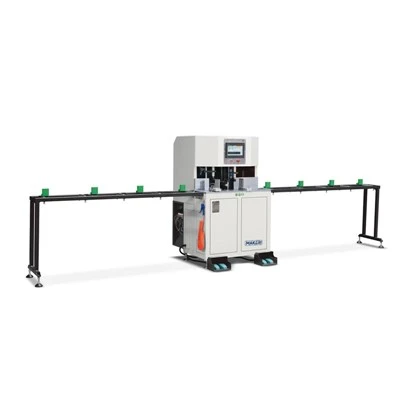
Adjusting processing parameters isn’t about being a genius—it’s about understanding how aluminum interacts with your machine and tools, and making small, data-driven tweaks. Skip the trial and error that leads to scrap parts and broken tools, and you’ll see your productivity jump fast. If you’re ready to upgrade your machine or get a consultation on tuning your current setup, let’s connect. We can walk you through custom parameters for your specific aluminum profiles, tools, and part requirements. No jargon, no sales pitch—just practical advice that works for your shop.
Thermal Break Line References
- Kalpakjian, S., & Schmid, S. R. (2020). Manufacturing Processes for Engineering Materials. Pearson Education.
- American Aluminum Association. (2019). Machining Aluminum Extrusions: Best Practices for Fabricators.
- Tooling & Machining Association. (2021. Guidelines for Aluminum Cutting Parameters and Tool Maintenance.
Jinan Makerl Machinery Co., Ltd.
Jinan Makerl Machinery Co., Ltd. is one of the most professional aluminum profile processing machine manufacturers and suppliers in China, featured by quality products and good price. Please rest assured to buy durable aluminum profile processing machine made in China here from our factory.
Address: Qihe Dayu Industrial Park, Dezhou City
E-mail: info@makerlcnc.com
WebSite: https://www.makerlcnc.com/
