If you’re a steel warehouse owner or manager, you know how crucial it is to keep your structure in check—especially because steel is tough, but it’s not indestructible. As a steel warehouse supplier, I’ve worked with dozens of clients who’ve ignored small warning signs and ended up with costly repairs (or worse, safety issues). Today, I’m breaking down simple, science-backed ways to monitor your steel warehouse’s structural integrity without needing a team of engineers 24/7. No fancy jargon, no overcomplicated steps—just what actually works. Steel Warehouses
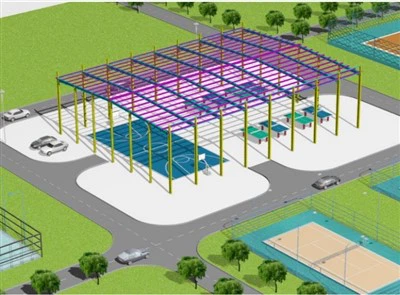
First, let’s get one thing straight: structural integrity here means your steel frame (columns, beams, trusses) and cladding don’t have hidden damage that could lead to collapse or make your space unusable. Steel rusts, bolts loosen over time, and extreme weather (wind, snow, even heavy forklift traffic) takes a toll. Skipping regular checks isn’t just careless—it can hit your bottom line hard. I’ve seen a client put off checking their steel roof trusses for two years, and a snowstorm caused a beam to warp, closing their warehouse for 6 weeks. That’s thousands in lost revenue, all because they skipped a 30-minute inspection.
Let’s start with the basics: visual inspections. You might think this is too simple, but it’s the first line of defense. Here’s what to actually look for, not just “check if steel looks good.”
First, walk the perimeter and interior once a month (I tell my clients to block 90 minutes, not a full day). For columns: check for bending—even a tiny tilt (more than 1 degree off vertical) is a red flag. How do you measure that? Use a speed square or even a laser level you can pick up at a hardware store for $20. I’ve had clients miss a bent column because they just glanced, not measured. Then look for rust: light surface rust is normal, but if it’s flaky, pitted (small holes), or covers more than 10% of a beam’s surface, that’s a problem. Rust eats away at steel, weakening it over time. Don’t forget the base of columns—water pooling there from gutters clogged with leaves causes hidden rust at the ground level, which you might only see if you get on your hands and knees (I know, it’s annoying, but worth it).
Next, beams and trusses. Look for cracks—even small ones, especially where beams connect to columns or other trusses. Also, check for deflection: that’s when a beam sags in the middle. For steel beams, a small sag is normal, but if it’s more than 1/360 of the beam’s length (so a 20-foot beam can sag no more than 2/3 of an inch), you need to get it checked. How to test? Tie a string between the two ends of the beam and measure the gap at the middle. I’ve had clients ignore a sagging beam that ended up damaging their stored inventory when it shifted. Also, check truss connections—those bolts and nuts. If they’re loose (wiggle them with a wrench), rusted tight, or missing, that’s a big one. Wind vibration from heavy storms or constant forklift movement can loosen bolts over time, so this needs checking every 3 months, not just monthly.
Cladding (the steel walls and roof panels) is easy to overlook, but it’s part of the structure too. Check for dents larger than a softball—especially on roof panels, because dents can trap water, leading to rust underneath. If you see a leak inside the warehouse, don’t just patch the ceiling; find the dented panel outside and fix it, otherwise the rust will spread to the frame. Also, check for panel movement—if a panel shifts when you push it gently, the fasteners are loose, and that can weaken the wall’s ability to resist wind.
Now, for something more than just visual: non-destructive testing (NDT). This is for when you’re unsure after a visual check, or your warehouse is in a high-risk area (coastal, where salt air speeds rust, or areas with frequent hurricanes). You don’t need to do this every year, but every 3-5 years is smart, especially for older warehouses. Let’s break down the common types, no confusing terms:
First, ultrasonic testing (UT). This uses sound waves to find hidden rust or cracks inside steel, without cutting into it. Think of it like a ultrasound for your steel beams. A technician uses a small handheld device that bounces sound off the steel—if there’s damage inside, the sound wave bounces back differently. For steel warehouses, UT is perfect for checking hidden rust at column bases or inside thick beams that you can’t see through. As a supplier, I often recommend this for clients with warehouses built before 2000, because older steel might have different coating that wears faster.
Then there’s magnetic particle testing (MPT). This checks for surface cracks, especially on welds (the spots where beams are welded together). Welds are common weak points—poor welding or vibration can cause cracks you might miss on a visual check. The technician spreads magnetic powder on the weld, then applies a small magnetic field; if there’s a crack, the powder lines up to show it. It’s cheap compared to other tests, and super accurate for welds. I’ve had a client who had a weld crack that a visual check missed—before it became a problem, so NDT saved them from a big repair.
Third, load testing. If you’re planning to store heavier inventory (like machinery, steel coils, or pallets stacked 20 feet high) than you did when you built the warehouse, this is a must. Load testing puts extra stress on the frame to see if it can handle the weight without deflecting too much. A technician will add temporary weight (or use hydraulic jacks) to the beams and trusses, and measure deflection. If the deflection is within safe limits, you’re good to go; if not, you can strengthen the frame before you move heavy inventory in. I had a new client who tried to store 30% more steel coils in their warehouse, and load testing showed the beams needed extra supports—they avoided a collapse before it even happened.
Now, tech tools that make this way easier—no more manual measurements and guessing. I know, some of you hate “new tech,” but these are simple, affordable, and actually save time.
First, tilt sensors. These are small, battery-powered sensors you stick on columns or beams that track tilt in real time. They send alerts to your phone if a tilt exceeds safe limits—so you don’t have to wait until your monthly inspection to see a bent column. They’re like $50 a sensor, and you only need a few for a 10,000 sq ft warehouse. I’ve installed these for several clients in hurricane zones—they got an alert during a storm that a column was tilting, and we were able to stabilize it before it caused damage.
Then, moisture sensors. Rust needs water to grow, so these sensors detect moisture at the base of columns or on the underside of roof panels. If a sensor picks up standing water, it sends an alert to clean your gutters or fix a leak—stopping rust before it starts. For coastal warehouses, salt air mixed with moisture is a rust supercharger, so these sensors are non-negotiable. I tell my coastal clients to put 2-3 of these sensors in high-risk spots; they’ve cut rust repairs by 70% for those warehouses.
Finally, regular maintenance that ties into monitoring. You can check all you want, but if you don’t fix small issues, they become big ones. For example, if you find a loose bolt, tighten it right away—don’t wait till next month. If you spot light surface rust, wire brush it and add a rust inhibitor, not ignore it. Also, keep records of all inspections and repairs. This isn’t just for insurance purposes—when you have a record, you can see trends: like if a certain column is always rusting, or bolts always loosen after a storm, you can fix the root cause, not just the symptom. As a supplier, I offer free inspection checklists to my clients, so they have a simple log to track everything.
Wait, let’s talk about common mistakes I see clients make: one, only checking after a big storm. Extreme weather is the worst time, but small things add up in between. Two, skipping checks because “it’s steel, it’s fine.” Steel is durable, but it’s not invincible—salt, humidity, and heavy use weaken it over time. Three, using unqualified people to do inspections. A friend who knows a little about construction isn’t enough—make sure whoever checks your structure knows steel warehouse specific stuff, not just residential buildings. For example, residential beams are smaller than warehouse beams, so a residential inspector might miss a deflection issue that’s critical for a warehouse.
Let me wrap this up. Monitoring your steel warehouse’s structural integrity doesn’t have to be complicated or expensive. Start with monthly visual checks, add quarterly bolt and rust checks, use NDT every 3-5 years, and throw in a few cheap tech tools to make it easier. As a steel warehouse supplier, I’ve seen how small, consistent monitoring saves clients tens of thousands in repairs and downtime.

If you’re not sure where to start, or need help with an inspection, reach out. We work with clients across all types of steel warehouses, from small 5,000 sq ft spots to 100,000 sq ft facilities, and can help you put together a monitoring plan that fits your needs and budget. Don’t wait for a problem to hit—take 90 minutes this month to walk your warehouse, or get a professional to check it, so you can keep your structure safe and your business running.
Poultry Farm Buildings References:
- American Institute of Steel Construction. (2021). Steel Structural Integrity Monitoring Guidelines for Commercial Warehouses.
- National Institute of Building Sciences. (2019). Non-Destructive Testing Methods for Steel Building Structures.
- Steel Manufacturers Association. (2020). Best Practices for Steel Warehouse Maintenance and Defect Detection.
- International Code Council. (2022). Load Testing Requirements for Industrial Steel Structures.
- Journal of Constructional Steel Research. (2018). Real-Time Monitoring Tools for Low-Rise Steel Buildings.
Shandong Honstar Construction Co., Ltd.
As one of the most experienced steel warehouses manufacturers in China, we have world-leading production equipment and strong manufacturing capabilities. Please feel free to buy cost-efficient steel warehouses for sale here from our factory. Contact us for more details.
Address: No.365,Xinhai street,Weifang,Shandong,China
E-mail: info@honstarconstruction.com
WebSite: https://www.steelbuildingchina.com/
