If you’ve ever spent time around heavy machinery, construction equipment, or even a modern passenger car, you’ve probably heard terms like “final drive” and “differential gear” tossed around in service bays, parts departments, or equipment operator meetings. For someone like me—who’s been a final drive supplier for 12 years, walking the line with my team, troubleshooting units in the field, and answering dozens of calls a week from mechanics and equipment owners—these two parts often get mixed up, and it’s not just a casual mix-up. Getting the difference right can mean the gap between smooth operation and costly downtime, whether you’re running a 20-ton excavator at a construction site or a compact skid-steer on a landscaping job. Let’s break this down straight, no engineering jargon overkill, from the perspective of someone who sells, installs, and stands behind these parts every single day. Final Drive

First, let’s start with the basics. Every wheeled vehicle that has more than one driven wheel needs a way to transfer power from the engine or motor to those wheels, right? If you just connect a single driveshaft to two wheels and lock them together, when the vehicle turns a corner, the outer wheel has to travel a longer distance than the inner one. It can’t do that if both wheels are forced to spin at the exact same speed—you’d get tire squealing, premature wear, and even strain that breaks parts. That’s where both final drives and differentials come in, but they do very different jobs, like two cooks in a kitchen: one chops the veggies, the other seasons the dish, and neither does the whole job alone.
Let’s start with the differential gear, because that’s the part most people have a vague idea of, even if they don’t know its formal name. The differential is the component that sits between two driven wheels, right at the axle. Its whole sole job is to split the power coming from the driveshaft so that each wheel can spin at a different speed when needed. Think about turning left: your left wheel is moving in a smaller circle than your right wheel, so it needs to spin slower. The differential lets that happen. It has a set of small bevel gears that mesh together, so when the axle turns, those gears spin independently, allowing one wheel to speed up or slow down as needed. That’s it for the differential—its only core function is speed differentiation between two wheels on the same axle. It doesn’t handle the torque multiplication, it doesn’t connect directly to the track or wheel hub, and it doesn’t sit at the end of the power line for the wheel.
Now, the final drive—this is where I get to talk about the part my team and I specialize in, and why it’s so different from the differential. The final drive is the whole assembly at the end of the axle, right next to the wheel or track sprocket. It does three key jobs, none of which the differential does. First, it takes the high-speed, low-torque power coming from the transmission or hydraulic motor and multiplies that torque to get enough force to move heavy equipment. For example, an excavator’s hydraulic motor spins at, say, 2,000 RPM, but it doesn’t have enough power to swing the 20-ton bucket arm or push the entire machine through muddy ground. The final drive uses a set of reduction gears—usually planetary gears, which are super common in heavy equipment—to drop that RPM down and crank up the torque. Second, the final drive houses the differential. Wait, that’s a big point: in most heavy equipment, the differential isn’t a separate part you bolt on; it’s inside the final drive assembly. That’s why people mix them up so often—they see the final drive on the end of the wheel and assume the differential is a separate part somewhere else, but no, the differential is the speed-splitting component inside the final drive. Third, the final drive is the structural housing that connects the entire power system to the wheel hub or track sprocket, so it has to be tough enough to handle the weight of the equipment, the shock from uneven terrain, and the constant stress of pushing or digging.
Let me make that concrete with a real example I ran into last month. A customer called me at 7 a.m., panicking because his 10-ton skid-steer was stuck on a job site, and the mechanic thought he needed a new differential. When I got there, I popped the cover off the final drive, and sure enough, the differential gears were fine—no broken teeth, no wear. The problem was the final drive’s planetary gear set: one of the carrier gears had sheared, so it couldn’t multiply torque at all, meaning the power from the hydraulic motor never reached the wheel. That’s the mix-up right there: the customer and his mechanic thought the failure was in the differential, but it was in the final drive, which is the larger, more complex assembly that contains the differential and does most of the heavy lifting (literally) when it comes to moving the machine.
Another way to tell them apart is where you find them on the vehicle. If you look at a passenger car rear axle, the differential is in the center of the axle housing, and the final drive would be the ring and pinion gear that sits in that same axle housing (wait, passenger cars use a slightly different setup, but you get the idea). But in heavy equipment—excavators, bulldozers, skid-steers, even large farm tractors—each driven wheel has its own final drive. There’s a final drive for the left front wheel, a separate one for the right rear, etc. Each of those final drives has its own hydraulic motor (or in older equipment, a connection to the transmission) and its own differential inside it. That means if one wheel is stuck in mud, the other wheel’s final drive is still working, but if a final drive fails, that wheel doesn’t move at all. The differential can only do its job if the final drive is sending power to it, so they’re dependent, but they’re not the same thing.
Let’s talk about common misconceptions I hear from customers all the time. The first is that the final drive is just a fancy name for a differential. No way—if that were true, I’d be selling differentials, not final drives, and my business would look way different. The second is that if you have a wheel spin out, that’s a differential issue. Nope, wheel spin is usually from too much torque, or low traction, not the differential. If both wheels are spinning at the same speed when you turn, that’s a differential issue—but that’s a rare failure, way less common than final drive failures from debris, overheating, or improper lubrication. Another one: some people think final drives are only for heavy equipment. While they’re most critical there, even passenger cars use final drives (often called the “final drive ratio” when talking about gear sets) that work with the differential to adjust torque for fuel efficiency. But when most people in the industry talk about final drives, they’re referring to the heavy-duty, wheel-specific assemblies we supply.
As a final drive supplier, I’ve learned that understanding this difference saves my customers thousands of dollars in unnecessary repairs. Last year, I had a customer who tried to replace the differential in his excavator because it was making a whining noise, but the real issue was that the final drive’s oil was contaminated with metal shavings, which was wearing down the differential. He spent $3,000 on a differential only to find out the real fix was flushing the final drive, replacing the oil, and adding a filter. That’s the kind of mistake that comes from mixing up these two parts, and it’s why I make it a point to walk every new customer through this difference, no matter how experienced they are.
So to sum it up, in simple terms: the differential is the speed-splitting component, inside the final drive, that lets wheels turn at different speeds. The final drive is the entire, heavy-duty assembly at the end of the axle that multiplies torque, houses the differential, and connects power to the wheel. It’s like comparing the engine’s piston (differential) to the whole engine block and cylinder head (final drive)—one is a small, specific part that does one job, the other is a larger assembly that incorporates that part and does the bigger, work-focused job.
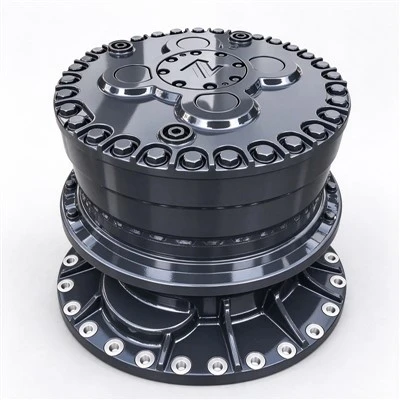
If you’re dealing with equipment downtime, whether you’re a small landscaping business with a skid-steer or a construction company with a fleet of excavators, getting the right part for the job matters. I’ve been supplying final drives for over a decade, so I know this inside and out—no overpriced parts, no confusing jargon, just parts that are built to stand up to the job site. If you have questions about final drives, differentials, or need a replacement that fits your equipment, reach out to our team to discuss your needs. We’ll walk you through what you need, no sales pressure, just honest advice from someone who’s been in your shoes working with equipment every day.
Transfer Case References
- Vehicle Dynamics: Theory and Application, Thomas D. Gillespie
- Heavy Duty Truck Systems, 7th Edition, Sean Bennett
- Fundamentals of Machine Design, Vol. 2, R.S. Khurmi and J.K. Gupta
- “Final Drive Assemblies: Design, Operation, and Maintenance,” Off-Highway Engineering Journal, 2021
- Automotive Chassis Engineering, Wolfgang Bauer
Shandong Huashou Transmission Technology Co., Ltd.
Shandong Huashou Transmission Technology Co., Ltd. is one of the most experienced final drive manufacturers and suppliers in China, also supports customized service. Please feel free to wholesale advanced final drive in stock here and get quotation from our factory. Quality products and reasonable price are available.
Address: No.6 Jinkang Road, Kangyi Town, Wenshang County, Jining City, Shandong Province, China
E-mail: 19285488291@163.com
WebSite: https://www.chinahuashou.com/
