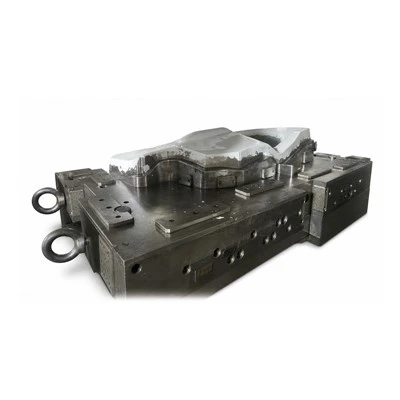
If you’ve ever worked with sheet molding compound (SMC) or bulk molding compound (BMC) in your manufacturing operations, you know how critical mold quality is to the final part. As someone who’s spent 12 years supplying SMC and BMC mold parts to industries ranging from automotive to renewable energy, I’ve seen firsthand how a mold’s surface finish can make or break a production run, from part durability to cosmetic appeal. Today, I want to break down exactly what SMC mold surface finish is, why it matters, and how we approach it in our shop—because this isn’t just a technical detail; it’s a direct line to your bottom line. SMC Or BMC Mold

First, let’s ground this in what SMC and BMC are, for anyone who might be new to the process. SMC is a fiber-reinforced thermoset composite made of chopped glass fibers, resin, and fillers, while BMC uses shorter fibers and a more paste-like consistency. Both are molded under high pressure and temperature, so the mold’s cavity surface isn’t just a shape guide—it’s a template that the compound flows against, leaving an imprint. That imprint is the part’s surface finish, and it’s defined by two key factors: the mold’s own surface texture and how the molding process interacts with that surface.
When customers ask me, “What’s the right surface finish for my SMC mold part?” I never give a one-size-fits-all answer. Instead, I walk them through the three main categories we work with, each tied to specific use cases. Let’s start with the most common: standard polished finish, often called “tool polish” in our shop. This is what most automotive body panels, like truck fenders or roof rails, use. We achieve this by grinding the mold’s cavity surface with progressively finer abrasives, moving from 180-grit to 600-grit stone, then polishing with compound until the surface has a smooth, uniform, semi-gloss sheen. For SMC, this finish works because it helps the compound flow evenly across the mold, reducing the risk of wrinkles or voids. It also makes the part easy to paint or coat later—something huge for automotive OEMs that need consistent paint adhesion.
But standard polish isn’t enough for parts that need to hide small imperfections, or for industries like agriculture where parts are exposed to rough conditions. That’s where textured finishes come in. Texturing a mold is different from polishing: we use chemical etching, media blasting, or EDM (electrical discharge machining) to create a controlled, consistent texture on the cavity. For example, a matte texture (often called “a satin finish” in industry terms) is ideal for things like tractor hoods or electrical enclosures, because it reduces the appearance of any slight warping that might happen during molding, and it’s scratch-resistant, so the part holds up to field use. I once had a customer in the renewable energy sector making wind turbine blade root sections—they wanted a texture that would prevent the blade from slipping during installation, but not be so rough that it created stress concentrations in the SMC. We settled on a 120-grit media-blasted texture on the mold, and the final parts have held up for 8 years now, which is way beyond the industry average.
Then there’s the less common, but high-stakes, mirror finish. This is for parts that need a completely smooth, decorative surface, like consumer electronics housings or luxury appliance panels. Achieving a mirror finish on an SMC mold takes extra steps: after polishing with 1200-grit compound, we hand-buff with diamond paste to get a surface roughness (measured in Ra, the standard unit for surface finish) of less than 0.2 microns. That’s smoother than a sheet of paper. But here’s the catch: SMC can have a tendency to “print through” the mold’s texture if the pressure isn’t calibrated right, so for mirror finish molds, we work closely with the customer on molding parameters to ensure the part doesn’t develop tiny lines or imperfections. I learned this the hard way early in my career—we supplied a mirror finish mold to an appliance maker, and they tried molding SMC at too low a temperature, and the resin pulled away from the cavity, leaving tiny pitting that had to be sanded off. Now, we include a process validation step for all mirror finish projects, so our customers don’t run into that mistake.
Now, let’s talk about how we measure surface finish, because it’s not just guesswork. Ra (roughness average) is the most common metric, measuring the average deviation of the surface from a perfectly smooth plane. For standard SMC molds, Ra is usually between 0.8 and 3.2 microns; textured finishes are 3.2 to 12.5 microns; mirror finishes are under 0.2 microns. But Ra only tells part of the story—we also look at Rz, which measures the maximum peak-to-valley height, because deep valleys in a mold texture can trap resin or air, leading to voids in the final part. That’s a detail most new customers don’t know, and it’s why we take the time to test the mold’s surface with a profilometer before it leaves our shop. I always tell customers: “If you just give me a Ra number without talking about Rz, we might end up with parts that look great but fail in the field.”
One thing I wish more people understood is that SMC mold surface finish isn’t static. Even after the mold is made, it degrades over time as you mold parts. The high pressure of SMC flow, combined with abrasive fillers in the compound, wears down the mold’s surface. That means a mirror finish might turn into a semi-gloss after 50,000 shots, and a textured finish might get smoother, which changes the part’s cosmetic and functional properties. That’s why we recommend maintenance programs: we offer re-polishing or re-texturing services for molds we supply, so our customers don’t have to buy a new set every few years. I had a customer making utility pole crossarms that used the same mold we supplied in 2016; last year, they sent it back for re-texturing, and the updated mold produced parts that looked and performed just like the new ones, saving them 70% compared to a new mold.
Let’s also address a common myth: some people think a rougher mold finish makes SMC flow better, but that’s not always true. For thin, complex parts—like electrical connectors that have tight tolerances— a too-rough mold can cause the compound to get stuck in the texture, leading to incomplete fills. We once had a customer making a 0.5mm-thick SMC connector for a sensor; they initially wanted a 6.4-micron Ra texture, but when we tested a prototype, the connector had 15% failure rates from incomplete fills. We switched to a 1.6-micron Ra polish, and failure rates dropped to less than 1%, which saved them thousands in rework. That’s why we prioritize prototyping with a small run of test parts, to make sure the surface finish works for both the mold and the molding process.
Now, if you’re a procurement or engineering manager looking for the right SMC mold parts, here’s what I want you to keep in mind. First, don’t just pick a standard finish because it’s cheaper. Ask about the Ra and Rz values, and how they align with your part’s requirements. If you’re making a structural part (like a truck frame crossmember), a semi-polished finish is fine, but if it’s a visible part (like a car door panel), you need a finish that’s consistent enough for painting. Second, ask about the mold’s durability. A cheaper mold with a rough texture might cost less upfront, but it will wear out faster, leading to more downtime. We use P20 tool steel for most of our SMC molds, which has a hardness of 28-32 HRC, so it holds its finish longer than lower-grade steel. For mirror finish molds, we use a pre-hardened stainless steel to prevent staining, which is a big issue with automotive paint solvents.
Finally, don’t sleep on post-mold finishing. Some customers think they can rough up a textured part or smooth a mirror part after molding, but that’s rarely cost-effective. For example, a part with a matte finish that’s too glossy because the mold polished too much would need to be bead-blasted post-mold, which adds 20% to the part’s cost. It’s way better to get the finish right on the mold, which is why we work with customers early in the design phase, before they finalize their mold specs. That way, we avoid costly reworks later.
Compression Mold If you’re currently dealing with SMC mold parts that have inconsistent finishes, high defect rates, or molds that wear out too quickly, let’s connect. We work with customers across industries to design and build SMC and BMC molds with surface finishes tailored exactly to their part’s needs, from structural components to decorative consumer parts. We also offer maintenance and rework services to extend the life of your existing molds, so you get the most value from your investment. Don’t let a bad surface finish hold back your production—reach out today to talk through your project.
References
- “Surface Finish Measurement for Molds and Composites,” Society of Plastics Engineers (SPE) Composites Division, 2021.
- “SMC Mold Design and Surface Finish Best Practices,” Automotive Composites Alliance (ACA), 2020.
- “Tool Steel Selection for SMC Molding Applications,” International Moldmakers Association (IMA), 2019.
Taizhou Lingyue Mold and Plastic Co., Ltd.
Taizhou Lingyue Mold and Plastic Co., Ltd. is one of the most professional smc or bmc mold manufacturers and suppliers in China, also supports customized service. If you’re going to buy advanced smc or bmc mold made in China, welcome to get quotation from our factory. Quality products and low price are available.
Address: NO.18, Shangxian Road, North Industrial Zone, Huangyan, Taizhou City, Zhejiang, China
E-mail: ly@lingyuemold.com
WebSite: https://www.lingyuemold.com/
