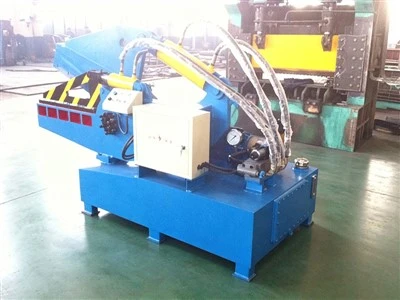
If you’ve ever stood in a warehouse, manufacturing floor, or retail backroom staring at a mountain of compacted cardboard, plastic wrap, or aluminum cans, you’ve probably asked the same question most waste and operations managers do: Is a waste baler actually worth the investment? As a supplier of these machines, I see both sides of this debate every single day. I’ve spoken to small shop owners who think balers are a luxury only big corporations can afford, and to plant managers who save tens of thousands of dollars annually with the right model. The truth isn’t a yes or no—it’s a matter of matching the baler to your specific waste volume, type, and long-term operational goals. Let’s break this down, no sales fluff included, just the hard numbers and real-world outcomes I’ve seen over the years working with businesses of all sizes. Waste Baler
First, let’s address the biggest misconception that holds people back: thinking a baler is only for companies generating massive amounts of waste. I recently worked with a small craft brewery in Ohio that only produced 1,200 pounds of cardboard and aluminum waste a month. Their old process? Breaking down boxes by hand, tying them into loose bundles with twine, and calling a hauler every two weeks. The hauler charged them $120 per pick-up, plus a $50 “extra waste” fee every time the bundles spilled over the allowed limit. When I installed a compact, vertical baler for them—one that fits in a 10×10 space, no construction required—their process changed entirely. They now bale the waste once a week, fit four times more material into a single bale than loose bundles, and their hauler only charges $65 per monthly pick-up. On top of that, they get $80 a month in recycling rebates from the local material recovery facility (MRF) because compressed bales fetch a higher per-pound rate than loose, messy material. That’s a net savings of $1,000 a year for a machine that cost them $3,200, and it paid for itself in just over three years. Compare that to the $1,500 they would have spent on hauler fees alone if they’d kept their old process. For that brewery, a baler wasn’t an extravagance—it was a way to cut unnecessary costs from a single small line item in their budget.
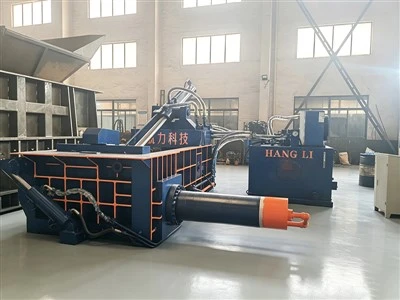
But let’s talk about the businesses that get the most out of balers: operations generating consistent, high volumes of mixed recyclables. Take a mid-sized grocery chain with 12 stores across the Southeast, which came to me two years ago. Before investing in horizontal balers for all locations, they paid an average of $450 per month per store for waste removal, and most of that cost went to the space loose recyclables took up in their dumpsters. Each store’s backroom was constantly cluttered with loose cardboard, plastic trays, and produce bins, which meant they had to schedule extra pick-ups to avoid code violations. After installing balers, each store now compacts 2,500 pounds of recyclables into a single bale, cuts their pick-up frequency in half, and reduces their monthly waste removal cost to $180 per store. Plus, their recycling rebates jumped 30% because MRFs don’t have to sort and clean loose material, so they pass more of the revenue back. For the whole chain, that adds up to $32,400 in annual savings, on top of a 15% reduction in the time their backroom staff spends sorting and breaking down waste—time they can now use to restock shelves or assist customers. That’s a double win: lower costs and higher productivity, which is why these businesses don’t just view balers as a tool—they view them as a core part of their operations.
Now, let’s get to the questions that actually matter when deciding if a baler is worth it: What are the hidden costs people miss? And are there scenarios where a baler isn’t a good investment? The first hidden cost is not the machine itself, but the time and labor to operate it. For a small business with a part-time staff, a baler that takes 20 minutes to load and tie a bale isn’t worth it if that time could be spent on revenue-generating tasks. I always advise small shops generating less than 1,500 pounds of recyclables a month to weigh that labor cost. If your staff makes $15 an hour, spending 40 minutes a week on baling adds up to $312 a year. If your hauler fee is less than that, a baler might not make sense—unless you care about reducing your carbon footprint, which is another factor many businesses overlook. Compacting waste cuts carbon emissions from hauling by up to 70% because fewer pick-up trips mean less fuel use and fewer truck miles. For businesses with sustainability goals, that’s a non-financial benefit that can boost brand reputation, attract eco-conscious customers, and even qualify them for green business incentives from local governments. I worked with a zero-waste retail store in Portland that got a $1,000 tax credit from the city for installing a baler, on top of $900 in annual savings from lower hauling fees. That’s a huge boost for small businesses trying to meet sustainability targets.
Another hidden cost is maintenance. A baler isn’t a set-it-and-forget-it machine—like any equipment, it needs regular oil changes, belt replacements, and occasional repairs. But here’s the thing: the best balers we build require less than $200 a year in routine maintenance, and we offer a 5-year parts and labor warranty for most models, so unexpected repairs are covered. We’ve also designed our balers to work with standard recycling bins, so businesses don’t have to invest in special containers or supplies. The only ongoing expense is baling wire or twine, which costs about $50 a month for most small models—an expense that’s almost always offset by lower hauler and higher rebate costs.
Now, let’s address a common pushback: What about businesses that mix waste types, like food and non-recyclable trash? A baler isn’t a solution for general non-recyclable waste. It’s only for clean, dry recyclables: cardboard, plastic bottles, aluminum cans, paper, and rigid plastics like pallets. If 80% of your waste is food or non-recyclable, a baler won’t help you much. But if recyclables make up 30% or more of your waste stream, a baler will pay for itself. For example, a restaurant that produces 1,000 pounds of cardboard and plastic packaging a month will save $500 a year on hauling fees, even after labor costs, which is enough to justify a baler. But a construction company that mostly produces drywall and wood debris won’t see nearly as much benefit, because most of that waste isn’t recyclable in a compacted form.
We also often hear from businesses that think balers take up too much space, but that’s no longer a concern. Our smallest vertical balers fit in a space just 3 feet wide by 4 feet deep—smaller than a standard refrigerator. They can be placed in a backroom, loading dock, or even a closet if needed, making them perfect for small retail stores, restaurants, or offices. Larger horizontal balers, for high-volume operations, are still compact enough to fit in most warehouse loading docks, and many businesses find that reclaiming space from loose, bulky waste makes up for the small footprint the baler takes up.
Let’s look at a real-life example that shows the ROI in action: a packaging company in Chicago that generates 10,000 pounds of cardboard a month, before investing in a baler. They paid $600 a month in hauler fees, and only got $120 a month in recycling rebates, for a net cost of $5,760 a year. After installing a mid-sized horizontal baler, they cut their hauler pick-up frequency from twice a week to once every two weeks, reducing their monthly hauler cost to $250. Their recycling rebates jumped to $500 a month because MRFs paid more for large, clean bales, and they saved an extra $1,200 a year in labor by having one employee spend 2 hours a week baling instead of 10 hours a week breaking down loose boxes. That’s a net savings of $7,560 a year, on a baler that cost $8,500. It paid for itself in about 11 months, and has saved them over $60,000 in the four years since they installed it. That’s not a small win—that’s a game-changer for a small business operating on tight profit margins.
Another factor to consider is the rising cost of waste removal. Landfill fees have increased by 15% on average across the U.S. in the last five years, and they’re projected to go up another 10% annually. That means the gap between the cost of hauling loose waste and compacted bales will only grow. A baler locks in lower hauling costs for your business, protecting you from future price hikes. For example, a retail store that pays $400 a month now could see that jump to $520 a month in three years, but with a baler, their cost would stay around $180, saving them $4,080 a year by then. That’s a long-term investment that will only become more valuable as waste costs continue to rise.
We also can’t ignore the regulatory side. More cities and states are implementing waste diversion requirements, which mandate that businesses divert a certain percentage of their waste from landfills. Failing to meet these requirements can result in fines of $100 to $500 per violation. A baler makes it much easier to track and manage your recyclable waste, ensuring you meet diversion targets and avoid costly fines. We had a client in California that was hit with a $1,200 fine in 2022 for failing to properly recycle cardboard; after installing a baler, they not only met all state requirements but also saved enough to pay for the machine and avoid any future fines. That’s a risk mitigation benefit that many businesses overlook.
So, is a waste baler worth the investment? The short answer is: if your business generates consistent recyclable waste, has space to fit a baler, and can offset minor labor costs, yes. The key is to match the baler to your specific needs, not to buy the largest, most expensive model just because you think it will help. For small businesses with low to mid volume, a compact vertical baler is almost always the best choice, while high-volume operations will see the most ROI from a horizontal model. If you’re not sure which model fits your waste stream, I recommend doing a quick audit: weigh your monthly recyclable waste, calculate your current hauler fees and recycling rebates, and estimate how much time your staff spends breaking down loose waste. That simple exercise will tell you in an hour whether a baler will save you money.
Don’t let the myth that balers are only for big corporations hold you back. I’ve seen every type of business—from a 5-person bakery to a 500,000-square-foot manufacturing plant—see value in a baler. It’s not just about cutting costs; it’s about streamlining operations, meeting sustainability goals, and preparing for future waste cost increases. If you’re ready to explore what a waste baler can do for your business, we’re here to help you find the right model, walk through ROI calculations, and answer any questions you have about installation, maintenance, or rebates. Don’t let another month of overpaying for waste removal and cluttered backrooms go by without finding the solution that works for you.
Metal Baler Reference
- U.S. Environmental Protection Agency. (2023). Municipal Solid Waste Generation, Recycling, and Disposal in the United States. EPA Publications Office.
- National Waste and Recycling Association. (2022). Commercial Waste Hauling Cost Benchmark Report. NWRA Press.
- Sustainable Business Network. (2023). The Impact of Compaction Equipment on Commercial Recycling Efficiency. SBN Research Institute.
- Local Government Commission. (2021). Green Business Incentives for Waste Diversion. LGC Publications.
Jiangyin Hangli Technology Co., Ltd.
Jiangyin Hangli Technology Co., Ltd. is one of the most professional waste baler manufacturers and suppliers in China. We are committed to providing high quality custom service and OEM service with low price. We warmly welcome you to buy high-performance waste baler for sale here from our factory. Also, pricelist is available.
Address: No. 11, Louxia Road, Zhouxi Village, Zhouzhuang Town, Jiangyin City, Wuxi City, Jiangsu Province, China
E-mail: sherry@hanglimachinery.com
WebSite: https://www.hanglirecycling.com/
