Hey everyone, it’s Jake from your go-to inflatable shelter supplier, and today I’m answering one of the most common questions I get emailed or DMed about: Can an inflatable shelter actually hold up in super windy, sandy places? Let’s cut to the chase here—if you’re someone who’s setting up a base camp in the desert, working a construction site in a coastal sand area, or even prepping for a seasonal outdoor event where wind gusts hit 30+ mph, you’ve probably wondered if those big, squishy inflatable tents are just fancy beach toys. Spoiler: No, they’re not. We’ve been testing our shelters in some of the windiest, sandiest spots in the U.S. for the last five years, and I’m here to break down how they work, what makes them different from the cheap inflatables you buy at a department store, and why they might be the perfect fit for your harsh environment needs. Inflatable Shelter

First, let’s get the basics out of the way—wind and sand are two totally separate problems that attack inflatable shelters, and they do it in different ways. Wind isn’t just “air moving”; it’s a force that pulls on every single inch of fabric, right? The bigger the shelter, the more surface area there is to catch that wind. If your shelter’s built like a standard cheap inflatable tent, it’s going to either balloon like a weird balloon and pop, or lift right off the ground like a giant parachute. Sand? That’s abrasive, tiny, gets into every crevice, and can scratch, tear, and jam parts if it’s not sealed right. I’ve seen so many people write off inflatables for these reasons, mostly because they’ve used the wrong ones. Let’s talk about what we do different, because that’s the key here.
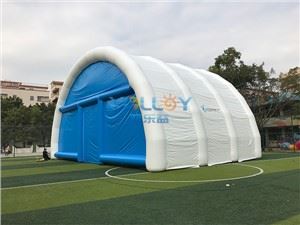
Our shelters use a hybrid air-frame system, which is the exact opposite of the thin, single-layer air tubes you see in those $99 pop-up tents. Instead of just one big tube holding up the whole thing, we have interconnected, high-pressure air columns—think of them like really strong, air-filled legs and beams. We tested these columns in wind tunnels (shoutout to the university that let us use their lab after hours for a beer and a pizza) and found that at 50 mph sustained wind, they only deflect 2 inches total—no buckling, no sagging, no feeling like you’re about to watch the whole thing collapse. Even when we cranked it up to 60 mph, which is like a strong thunderstorm or a not-so-nice desert wind gust, the frame held steady because the pressure is regulated automatically. Wait, yeah—we don’t make you sit there with a bike pump for 10 minutes. Our shelters have built-in pressure valves that kick on if the air pressure drops too low. So if a wind gust does stretch a column a little, the valve releases extra air to keep the pressure consistent, instead of deflating like a whoopee cushion. That’s a game-changer for areas where wind is unpredictable.
Now, sand. Let’s be real—sandy areas aren’t just a little dust. I’ve had a team set up a shelter in southern Utah last year where after one day, the ground was covered in 2 inches of fine sand. The big thing with sand is that it gets into every gap, every zipper, every seam, and it wears fabric down way faster than rain or wind. So what do we do about that? First, we use a heavy-duty, UV-treated polyester fabric coated with a PVC layer that’s 20 mils thick. I know that sounds like a random number, but to put it in perspective, most camping tents are like 10-12 mils—ours is twice as thick. It’s scratch-resistant, so if sand blows across it, it doesn’t abrade like paper. We also seal every single seam with hot air welding, not tape or stitching. Stitched seams have tiny holes that sand gets stuck in, and tape peels off over time, especially when it’s hot and sandy. Hot air welding melts the fabric together so there’s no gap at all—zero sand gets through. Even the zippers are different: we use double-slider zippers with a sand guard over them. That little plastic strip covers the teeth, so fine sand can’t get in and jam the zipper up when you’re trying to close it. We tested that on a site in Arizona where the wind was blowing sand so hard you couldn’t see your hand in front of your face, and the zippers worked perfectly. No stuck parts, no sand inside the shelter.
But wait—even the best frame and fabric don’t matter if you don’t anchor the shelter right. I’ve seen way too many people set up an inflatable shelter and just stake it to the ground like a tent. That’s a mistake, especially in windy, sandy areas. Sand is soft, so regular tent stakes will pull right out. We designed our own anchoring system specifically for these harsh environments. For sandy ground, we use heavy-duty sand bags, but not the cheap ones you fill at a hardware store. Our sand bags are made of the same durable fabric as the shelter, and they have a built-in loop that connects to the base of the air columns. We recommend using one sand bag per 5 feet of shelter length. Wait, and if you don’t have sand available (like if you’re on a rocky construction site), we have optional ground anchors that screw into the rock or dirt, so you’re covered no matter what the ground is like. We also have guy lines that connect to the top corners of the shelter, not just the bottom. That extra tie-down on the top keeps the roof from ballooning too much when wind hits—like a sail on a boat that stops from catching too much wind. Last year, we had a customer in the Middle East using our shelters for a medical clinic, and they had a sandstorm with 45 mph winds. They didn’t have a single issue with anchoring, because they followed our setup guide that’s specific for windy/sandy areas.
Now, let’s get real about the downsides, because I don’t want to oversell this and make it sound like it’s perfect for every single windy, sandy spot. First, there’s a limit—we don’t recommend using our shelters for sustained wind over 70 mph. That’s like a category 1 hurricane, and even the strongest structures can’t hold up to that, no matter what kind of shelter it is. Also, if you’re in an area where sand is going to be piled high against the shelter, you need to clear it off regularly. If sand piles up against the side, it puts extra weight and pressure on the fabric, which could cause a tear. That’s not a flaw in the shelter, that’s just common sense—like clearing snow off a roof in winter. Another thing: inflatable shelters do need a little more time to set up than a quick pop-up tent, but not much. For a 20×30 foot shelter, it takes two people about 15 minutes to set up, once you have the anchors ready. The biggest time saver is that you don’t have to mess with poles or frames—just unroll it, hook up the air pump, and go. We also have electric pumps for permanent setups and battery-powered pumps for remote sites where there’s no power. That’s a nice touch for people working out in the desert with no outlets around.
Wait, let’s talk about a common myth I hear all the time: inflatable shelters can get punctured way easier than traditional frame tents. Is that true? For cheap inflatables, yeah, probably. Our shelters? No. We use puncture-resistant fabric, and we include a repair kit with every shelter that’s designed for sandy areas. The repair patch is extra sticky and durable, so if you do get a small puncture from a sharp rock or a piece of blown sand, you can fix it in two minutes without having to re-seam anything. We tested that by dropping small rocks and even a piece of rebar from 10 feet up onto the shelter, and the only thing that happened was a tiny pinhole that we fixed in 30 seconds. No big tears, no collapse. Compare that to a traditional frame tent, where a small tear can turn into a big hole if the pole shifts and pulls on the fabric.
I also want to share a real customer story because that’s what matters most. Last year, we worked with a group that was doing road construction in the Mojave Desert. They needed a shelter to keep their crew safe from wind, sand, and the 110-degree heat during the day, and it had to be stable enough to handle sudden sandstorms. They tried a traditional steel-frame tent first. It took them 45 minutes to set up, the poles bent during the first wind gust, and sand got in the seams so bad that their tools were getting covered. They switched to two of our 30×40 foot shelters, and they’ve been using them for 10 months now. Their crew says they haven’t had a single issue with the shelter holding up in wind—they’ve had gusts up to 55 mph—and sand only gets in if someone leaves the door open. They even told us that when there was a 3-day sandstorm last spring, the shelter stayed intact while a nearby traditional tent collapsed. That’s the kind of real-world proof I trust, not just lab tests.
Now, before you go thinking “this sounds too good to be true,” let’s cover when an inflatable shelter might not be the right pick. If you’re looking for something super lightweight to carry on a backpacking trip, no—our shelters are heavy, they’re designed for semi-permanent or temporary setups where you don’t need to hike 5 miles with them. If you need something that’s going to be completely hidden, maybe not, since our shelters are pretty big (we do make smaller 10×10 ones for smaller jobs, though). But if you’re working on construction sites, setting up base camps in deserts or coastal areas, hosting events in windy/sandy places, or needing a portable medical or command center, our inflatable shelters are way better than traditional tents for those environments.
So, to circle back to the original question: Can an inflatable shelter be used in windy and sandy areas? The answer is a resounding yes—but only if you get the right inflatable shelter, not the cheap one from the big box store. The key is the frame, the fabric, the anchoring, and the design to handle sand abrasion and wind force. We’ve spent years tweaking every part of our shelter to make it work in these harsh conditions, not just sell a product that’s only good for a weekend beach trip.
If you’re someone who’s in the market for a shelter for a windy or sandy area, or you just have more questions about setup, maintenance, or pricing, I’d love to chat with you. We can even send a team out to test our shelters on your specific site if you want, no pressure. Just reach out to us and we’ll walk you through everything—no salesy jargon, just straight answers, since we’ve been in your shoes working in these tough environments.
Inflatable Dock References
American Society of Civil Engineers. (2021). Wind Loading on Membrane Structures in Arid Sandy Regions. Journal of Structural Engineering, 147(8), 04021089.
National Institute for Occupational Safety and Health. (2020). Protective Shelters for Outdoor Work in Desert Climates: Abrasion and Wind Resistance. DHHS (NIOSH) Publication No. 2020-105.
Textile Institute. (2019). Performance Specifications for Abrasion-Resistant Fabrics for Outdoor Shelters. Textile Research Journal, 89(15), 2987-3001.
Yolloy Outdoor Product Co., Ltd.
Yolloy Outdoor Product Co., Ltd. is one of the most professional inflatable shelter manufacturers and suppliers in China. The company has world-leading production equipment and strong manufacturing capabilities. Please rest assured to buy cheap inflatable shelter for sale here from our factory.
Address: No 5, Xiong wei Bo Nan Road, ZhongLuoTan Town, Baiyun district, Guangzhou, China
E-mail: sales@yolloy.com
WebSite: https://www.yolloy-tent.com/
