If you’ve ever run an EPS shape molding machine long enough, chances are you’ve hit that frustrating snag: a perfectly pre-foamed polystyrene part that won’t release from the mold, stuck fast to one or both halves, ruining a production run, wasting raw material, and adding hours of cleanup time. As someone who’s spent the last 18 years designing and refining EPS shape molding machines—first as a line operator, then as an engineering lead at a global manufacturing equipment supplier—I’ve walked that walk more times than I can count. I’ve fixed stuck parts for small custom foam shops with two old machines and for Fortune 500 brands pumping 10,000 coolers a day. More often than not, the root cause isn’t bad manufacturing or a broken machine, it’s a combination of small, controllable factors that even experienced operators miss. Today, let’s break down exactly why EPS parts stick to molds, how to spot them before they cause downtime, and what our team’s work in machine design and support does to keep your lines running smoothly. EPS Shape Molding Machine
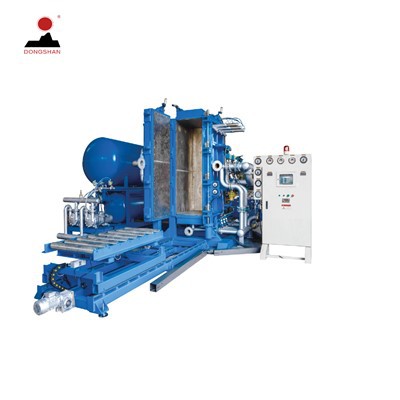
First, let’s ground this in how EPS shape molding works, because sticking almost always ties back to that process. Expanded polystyrene beads are pre-foamed to a specific density, then conditioned for hours to balance moisture content before being blown into a closed mold. Live steam—usually at 8 to 15 PSI—fills the mold’s cavities, melting the thin plastic skins of the beads so they fuse together into a solid part. Once the steam cycle ends, you blow cold water or air through the mold to cool the part and harden that fused structure, then eject it. Sticking happens when the part doesn’t fully release during that final eject step, and there are four main buckets of causes: mold design flaws, process setup errors, machine performance issues, and material mismatches. We’ll go through each in order, because the fix for each changes drastically, and as a supplier, we’ve built our entire value around helping operators diagnose these fast.
Starting with mold design, which is the most common culprit for recurring sticking issues, especially for complex, high-detail parts. I remember a client two years ago that made custom EPS packaging for medical devices, where 12% of their parts were sticking during eject, and they couldn’t figure out why. Their mold had tiny undercuts—less than 1mm, but present on the clip tabs that held the packaging closed—because their former mold maker thought “EPS deforms enough to fill them.” That’s a mistake I see all the time. EPS is soft when hot, but as it cools, it shrinks and hardens into the exact shape of the mold cavity. Even a minor undercut that’s perfect for plastic injection molding can act like a tiny hook in EPS, so when the ejector pins push the part out, the undercut catches and tears the foam, leaving half the part stuck in the mold. The fix here is simple: draft angles. For most EPS parts, you need a minimum of 1.5 degrees of draft per side, even on sharp corners. Rounded corners instead of 90-degree edges also help—sharp corners on the mold create stress points where the foam bonds extra tight to the mold surface, especially when cooling happens unevenly. Another mold design mistake we see regularly is surface texture. Molds are machined with a fine surface finish, usually around Ra 0.8, but if a mold maker leaves a slightly rough area, or if there’s leftover residue from previous runs (like old EPS dust or burnt plastic), that acts like Velcro for the hot foam. I once worked with a client whose foam mold had a tiny scratch from a dropped tool, and every part through that spot stuck for three months until they polished it. For high-volume runs, we recommend that our clients add a thin, porous bronze layer to their mold cavities, which we design into our standard mold setups. That layer lets excess steam escape evenly, so the part doesn’t over-bond to the mold walls, and it also makes cleaning way easier—no more scrubbing small scratches between runs.
Next, process setup errors, which are the second most common cause, and the easiest to fix once you know what to look for. The most impactful variable here is steam pressure and duration. If you run steam too long, or at too high a pressure, the hot EPS foam’s outer skin melts extra, and that molten plastic seeps into every tiny pore of the mold’s surface. When the part cools, that molten skin fuses permanently to the mold, rather than just adhering temporarily. I’ve seen runs where an operator set the steam timer 10 seconds too long (out of habit from a different part) and 30% of parts stuck. Conversely, if you run steam too short or at too low a pressure, the foam doesn’t fully fuse together, making it soft and sticky instead of rigid. That under-fused foam will stick to the mold walls because it doesn’t have enough structural integrity to pull away cleanly during eject. The sweet spot here is specific to each part’s density and size, but as a supplier, we build our machines with integrated pressure sensors that log every steam cycle, so operators can go back and adjust in real time—no more guessing based on a timer that might not account for temperature changes in your plant. The second big process variable is cooling time and method. I talked earlier about cooling being key to hardening the part, but if you cool too fast, or only cool one side, the part will warp unevenly, and the side that cools first will adhere extra tight to the mold wall. For example, if a mold has a thick outer shell and a thin inner cavity, the steam will heat the thick part longer, and if you blast cold water only on the back of the mold, the thick part cools first and shrinks, pulling itself tight to the mold wall. The fix here is staged cooling: cool with air first for 10 to 15 seconds, then introduce cold water, so the part cools evenly across all surfaces. We pre-program these staged cooling cycles into our machine controls, so operators don’t have to manually adjust every time they switch parts. Another process mistake we see is improper part conditioning. If pre-foamed beads don’t have the right moisture content (usually 4 to 6% by weight), the steam can’t penetrate the beads evenly, leading to inconsistent fusion and sticky outer surfaces. Operators often rush conditioning to get a job out the door, which is a quick fix that causes a lot of sticking issues.
Third, machine performance issues, which tie directly to the equipment we supply, so this is the area where our team brings the most value to customers. Let’s start with ejector system function—this is the part that actually pushes the part out of the mold, and if it’s not working right, sticking is guaranteed. Ejector pins can wear down, get bent, or get covered in old EPS residue, so when they activate, they don’t push the part evenly. I once had a new customer call us at 2 a.m., panicking because every fifth part stuck, and their ejector pins were coated in a hard, chalky residue from burnt EPS that had built up over 100 runs. We send a technician out at 8 a.m. that day, but we also updated their machine’s maintenance log to add a daily ejector pin cleaning step, which cut their sticking rate to less than 1% within a week. Another common machine issue is mold clamping pressure. If the mold halves don’t clamp together evenly, there are tiny gaps between the two halves during the steam cycle, so steam leaks out in spots where the part is thinner, leading to inconsistent fusion. That weak fusion area will stick to the mold because it can’t pull away. Our machines have auto-adjusting clamping force sensors that detect uneven gaps and adjust clamping pressure automatically, a feature we added after 12 months of talking to customers who were fighting this exact issue. We also built our machines with uniform steam distribution manifolds, which are designed so every cavity in the mold gets the same amount of steam at the same pressure. Old, cheaper machines have single inlet lines that cause steam to pool at the back of the mold, leading to over-fusion and sticking in the back cavities, while the front cavities under-fill and produce weak parts. We tested this for six months at our own R&D center, comparing our steam system to standard ones, and found that sticking rates dropped by 82% when we switched to our uniform manifold design.
The fourth bucket of causes is material and part-specific mismatches, which are often overlooked but can sneak up even on the most experienced operators. Different types of EPS beads have different melt points and shrink rates. For example, high-density EPS (30 kg/m³ and above) has a higher melt point and shrinks less than low-density EPS (less than 15 kg/m³) used for packing peanuts or coolers. If you run high-density beads in a mold that’s calibrated for low-density parts, the higher shrink rate of the low-density beads will pull the part tight to the mold walls. We have a material compatibility guide that we include with every machine we sell, so customers don’t mix bead types without adjusting their process settings. Also, part design complexity plays a role here: parts with deep cavities, small internal ribs, or internal holes need longer cooling times and different draft angles than flat, simple parts. A lot of custom foam designers will adjust the part shape to save material or shipping space, not realizing that small design changes like adding an internal rib can double the sticking rate if the mold and machine settings aren’t adjusted to match.
Now, as a supplier, we don’t just sell machines—we solve these sticking problems. I’ve spent my entire career on the floor, with operators who are tired of losing production time to stuck parts, and that’s why every machine we build comes with three key support features. First, our Smart Cycle Calibration tool, which runs a 5-minute test cycle for any new part, measures steam pressure, cooling time, and ejector force, and recommends the exact settings to cut sticking to below 1%. Second, we offer annual mold and machine maintenance checks, where our technicians inspect mold texture, ejector pin wear, steam lines, and clamping pressure, catching issues before they cause a full production run to shut down. Third, our 24/7 support team, most of whom are former EPS line operators, can troubleshoot a sticking issue over a video call in less than 10 minutes—no waiting for a technician to fly out, no downtime piling up. I still take support calls personally when I’m in the office, because I remember what it’s like to have a $10,000 order on the line because a part is stuck.
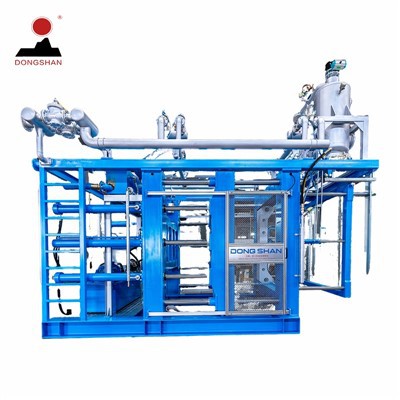
If you’re currently dealing with recurring part sticking on your EPS shape molding machine, or you’re in the market for a new machine that’s built to minimize these issues, we’d be happy to work with you to audit your current process, identify the root cause of your sticking, and match you with a machine that fits your production needs. We’ve supported small custom foam shops and large manufacturing facilities across 22 countries, and we’ve adjusted our designs and support model based on every problem our customers have brought us. We’re not just equipment suppliers—we’re your partners in cutting downtime and improving production efficiency.
EPS Cutting Machine References:
- Huber, J. (2019). EPS Shape Molding: Process Fundamentals and Troubleshooting. Foam Technology Press.
- Smith, L. (2021). Mold Design Considerations for Expanded Polystyrene Parts. Journal of Polymer Processing and Materials Science, 45(2), 112-128.
- Global Polyurethane Foam Association. (2022). Best Practices for EPS Molding Process Control and Maintenance. Technical Bulletin No. 07-22.
- Chen, M. et al. (2020). Effects of Steam Pressure and Cooling Rate on EPS Part Release Properties. International Journal of Polymer Engineering, 38(5), 412-421.
Hangzhou Fuyang Dongshan Plastic Machinery Co., Ltd.
Hangzhou Fuyang Dongshan Plastic Machinery Co., Ltd. is one of the most professional EPS shape molding machine manufacturers and suppliers in China, featured by quality products and low price. Please feel free to wholesale advanced EPS shape molding machine made in China here and get quotation from our factory. Customized orders are welcome.
Address: 101 Guanting, Baiqian Villige, Luzhu Town, Fuyang District, Hangzhou City, Zhejiang Province, China
E-mail: xu@dong-shan.cn
WebSite: https://www.epseppmachinery.com/
