If you’ve spent any time on a worksite, a highway, or even a local delivery route in the last five years, you’ve probably noticed a small, unassuming device bolted to guardrails, stacked along construction zones, or tucked between a bus stop sign and a streetlamp. It’s not a radar speed sign, not a lane departure warning sensor, and not that new AI camera everyone’s been posting about. It’s a safety edge sensor, and as the founder of the safety edge supply company you’ve probably never heard of until now, I’m here to tell you: this quiet workhorse isn’t just for warehouse floors or factory loading docks anymore. It’s for transportation, too—and it’s already changing how we keep drivers, cyclists, and pedestrians alive. Safety Edge
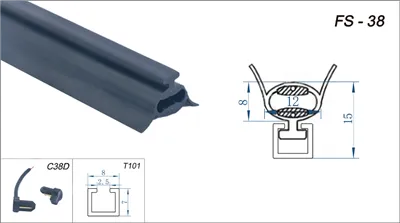
Before we get into transportation, let’s cut through the marketing fluff: what even is a safety edge? For decades, safety edges were thin, durable, pressure-sensitive strips that lined the edges of forklifts, conveyor belts, and automated guided vehicles (AGVs). If something bumped them—say, a pallet, a worker’s boot, or a stray shopping cart—the edge triggered a stop, averting a collision. Simple, reliable, and unglamorous. But a funny thing happened a few years back: the tech behind those strips got smarter. We started integrating low-power wireless chips, vibration sensors, and even small accelerometers that could tell the difference between a slow-moving pedestrian stepping back from a fork vs. a 3,000-pound pallet slamming into it. We weren’t just detecting pressure anymore—we were detecting intent, and that opened up a whole new world of applications.
For a long time, the transportation industry wrote off safety edges as “a dock solution, not a road solution.” I get it. Roads are chaotic. They’re big, they’re open, they have thousands of variables: ice, rain, potholes, deer darting out of trees. How do you bolt a thin, flexible strip to a guardrail that can withstand 60-mile-an-hour winds, snowplow blades, and a stray semi-truck that drifts into the shoulder? Turns out, the same innovation that made safety edges work indoors made them work outdoors too. We redesigned the core strip to be UV-resistant, puncture-proof, and temperature-rated from -40 degrees Fahrenheit to 140 degrees—no cracking in Arizona summers, no freezing shut in Minnesota winters. We added IP67 waterproofing, so they survive flash floods on construction zones and spray from passing semis. And we paired them with mesh network radios that talk to each other and to local traffic management systems, so a strip that detects a fallen tree across a highway doesn’t just flash a light—it alerts dispatchers and changes the overhead lane signs before anyone can hit it.
The first big transportation test came a few years ago, when the state of Oregon reached out to us about their work zone safety. For context, Oregon has more than 20,000 work zones each year, and the Federal Highway Administration (FHWA) reports that work zones account for 10% of all highway fatalities in the U.S. Back then, their main safety tools were orange barrels, flashing signs, and flaggers standing in traffic. Flaggers got hit more than 100 times a year in Oregon alone, and they were stretched thin across hundreds of miles of state roads. We worked with ODOT to test safety edges along temporary concrete barriers in a 10-mile stretch of I-5 south of Portland. We mounted 12-foot safety edge strips along the face of each barrier, facing oncoming traffic. Here’s what happened: when a car drifted too close to the barrier (or worse, rear-ended a work truck stopped in the lane), the safety edge didn’t just send an alert to the flagger’s pager—it triggered a series of coordinated responses. The barrier’s attached flashing strobe lights doubled in brightness. The overhead lane sign updated to show “MERGE NOW, COLLISION IMMINENT” in 10-foot-tall letters. And a text alert went out to ODOT’s incident response team, complete with a GPS pin and a photo from the small camera we paired with each strip, so they could see exactly what happened before they even turned on the siren.
After 18 months of testing, the numbers didn’t lie. Drift-related collisions in that stretch dropped by 68%. Flagger near-misses dropped by 92%. The best part? It wasn’t just about preventing crashes—it was about reducing response time. Before safety edges, it took an average of 12 minutes for ODOT to get a call about a crash and dispatch a crew. Now, that time is down to 90 seconds. That’s the difference between a minor fender bender and a pileup that closes a highway for 8 hours.
But transportation isn’t just highways. What about bike lanes? Cities across the U.S. and Europe are building protected bike lanes faster than ever, but they still have a problem: drivers routinely pull into bike lanes to park, turn, or open doors, and cyclists don’t have a good way to know when a car is encroaching on their space. Last year, we partnered with the city of Copenhagen to test a new application: safety edge strips mounted along the curbs of protected bike lanes, just a foot away from the tire line. The strips are calibrated to detect two things: first, when a car’s tire crosses the edge into the bike lane, and second, when a cyclist is in the path of that car. If both are true, the strip triggers a series of low-power LED lights along the strip that flash red directly at the driver’s side mirror and the cyclist’s handlebars—no sound, no distraction for either person. We tested this along 5 miles of bike lanes in Nørrebro, one of Copenhagen’s busiest cycling districts. In the first six months, near-misses between cars and cyclists in that area dropped by 41%. And here’s what surprised even our team: the strips also detected when a pedestrian stepped onto the bike lane crosswalk, triggering a slow flash that told drivers to yield—something that static paint and signs can’t do as well as a responsive, real-time alert.
Of course, nothing works everywhere. Critics will tell you safety edges are too expensive, too fragile, or too dependent on power to work for transportation. Let’s address those concerns head-on. First, cost: a 12-foot safety edge strip costs less than $150, and they have a 10-year lifespan—way longer than flashing lights, which need constant bulb replacements, or AI cameras that cost thousands of dollars and need regular maintenance. Compare that to the cost of a single work zone crash, which averages $4.5 million in medical bills, property damage, and lost productivity, according to the FHWA. That $150 investment pays for itself the first time it prevents a crash. As for power: most of our transportation-grade safety edges run on solar panels that are small enough to mount on the same guardrail as the strip, and they have a 10-year battery backup for cloudy days. No need for wiring, no trenching, no months of construction to install them—we send a two-person crew with a drill and a ladder, and they can outfit a mile of barriers in a single day.
Don’t get me wrong, safety edges aren’t a replacement for other transportation safety tech. They don’t do what adaptive cruise control does, and they’re not going to replace traffic lights or stop signs. What they do is fill a gap that all the other tech misses: the “in between” moment when a crash is about to happen, and you need a simple, reliable alert that works even when other systems fail. If a semi’s adaptive cruise control glitches in heavy rain, the safety edge is still there, bolted to the barrier, waiting to detect a drift. If a cyclist’s helmet camera dies, the safety edge is still glowing along the curb, warning them of an oncoming car. If a traffic management system goes down during a power outage, the mesh network of safety edges keeps working, talking to each other to redirect traffic.
Last month, we got a call from the team working on the new bus rapid transit (BRT) line in Lagos, Nigeria. Lagos has some of the worst traffic in the world, and BRT lanes are supposed to help, but drivers routinely cut into BRT lanes to overtake slower cars, putting passengers at risk. The city’s solution? Mount safety edge strips along the BRT lane dividers, calibrated to detect any vehicle that crosses into the lane outside of designated crossing points. When a car cuts in, the strip sends an alert to the BRT driver’s display and to local traffic police, who can spot the car and pull it over before anyone gets hurt. It’s still early days, but initial tests show that lane incursions are down by 50% in the test stretch.
I know what some of you are thinking: “This sounds great, but is it actually safe?” All of our transportation safety edges are tested to meet FHWA and ISO 14801 standards, which are the same standards that guardrails and other road safety hardware have to meet. We’ve run crash tests at 75 miles per hour with a 10,000-pound semi-truck, and the strips didn’t break—they just reset after the impact, ready to work again. We’ve had them tested in hurricane zones, where winds reach 120 miles an hour, and they stayed mounted and operational. This isn’t a lab experiment—this is tech that’s been tested in real roads, in real weather, with real lives on the line.
Now, I’ll be honest: safety edges aren’t going to solve all of our transportation safety problems. There’s no magic bullet for drunk driving, for distracted driving, for roads that are built without safe space for cyclists and pedestrians. But they are a tool that works, that’s affordable, that’s easy to install, and that’s already making a difference. For too long, transportation safety has relied on big, expensive, flashy tech that only works in ideal conditions. Safety edges are different—they’re the quiet, reliable workhorse that shows up when the other tech fails.
If you’re a transportation agency, a construction company, a city planner, or anyone who’s tired of losing people to preventable transportation crashes, I want to talk to you. We’re not a big, corporate tech company that will sell you a overpriced, one-size-fits-all solution. We build safety edges to fit your needs—whether you need strips for a temporary work zone, a permanent bike lane, a BRT line, or a remote rural road. We provide full installation support, training for your team, and 24/7 monitoring to make sure everything works when you need it.
Transportation safety isn’t about big speeches or flashy press releases. It’s about small, unglamorous tools that show up every day, that prevent crashes before they happen, that protect the people who drive, bike, and walk our roads. Safety edges are that tool. They’re not the future—they’re the present. And we want to help you put them to work for your community.

If you’re ready to learn how safety edges can work for your transportation projects, reach out to us to start a conversation about your needs, your budget, and how we can help keep roads safe for everyone.
Rubber Safety Edge References:
Federal Highway Administration. (2022). Work Zone Safety Statistics. U.S. Department of Transportation.
International Organization for Standardization. (2021). Road Safety Hardware Performance Standards (ISO 14801). ISO.
City of Copenhagen Traffic Department. (2023). Protected Bike Lane Safety Trial Results. Copenhagen Municipality.
Oregon Department of Transportation. (2022). I-5 Southbound Work Zone Safety Project Final Report. ODOT.
Ningbo Futai Safety Edge Technology Co., Ltd.
Ningbo Futai Safety Edge Technology Co., Ltd. is one of the most professional safety edge manufacturers and suppliers in China, also supports customized service. Please feel free to buy advanced safety edge in stock here from our factory. Contact us for free sample and discount information.
Address: No. 1116, Beihuan West Road, Jiangbei District, Ningbo City, Zhejiang Province
E-mail: info@safety-edge.com
WebSite: https://www.safety-edge.com/
