If you’re reading this, chances are you’ve stared at your unfinished basement kitchen (or that half-finished corner you’re pretending counts) and thought, “Can I actually put a range hood down here? Or am I just going to end up with mold that looks like a science experiment and smells like a old gym sock?” Spoiler: I’m a range hood fan supplier, and I get this question at least three times a week. Let’s cut the fancy engineering jargon and talk real basement stuff—no corporate fluff, just what actually works when you’re dealing with a space that’s usually damp, low on ventilation, and way more likely to get a leak than your upstairs kitchen. Range Hood Fan
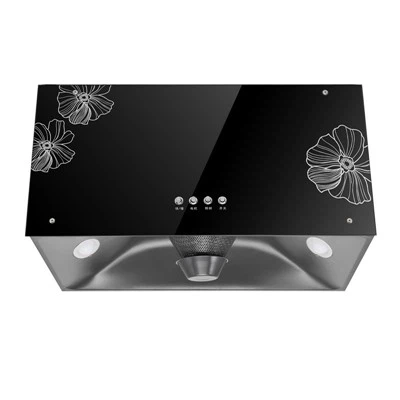
First, let’s get the basics straight. A range hood’s whole job is simple: it pulls greasy, steamy, smelly air from your stove, so it doesn’t just float around your house or turn into a gross film on your cabinets. But basements are weird. They’re below ground, so humidity levels are through the roof most of the time. I’ve seen basements with 70% humidity that’s so high, your bathroom mirror fogs up for 20 minutes after you wash your hands—imagine what that’s like after cooking bacon, or a lasagna that’s been simmering for three hours.
So can a regular range hood fan work down there? Short answer: yes, but not the one you’d get for your kitchen upstairs. The ones you see at big box stores for $150? Don’t do it. Those are made for above-ground kitchens, where the air’s dryer, the vents go straight outside, and you don’t have to worry about moisture eating away at the motor in a year. Basement range hoods need to handle way more humidity, and that’s where I (and my team of guys who test every hood in our warehouse) come in.
Wait, let’s break down the big basement issues, because that’s what actually messes things up. First, moisture. If your basement has a sump pump, that’s a good sign, but it still means the air’s got more water vapor. A standard range hood fan’s motor is sealed to handle some dust, but not constant, damp air. Over time, that moisture gets into the motor, makes the metal parts rust, and then—bam—your hood stops working right. We test all our basement-specific range hoods with humidity chambers, cranking it up to 80% for weeks, and I’ve yet to see one of ours rust out. That’s the key. It’s not just about suction; it’s about being built to survive the basement’s unique garbage conditions.
Second, ventilation. Wait, basements are underground—how do you vent a range hood? A lot of people make the mistake of venting it into the attic. Don’t. If you vent into the attic, all that greasy, steamy air just gets stuck up there, plus the humid air will make mold grow in your attic insulation, and that’s a whole other disaster. The right way is to vent directly outside—same as upstairs, but you might have to run the vent pipe through the foundation wall instead of the roof or soffit. Now, if your basement has really good cross-ventilation (like if there are two windows on opposite walls), you could do a ductless recirculating hood, but you still need one that’s made to filter out moisture and grease from damp air. Most ductless hoods just aren’t built for that—their filters get clogged way faster, and then they stop working.
Third, space. Basements are often smaller, right? You might have a tiny “kitchen” that’s just a mini-fridge, a hot plate, and a folding table. So you don’t need that huge, 30-inch hood that takes up half the wall. We make compact range hoods for basements—some that are under-cabinet, some that are even wall-mounted but smaller, because no one’s cooking a 10-course meal down here (unless you’re me, and I cook way too much chili in my basement test kitchen, but that’s another story). The point is, you don’t have to overbuy. But you do need to make sure the CFM (cubic feet per minute—basic suction power) is right. For a standard gas stove, you want at least 100 CFM, but if you’re burning a lot of heat (like a wok or a high-output burner), go higher—200 or 300 CFM. And since basements have less air circulation, don’t skimp here. A weak hood won’t pull the air, and you’ll end up with that gross smoky smell in the laundry room three days later.
Let me tell you about a customer I had last month—guy in Cleveland, basement with a leaky window, humidity through the roof, had tried a cheap $120 range hood from a big chain. It lasted 6 months. Motor rusted, the plastic parts got warped, and he was complaining about mold on his walls. He called us, got one of our basement-specific under-cabinet hoods, and we told him to make sure the vent was sealed well through the foundation. He messaged me a month ago saying he cooked a whole turkey, didn’t smell a thing, and no new mold spots. That’s the kind of win I live for.
Wait, what if your basement has no way to vent outside? I know, some older homes have concrete foundations, and drilling a hole for a vent pipe is a pain. Then what? Get a ductless range hood, but again—make sure it’s designed for basements. Regular ductless hoods have filters that only handle dry air. Ours have extra filters that catch moisture and grease, so they don’t clog in a week. You’ll still need to change the filters more often than an upstairs hood, but it’s way better than letting all that air stick around. And you should still run a dehumidifier alongside it—range hoods don’t fix all your basement issues, just the cooking ones.
Another common mistake people make: installing a hood that’s too small for their stove. I see this all the time. If your stove is 24 inches wide, don’t get a 18-inch hood. It won’t cover the whole burner, so half the smoke and steam goes right past it. We have a size guide on our site, but if you’re not sure, shoot us a message—we don’t do pushy sales stuff, just tell you what works for your space.
Let’s talk about installation. You don’t need a fancy electrician, but you should know your way around a drill. The tricky part is running the vent pipe if you’re venting outside. You have to make sure the pipe is slanted a little downward (like 1/4 inch per foot) so any condensation doesn’t get stuck in the pipe and cause mold. Also, use metal duct pipe, not plastic—plastic gets warped by heat, and that reduces suction. We include all the installation tips with every hood, plus if you need help, our support team is just a message away. No hold music, no automated bots—just regular guys who know range hoods.
Is there any time you shouldn’t put a range hood in your basement? If your basement is super damp all the time—like if you’ve had standing water there before, or the humidity never drops below 80% even with a dehumidifier—wait on it. Fix the moisture problem first, because even the best hood can’t fight a basement that’s basically a swimming pool. But if you’ve got it mostly dry, just need to handle cooking fumes and steam, go for it.
At the end of the day, a range hood fan absolutely can be used in a basement kitchen—you just can’t use the same one you’d put in your fancy upstairs kitchen. It needs to be built for the conditions, sized right, and vented properly. I’ve been selling range hoods for 12 years, and I’ve seen every mistake people make with basement kitchens, so I know what works.

If you’re outfitting your basement kitchen and need a hood that actually stands up to the humidity and the cooking, hit us up. We can answer any questions, help you pick the right size and style, and make sure you don’t waste money on a hood that’s gonna rust out in a year. No pressure, no weird fine print—just a good product that works for your space.
Fan Heater References:
- ASHRAE. (2021). Ventilation for acceptable indoor air quality. American Society of Heating, Refrigerating and Air-Conditioning Engineers.
- International Residential Code. (2022). Mechanical ventilation requirements for basements and garages. International Code Council.
- Underwriters Laboratories. (2020). Standard for safety of range hoods and ventilation fans. Underwriters Laboratories Inc.
Shengzhou Geeking Electric Appliance Technology Co., Ltd.
We’re well-known as one of the leading range hood fan manufacturers and suppliers in China. With abundant experience, we warmly welcome you to buy bulk discount range hood fan in stock here and get free sample from our factory. Quality products and low price are available.
Address: No. 19, Putian Avenue, Pukou Subdistrict, Shengzhou City
E-mail: 13588516010@163.com
WebSite: https://www.geekingfan.com/
