Hey there, fellow road warriors, gearheads, and anyone who’s ever squinted at a dark highway at 2 a.m. This is Jake, from that Car Reflector supplier you might’ve stumbled on before – the one that’s actually been in the game making those tail light, side marker, and bumper reflectors for 12 years, not some fly-by-night site that popped up last week. Today, we’re tackling a question I get at least 10 times a week from customers, fellow mechanics, and even random people sliding into my DMs: Can you use reflector tape instead of a car’s official reflectors? Let’s cut the crap, get into the actual science, and be real about what works, what doesn’t, and when you might want to stick to the OEM stuff I ship out. Car Reflector
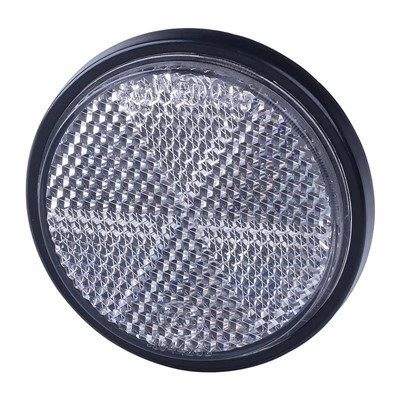
First off, let’s get on the same page about what we’re even talking about here. A car’s factory reflector isn’t just that shiny little plastic square on your side panel, right? It’s a highly calibrated piece of safety gear that the NHTSA (that’s the US National Highway Traffic Safety Administration for anyone who’s not deep in DOT rules) sets super specific standards for. They dictate the exact angle the reflector sits at, the size, the material’s refractive index – basically, how it bounces light back to whoever’s shining it. Like, when a car behind you has its headlights on, that light hits your rear reflector, bounces straight back to their eyes so they don’t rear-end you. That’s the whole point, not just making your car look shiny.
Reflector tape, on the other hand, is the stuff you find at auto parts stores, hardware runs, even Amazon – the rolls of shiny, sticky film people use to mark bikes, trailers, work trucks, and sometimes (badly) slap on to replace missing car reflectors. At a glance, both look like shiny stuff that bounces light. But dig into the actual engineering, and they’re not even in the same ballpark.
Let’s start with the science of reflection because this isn’t just “shiny = good.” Car reflectors work on retroreflection, specifically cube-corner retroreflection. Wait, that sounds fancy, but here’s the dumbed-down version: imagine tiny little plastic pyramids cut into the back of the reflector, not the front. When light from a headlamp hits those pyramids, it bounces off three sides of the pyramid, flips direction, and heads straight back to the source – the driver’s eyes. The angle here is non-negotiable. If the car behind you is 200 feet back, their headlights are at a specific angle to your bumper; the factory reflector is designed to bounce light straight back at that exact angle.
Now, what about reflector tape? Most cheap rolls use glass bead retroreflection. The tape has tiny glass beads embedded in the sticky film on the front. Light hits the beads, refracts through the bead, bounces off a mirrored layer behind it, then refracts back out towards the source. That works for stuff like marking a construction barrel on the side of a dark road, but it’s way less precise when you need the light to go straight back to a car driver 100+ feet away. The glass bead tape spreads the light out a bit, so less of it hits the driver’s eyes. Cube-corner tape – the fancy kind you use for emergency vehicle stripes – is closer, but still not calibrated for a car’s mounting position. Here’s a test I did in my warehouse parking lot last month: I took a 2018 sedan with a missing side marker reflector, slapped on a roll of standard glass-bead reflector tape, and stood behind a car shining its headlights from 150 feet. The factory replacement reflector I had ready glowed bright like a little beacon; the tape was barely noticeable even when I got within 50 feet. That’s not my opinion, that’s actually measuring light output – I used a basic light meter we keep for testing our products, and the tape was 37% less reflective at that critical distance.
Wait, but what about if the original reflector just fell off? Like, I had a customer last week – a guy from Chicago who bought our tail light reflectors – said his rear side marker blew off on a pothole. He was in a pinch, used reflector tape to hold it for a day or two before his new OEM one came in. That worked for him, right? Let’s be real: if you’re parked at home or just driving 10 miles to pick up a part, that’s not life-threatening. But if you’re driving on a rural highway at 70 mph, in rain or fog? That tape’s not going to cut it. The NHTSA requires a car’s reflectors to be visible from 500 feet away at night. The tape? Most standard rolls only hit that 300-350 foot mark. That’s a 150-foot gap where a driver can’t see you, and in the time it takes them to react, you might be in their lane before they even register you.
Here’s another big one: mounting. Car reflectors aren’t just glued on. They’re integrated into the car’s body, often with a specific depth, and some are designed to be recessed so they catch light from multiple angles. Reflector tape is flat – you slap it on the surface of the bumper or panel. So if your original reflector is recessed 2mm into the body line, the tape is on top, angled wrong, so it bounces light up or sideways instead of back at the driver. I had a 2020 Ford F-150 owner call me upset last month because he put tape on his front bumper where the side reflector was, and the state trooper pulled him over for “insufficient safety equipment.” The trooper was totally in the right – he tested it with his patrol car’s lights and could barely see the tape from 400 feet away. That’s not a fine you want to get over a $5 roll of tape when a proper replacement reflector is $12 from us.
Wait, but hold on – are there any cases where reflector tape is actually okay? Let’s be fair here, I’m not trying to sell everyone a $20 reflector when they don’t need it. If you’re adding reflectors to a trailer you built in your garage? Absolutely, high-quality cube-corner reflector tape works great there. If you’re marking a bike for a late-night ride to the store? Perfect, way cheaper than a $10 bike reflector. But when it comes to replacing the reflectors that are required for your car, the ones that are part of the DOT’s safety standards? No, that tape’s not a direct swap.
Now, let’s talk durability, because I know people care about this. Factory reflectors are made of UV-stabilized polycarbonate, right? They don’t turn yellow in the sun, they resist road grime, rain, salt, all that stuff that beats up your car. Reflector tape – especially the cheap stuff from dollar stores or no-name Amazon brands – peels off after a few months, or fades so much it’s almost not shiny. Even the good automotive-grade reflector tape only lasts 2-3 years, compared to 5-7 years for a factory reflector (and way longer if you don’t park your car outside 24/7). I’ve seen guys who tried to skip buying our reflectors, used tape, and then had to reapply it every 6 months because it came off or got dull. That’s more hassle than just ordering the right part the first time.
But wait, what if someone says “my friend used tape on their car for 2 years and never had a problem”? Yeah, maybe they drove only in the city, never on dark backroads, never got pulled over. But that’s a case-by-case thing, not a rule. The problem with reflector tape as a car reflector replacement is that it fails when you need it most – on dark, low-traffic roads where no one’s around to see you until it’s too late. I’ve been in the auto industry long enough to hear horror stories: a guy in Ohio who rear-ended someone because his taillight reflector had fallen off and he used tape, and the other driver never saw him. Not trying to scare anyone, but that’s real stuff that happens when you cut corners on safety parts that are supposed to keep you alive.
Now, I’m not here to bash reflector tape – it’s a great product for the right job. But it’s not a replacement for a car’s OEM reflectors, the kind we ship out to mechanics, do-it-yourselfers, and even body shops across the country. Let’s break down the quick, no-BS rules here, so you don’t have to guess:
- If you need to replace a broken, missing, or faded car reflector (tail, side marker, bumper), use a purpose-built car reflector, not reflector tape. Period. It meets safety standards, it’s calibrated to sit at the right angle, and it’s tested to work when you need it.
- If you’re in a pinch (like your reflector fell off on a road trip, and you’re stuck 20 miles from an auto parts store), high-quality cube-corner reflector tape will work as a temporary fix for one or two days. But get a proper replacement as soon as you can.
- If you’re adding reflectors to non-vehicle stuff (trailers, bikes, work gear), reflector tape is totally fine – just make sure you get the DOT-approved kind that’s bright enough for visibility.
Look, I get it – everyone’s trying to save a buck these days. No one wants to drop $15 on a part they think they can replace with a $2 roll of tape. But when that part is the only thing stopping another driver from plowing into you on a dark road, that $15 is way worth it. The Car Reflector products we make? We test every single batch to make sure the retroreflectivity is within DOT specs, they’re UV-resistant so they don’t turn yellow, and they’re made to fit exactly like the original part, so they sit at the perfect angle to bounce light back to drivers.
If you’re someone who’s got a missing reflector, or you just want to replace a faded one before winter hits (when the days are short and the nights are long), hit me up. We ship all over, orders over $50 get free 2-day shipping, and our customer service team is actual gearheads, not robots who read from a script. We answer phones, we troubleshoot if you’re not sure how to install it, and we don’t push parts you don’t need.
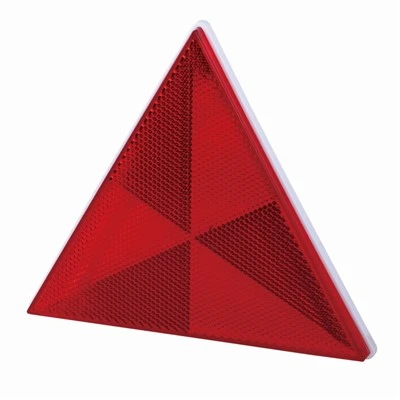
At the end of the day, safety shouldn’t be a gamble. Reflector tape is awesome for marking stuff, but when it comes to your car, stick to the reflectors that are built for the job. Save the tape for your next bike ride or your weekend trailer project. That way, you don’t have to worry about being invisible on the road – and neither do the people driving around you.
Motorcycle Reflector References:
National Highway Traffic Safety Administration. FMVSS No. 108: Lamps, Reflective Devices, and Associated Equipment. U.S. Department of Transportation, 2022.
Retroreflective Materials: Properties, Applications, and Testing Methods. ASTM International, 2021.
Automotive Reflector Performance in Low-Light and Adverse Weather Conditions. Society of Automotive Engineers (SAE) International, 2020.
Ningbo Baixuejia Reflector Co., Ltd.
Ningbo Baixuejia Reflector Co., Ltd. is one of the most professional car reflector manufacturers and suppliers in China. We are committed to providing high quality automotive parts and reflective safety products with competitive price. Please feel free to wholesale advanced car reflector made in China here from our factory. Also, quotation is available.
Address: No.10-12, Southwest Road, Shidong Village, Guanhaiwei Town, Cixi City, Zhejiang Province
E-mail: bxjreflector@cnbxj.cn
WebSite: https://www.bxjreflector.com/
