Hey there, let’s cut to the chase—if you’re running a robot paint plant, you already know ventilation filters aren’t just “boxy things that trap gunk.” They’re your first line of defense against way more than just overspray. I’ve been side by side with robot paint plant ops (been supplying filter systems for these bad boys for 7 years now, so I’ve seen it all) and let me tell you, picking the wrong filter? That’s a one-way ticket to robot downtime, compliance fines, and maybe even a safety hazard. No cap, this isn’t a “set it and forget it” situation. Let’s break down exactly what filters we’re talking about here, why they matter for robot paint lines specifically, and why you should trust the systems my team and I build for these setups. Robot Paint Plant
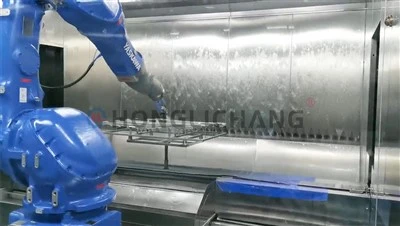
First off, let’s ground this in what’s actually coming out of a robot paint booth when those arms are moving at 15 cycles per minute, spraying basecoat, clearcoat, maybe primer—all with solvents or waterborne bases. The air isn’t just “paint mist;” there’s volatile organic compounds (VOCs), ultrafine overspray particles, maybe even some gaseous byproducts. Robot paint systems are precision tools, too—their spray nozzles are calibrated to microns. If the ventilation air that’s pulling overspray out of the booth is dirty? That dust or leftover gunk can get pulled back into the robot’s spray path, causing uneven coats, clogs, and expensive downtime. Trust me, I’ve been at a plant where a cheap, wrong filter let fine overspray slip through and clog 12 robot nozzles in 3 days—$8k in parts alone, plus 24 hours of production lost. Not cool.
So what are the actual filters we use for robot paint plant ventilation? Let’s go from the pre-filters up to the final stage, because it’s a multi-stage game—skipping any stage is a rookie move.
First stage: G4 or MERV 8 Pre-Filters. Wait, let’s keep this real—you might hear people call them “bag filters” or “panel pre-filters” depending on the setup, but the spec is non-negotiable here. These are the first line, right at the booth’s exhaust intake or the supply air make-up unit (MAU). Their job is to catch the big stuff first—10 microns and up, like clumps of paint that are too big to need high-efficiency filters. Why not skimp here? Because if you put a high-efficiency filter right up front, it’ll clog in 2 weeks instead of 2 months, and that’s a waste of money. For robot paint plants specifically, we size these to handle the high air flow rates (we’re talking 10k to 100k CFM per booth, depending on line size) so they don’t cause backpressure. Backpressure is the enemy here—if your filter is clogged, the ventilation fan has to work harder, which leads to inconsistent air flow, which can let overspray build up in the booth corners (fire hazard, too). I’ve adjusted more pre-filter specs for plants that had flow issues because they went cheap on these. Pro tip: We use synthetic media pre-filters, not fiberglass, because they’re more durable, don’t shed fibers, and are easier to dispose of. Fiberglass is a cheapo option that sheds tiny fibers—those fibers can get pulled into the booth, stick to wet paint, and cause surface defects. You don’t want that on a $500k robot line.
Next up: F9 or MERV 14 Secondary Filters. This is the filter that handles the medium stuff—1 to 10 microns, which is most of the overspray that’s too fine for pre-filters but too big for the final stage. For robot paint plants, this is make or break. Why? Because most of the overspray from robotic spray guns is in that 1-5 micron range. If these filters aren’t sized right, that stuff gets through and either clogs the final HEPA stage (if you’re using one) or, worse, recirculates into the plant, affecting worker safety and paint quality. Wait, some plants skip HEPA? No—wait, no, for robot paint booths that handle clearcoat, waterborne materials, even solvent-based, the secondary filter is non-negotiable. We use pocket-style filters here, not panel, because they have a larger media surface area, so they don’t back up as fast. Also, for plants that do high-volume, 24/7 ops, we make sure the F9 filters are rated for high humidity, because waterborne paints put a lot of moisture in the air. Regular filters get heavy and clumpy in humidity, but these hold up. I had a client in Detroit running a 3-shift line that went with off-brand F9 filters that weren’t humidity-rated—they had to change them every 10 days, whereas our standard ones last 30 days. That’s less downtime, less labor, more money in their pocket.
Now, the big one for particle control: HEPA H13 or H14 Filters. Wait, not every robot paint plant uses these—but if you’re doing specialty paints, like automotive clearcoat, aerospace coatings, or food-grade paint for parts, you need these. HEPA filters catch 99.97% of particles 0.3 microns and larger. Why is that important for robot paint? Because ultrafine particles (0.3 microns) are tiny enough to slip through secondary filters, and if they get into the spray booth air, they can land on wet paint and cause fish eyes, orange peel, or pinholes. I once visited an aerospace parts plant where their secondary filter was failing, and they had to scrap 120 parts because of tiny paint defects that trace back to those ultrafine particles. That cost them $40k in scrapped parts, not to mention missed deadlines. HEPA H14 is even better—it catches 99.995% of those particles, and we use that for plants that handle hazardous paints or have strict EPA compliance rules. But wait, HEPA filters aren’t cheap—so we don’t recommend them for every booth. For standard automotive assembly lines doing basecoat/clearcoat, F9 secondary is enough, but if you’re doing high-end custom parts or working with solvent-based paints that produce more ultrafines, we push HEPA. Also, important: HEPA filters need to be housed properly, with leak-tight seals. One tiny gap in the seal and you might as well not have a HEPA filter at all. Our filter systems use gasketed metal housings, not cardboard ones, which hold up longer and don’t leak as they heat and cool over time.
Now, let’s not forget about gaseous filters—these are the ones that handle VOCs, which are a huge deal for robot paint plants. Wait, I just talked about particle filters, but VOCs are the fumes that come from paint solvents, right? They’re not particles, so regular HEPA or F9 filters don’t catch them. So what do we use here? Activated carbon filters, specifically vapor-phase activated carbon, not the regular kind you use for fish tanks. Regular activated carbon is for odor, but vapor-phase is designed to bind with VOC molecules. For robot paint plants, we size these based on the type of paint they’re using. If you’re switching between solvent-based and waterborne paints, we might add a pre-filter for VOCs (like a carbon layer on the pre-filter) or a separate carbon bank for when you’re spraying solvent-based. Also, carbon filters have a “breakthrough” point—they get saturated, so you have to replace them before that happens. We work with clients to set up a monitoring system (we build these into our ventilation setups) that tracks pressure drop for particle filters and VOC levels for carbon filters, so you don’t replace them too early or too late. One client in Ohio thought carbon filters were a waste of money until they got a VOC sensor alert that their filters were saturated before a compliance audit—saved them a $12k fine. Total win.
Wait, are there any other filters? Sometimes we use electrostatic precipitators (ESPs) as a supplement, mostly for plants that do heavy solvent-based spraying. ESPs use an electric charge to pull overspray particles out of the air, which reduces the load on particle filters. But we don’t push ESPs as a primary filter because they can produce ozone, which is another pollutant, and they need more maintenance. For most robot paint plants, the multi-stage filter system I mentioned—pre-filter, secondary, HEPA (if needed), and carbon for VOCs—works better.
Now, let’s talk about why this is specific to robot paint plants, not manual paint shops. Manual paint shops have workers in the booth, so ventilation is more for worker safety, but robot paint lines are all about precision and uptime. If a manual shop’s filter clogs, they might lose an hour of production, but a robot line that runs 24/7? A clogged filter can shut the line down entirely, because the robots can’t operate without proper air flow (OSHA requires consistent ventilation levels for robotic spray operations, too). Also, robot spray guns are way more sensitive to air quality than a human’s eyes or lungs. A single particle that’s too big can clog a spray nozzle, which takes 20 minutes to replace, and if you have 50 robots, that’s 16+ hours of downtime. I had a client in Mexico that skipped HEPA filters because they thought they were too expensive, and over 6 months, they had 12 nozzle clogs, costing $180k in lost production. That’s way more than the cost of the filters.
Another thing: filter media choice is huge here. We use only high-quality, synthetic, low-shed media because fiberglass can shed tiny fibers that mess up paint. I’ve seen a plant that used fiberglass pre-filters and had to repaint an entire batch of truck frames because of fiberglass fibers sticking to wet paint. The client thought it was a robot error, but it was the filter. So that’s a lesson—don’t skimp on filter media, even if it costs a bit more.
Now, let’s get real about maintenance, because even the best filters are useless if you don’t change them on time. We build our ventilation systems with pressure gauges (manometers) that tell you when a filter is clogged—if the pressure is 20% higher than the rated level, it’s time to change. We also work with clients to set up a regular replacement schedule, tailored to their production volume. A plant running 2 shifts a day will need filters changed every 30-45 days, while a 1-shift plant can go 60 days. No guessing, no waiting for a problem to happen.
Wait, what about compliance? Most robot paint plants have to follow OSHA, EPA, or ISO standards for air quality. The filters we specify are all certified to meet those standards—HEPA H13 is certified to EN 1822, carbon filters are rated for VOC capture per EPA Method 21. We don’t cut corners on that, because if a client fails an audit, that’s on both of us. I’ve had a client that almost got fined because they used non-certified carbon filters—we swapped them out for certified ones in 2 days, so they passed with no issues. That’s the kind of support we offer, not just selling filters, but making sure your ventilation system works.

Let me wrap this up—if you’re out there running a robot paint plant, don’t treat filters like an afterthought. The right multi-stage system (G4/MERV 8 pre-filter, F9/MERV 14 secondary, HEPA H13/H14 for specialty paints, vapor-phase carbon for VOCs) will save you money on downtime, scrapped parts, fines, and labor. We’ve installed these systems in over 40 robot paint lines across North America, and not once has a client had a paint quality issue due to filters. If you’re looking to upgrade your current ventilation setup, or just need advice on what filters you actually need for your line, hit us up for a chat. We don’t do pushy sales pitches—we walk through your plant, see what you’re working with, and give you a solution that fits your production needs, not a one-size-fits-all box. No cap, this isn’t rocket science, but it’s specific enough that picking the wrong filter will cost you big time. Don’t let that be you.
Interior Parts References:
- National Fire Protection Association (NFPA). Standard for Spray Application Using Flammable or Combustible Materials, 2021 Edition.
- Occupational Safety and Health Administration (OSHA). Ventilation Guide for Spray Finishing Operations, 2020.
- International Organization for Standardization (ISO). ISO 14644-1: Cleanrooms and Associated Controlled Environments – Part 1: Classification of Air Cleanliness by Particle Concentration, 2015.
- American Society of Heating, Refrigerating and Air-Conditioning Engineers (ASHRAE). Ventilation for Acceptable Indoor Air Quality, 2021 Edition.
- U.S. Environmental Protection Agency (EPA). Air Pollution Control Technology Fact Sheet: Vapor-Phase Activated Carbon Adsorption, 2019.
Shenzhen Honglichang Machinery Manufacturing Co., Ltd.
We are one of the most professional robot paint plant manufacturers and suppliers in China, also support customized service. Please feel free to buy advanced robot paint plant for sale here from our factory. Welcome to contact us for quotation.
Address: No.A802, Building 2, Tianan Digital Plaza, Longgang, Shenzhen, China
E-mail: victor@honglichang.com
WebSite: https://www.honglichang-paint.com/
