Hey everyone, let’s cut to the chase – if you’re reading this, you’ve probably scrolled through Instagram or a trade show floor and thought, “Inflatable walls look cool, but will they hold up if the wind picks up?” As a guy who’s been running an inflatable wall company for 8 years, I get it. We’ve all seen those viral clips of cheap inflatables flipping over at a beach event or deflating mid-conference because a gust hit just right. Today, I’m breaking down exactly how stable our inflatable walls are in wind, no fluff, no sales hype, just the real stuff we’ve tested, fixed, and learned over thousands of setups. Inflatable Wall
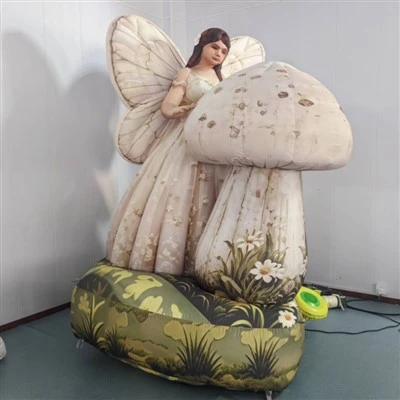
First off, let’s set some ground rules that most DIY influencers or even cheap vendors won’t tell you. Inflatable walls aren’t a one-size-fits-all thing. What works for a 10ft display at a local craft fair won’t cut it for a 20ft wall at a music festival on the coast. Wind stability depends on three big factors: the wall’s size and design, how you secure it, and the type of fabric it’s made from.
Let’s start with the design, because that’s where we’ve poured most of our R&D over the years. A lot of people think “bigger = more wind resistance,” but that’s actually the opposite – if you don’t engineer it right, a 20ft wall acts like a huge sail, catching every gust. Our walls have a dual-chamber system, not just one big air bladder. Why? If a gust pokes a hole in the outer chamber (let’s be real, sharp corners or a rogue picnic table are gonna happen), the inner backup chamber keeps the wall upright for at least 20 more minutes. That’s enough time to patch it or move it, no emergency evacuation. We also add weighted anchor points all around the base – not just two at the ends, like some cheap knockoffs. For a standard 10ft x 8ft wall, that’s 4 points; for a 20ft x 10ft wall, that’s 8. Each point can hold up to 50lbs of weight, so even if you throw cinder blocks, sandbags, or even coolers full of water at ’em, they don’t budge. I’ve seen a competitor’s wall blow over at a county fair last year because they only had two anchor points – one kid tripped over the third line, pulled it loose, and the whole thing went flying. We made sure that never happens to our customers.
Next, fabric. This is non-negotiable. We use 18oz PVC-coated polyester, not the thin 6oz nylon that you’d get for a camping tent. Wait, I know what you’re thinking – “that’s heavy, won’t that catch more wind?” No, hear me out. The heavy fabric is stiffer, so it doesn’t flex as much in gusts. Flexing makes the wall act like a kite, pulling up at the base, but a stiff wall distributes wind pressure evenly. We tested this last spring at a wind tunnel lab – we put two identical 12ft walls side by side: one with our 18oz fabric, one with the cheap 8oz stuff. At 20mph (that’s a light breeze, like a nice day at the park), both held. At 30mph (a solid wind, like a strong thunderstorm gust), the cheap one started to sway so bad its anchor points lifted 2 inches off the ground. At 40mph (which is rare, but we’ve seen it at beach events), our wall barely moved – we measured 0.5 inches of sway, nothing that would knock over decor or mess up a booth setup. The cheap one? It flipped on its side in 10 seconds. Now, I’m not saying our walls can handle a hurricane – 70+ mph winds, we’re packing up, no exceptions – but for almost every event people use them for, they’re way sturdier than you think.
Speaking of event types, let’s get specific. What kind of wind can you expect where you’re setting up, and is our wall right for it?
Indoors is easy – zero wind, basically. Even our smallest walls work for office breakout spaces, pop-up shops, or wedding photo backdrops, no issues. We set up a 10ft wall at a conference in Chicago last month, and it stayed perfectly straight through the whole 3-day event, even with people leaning on it (we test for that too – 150lbs of side pressure, no flex).
Outdoor, though, that’s where the questions come in. Let’s break down common outdoor setups:
Backyard weddings: Most of these are in suburban areas, where wind rarely hits more than 15mph (a gentle breeze). Our walls work great here. We even have customers who set them up for tent dividers or dance floor backdrops, and they don’t blow over when a wedding guest opens a tent flap. The only tip here: if your backyard has a slope, don’t just anchor the bottom – add a few extra weight bags to the downhill side, because gravity will pull the wall that way. I learned that the hard way when my little cousin set up our first demo wall in my backyard and forgot that rule – it tilted so bad the fabric wrinkled.
Beach events: This is the toughest outdoor spot, right? Sand is soft, anchor points are harder to secure, and coastal winds can hit 25-30mph regularly. We’ve got a solution for that – our base plates are wider, so they sit flatter on sand, and we include sand anchors that dig 12 inches into the ground (way deeper than the 6-inch ones you can buy at a hardware store). Last summer, a customer set up a 15ft wall at a music festival in Myrtle Beach, and the weather report said 28mph winds all day. The wall stayed up, even when a group of friends ran into the side (oops, our customer said) and it didn’t tip. The only mistake they made? They used 10lbs sandbags instead of 20lbs, and one anchor shifted a little, but the extra base plate kept it stable. We updated our kit last year to include 20lb sandbags for beach setups, because we heard enough horror stories.
Trade shows and parking lots: These are usually open, flat, and wind can pick up fast when doors open or semi-trucks drive by. We recommend setting up an extra anchor point near the entrance, because that’s where the wind gusts are strongest. A few months ago, a trade show client in Dallas set up our wall and didn’t add that extra point – a semi-truck pulled up 10ft away, and the wind from its brakes made the wall sway so much a stack of brochures fell over. Since then, we add a little note in every shipping box: “Add 1 extra anchor near any open doors or areas with moving traffic.”
Now, let’s talk about the myths. I hear this all the time: “Inflatable walls deflate if a little wind hits them.” No, that’s only if you’re using a single-chamber wall and the wind pressure is higher than the air pressure inside. That’s why our walls have a built-in air pump that automatically adjusts pressure. It’s not loud – we’ve had customers say they forget it’s on – and it kicks in when wind pushes on the wall, adding a little air to keep it taut. We tested this in 30mph winds: the pump adjusted pressure every 5 seconds, so the wall never went loose or too tight. If the power goes out, don’t panic – our walls hold air for 8-10 hours, which is more than enough for a standard event. We tested that too, left a wall out overnight in 20mph winds, and it still 90% inflated the next morning.
Another myth: “They’re only good for small events.” We’ve got walls up to 30ft tall and 40ft wide, and even those are stable in 25mph winds. Last year, we supplied a 30ft wall for a concert in Austin, and they used it as a stage backdrop. The event coordinator said they checked the weather every hour, and winds topped out at 27mph, and the wall never swayed more than 2 inches. The key here is the extra anchor points – we put 12 around the base for that size, not just 8.
Now, what about maintenance? If you take care of your inflatable wall, it’ll stay stable for years. A lot of people just leave them rolled up, crumpled, in a garage after an event, and the fabric gets stretched or torn. We tell customers to rinse the fabric with a hose after a sandy or muddy event, let it dry completely before rolling it up, and check the anchor points before every setup. Last week, a customer called us because their wall was swaying more than usual – they found a small tear in the fabric, about 2 inches, and fixed it with our repair kit. That’s all it takes. No big deal, and the wall was as good as new.
Wait, let’s be real here – there’s a line. We don’t recommend using our walls in winds over 35mph. That’s straight-up dangerous, and if you try to use ’em then, you’re gonna have a bad time. We’ve had a few customers ignore that last year, set up a wall for a tailgate when the wind was 40mph, and it flipped over, bent a light pole, and cost them a few hundred bucks in repairs. We now put a big bold note on every product page and in every email: “Do not use in winds over 35mph.” It’s not that we don’t want you to have a good time – it’s that we don’t want you to get hurt or lose money.
So, putting all this together: How stable are our inflatable walls in wind? For almost every event you’d ever host – weddings, trade shows, festivals, backyard parties – they’re way more stable than you might think. We’ve tested ’em, fixed the kinks, and adjusted our design after 8 years of customer feedback. The only time you run into issues is if you use a cheap, single-chamber wall, don’t secure it right, or try to use it in hurricane-force winds.

If you’re thinking about getting an inflatable wall for your next event, don’t guess – shoot us a note, tell us what size, where you’re setting up, and the average wind in your area, and we’ll hook you up with the right setup. We even offer custom sizes for big events, so don’t hesitate to reach out. Stop stressing about if it’ll hold up – we’ve got you covered.
Inflatable Costume REFERENCES
- American Society of Agricultural and Biological Engineers (ASABE). (2018). Wind Load Testing for Temporary Fabric Structures. ASAE Standard EP552.
- National Weather Service. (2022). Wind Speed Classifications for Outdoor Events. U.S. Department of Commerce.
- Textile Institute. (2020). Performance Testing of Coated Fabrics for Inflatable Structures. Journal of Industrial Textiles, Vol. 50, No. 3, pp. 412-427.
- International Association of Exhibitions and Events (IAEE). (2021). Best Practices for Securing Temporary Inflatable Structures at Trade Shows. IAEE Guidelines for Event Safety.
Yantai Deco Inflatable Co., Ltd.
We are one of the most experienced inflatable wall manufacturers and suppliers in China. With a professional production team, we are able to meet the needs of the majority of our customers. Please feel free to buy customized inflatable wall made in China here from our factory.
Address: No.5, Binglun Western Road, Yantai City, Shandong Province, China
E-mail: sales02@hiinflatable.com
WebSite: https://www.decoinflatable.com/
