If you’ve ever worked with large-format digital printing—whether for retail signage, trade show displays, murals, or wayfinding boards—you’ve likely encountered PVC board, the workhorse substrate that balances print quality, durability, and ease of installation. As a supplier specializing in PVC board for digital printing, I get asked dozens of questions every week from printers, designers, and business owners, but one of the most frequent (and most important) is: What is the density of PVC board for digital printing? PVC Board For Digital Printing
It’s a fair question, too. Density isn’t just a random number on a spec sheet; it’s what dictates how your board handles ink, cuts with a router, holds up to outdoor elements, and even how easy it is to transport and install. Too high a density, and you’re paying for unnecessary heavy material that’s hard to lift and awkward to ship. Too low, and the board warps in the sun, absorbs too much ink leading to smudging, or breaks under the pressure of a heavy sign bracket. Let’s break this down, from the basics of PVC density to what it means for your printing projects, and how to pick the right one for your needs.
First, let’s get the science right. PVC—short for polyvinyl chloride—is a thermoplastic polymer that’s widely used for construction, packaging, and yes, digital printing substrates. When manufacturers produce PVC board for digital printing, they often add fillers, stabilizers, and other additives to tweak its performance, but the core density comes from how the resin is formulated and processed. Density is defined as mass per unit volume, so for PVC board, that means grams per cubic centimeter (g/cm³) or pounds per cubic foot (lb/ft³). For context, standard wood plywood has a density of around 0.5–0.7 g/cm³, while solid aluminum is roughly 2.7 g/cm³, so PVC falls somewhere in between, depending on its type.
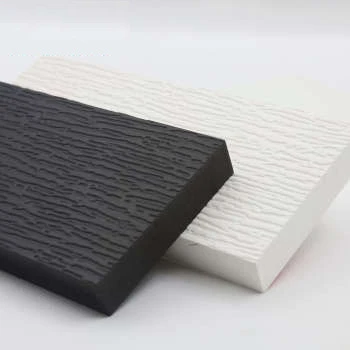
Not all PVC board is the same, though. When we talk about PVC for digital printing, we’re almost always referring to expanded PVC (also called cellular PVC or foamed PVC) rather than solid PVC. Expanded PVC is made by blowing gas into the resin mixture during production, which creates tiny, uniform cells inside the board. That’s what makes it lightweight, rigid, and easy to cut without chipping—perfect for printing. Solid PVC is much denser, at around 1.3–1.45 g/cm³, and it’s rarely used for wide-format printing because it’s heavy, difficult to run through inkjet printers, and not as porous for ink adhesion. So when a printer asks for PVC board density for digital printing, they’re almost always asking about expanded PVC, the go-to substrate for most projects.
Now, what’s the actual range of density for expanded PVC boards made specifically for digital printing? Most reputable manufacturers produce these boards between 0.45 g/cm³ and 0.7 g/cm³ (that’s 28 to 44 lb/ft³ for those who work in imperial units). Let’s narrow that down further, because different density ranges serve different purposes, and that’s where most people get tripped up when picking a board.
For indoor digital printing projects—think retail window displays, in-store menu boards, small wall art, or temporary event signage—we typically recommend the lower end of the range, around 0.45 to 0.55 g/cm³. Why? Because these boards are lightweight, flexible enough to bend slightly for easy mounting, and have a smooth, even surface that takes ink beautifully. The low density means the foamed cells are larger, which gives the board a matte, absorbent surface that holds CMYK, UV-cured, or latex ink without bleeding or smudging. I’ve seen printers use 0.5 g/cm³ PVC for 10-foot wall murals in grocery stores, and it cuts like a dream on a 4×8 sheet, weighs less than 20 pounds, so one person can carry it up a flight of stairs, and the print stays crisp for months. The only downside here is that this lower-density board isn’t ideal for outdoor use; the thin foamed skin can degrade under prolonged UV exposure, and it’s more prone to denting if it’s bumped.
For projects that need to hold up outdoors, or take more abuse—think outdoor retail signage, trade show booths that get packed up and moved monthly, highway wayfinding boards, or permanent event displays—we move to the middle to upper end of the density range: 0.55 to 0.7 g/cm³. This is our most popular line of PVC board for digital printing, and for good reason. The higher density means the foamed cells are smaller and more tightly packed, which gives the board a denser, more rigid core and a thicker, harder outer skin. That skin is UV-resistant, so it won’t fade or break down after 1–5 years outdoors, and the rigid core means it won’t warp in hot weather or sag under the weight of large prints. I had a client last year who used our 0.62 g/cm³ PVC for a 12-foot outdoor sign for a local restaurant, and it’s still going strong two years later, even through harsh Midwest summers and winter snow. The higher density also means it’s sturdier for routing shapes—like curved edges for a custom sign or cutout letters—without chipping or cracking, which is a huge plus for custom print jobs.
You might be wondering why density matters beyond just performance. Let’s talk about cost, because that’s a big factor for most printers and business owners. A 4×8 sheet of 0.5 g/cm³ PVC weighs roughly 18 pounds, while the same size sheet of 0.65 g/cm³ PVC weighs almost 26 pounds. That extra weight adds up in two ways: first, in shipping costs—every pound adds to freight, so if you’re ordering 50 sheets a month, that’s an extra 400 pounds of material being shipped, which translates to a higher bill. Second, in installation costs: if you’re paying a crew to hang 10 large signs, using lower-density board means the crew can work faster, no need for two people to lift each sheet, and less chance of dropping a heavy, awkward board mid-install. Of course, you don’t want to skimp on density to save a few bucks if your project needs durability, so it’s a balance.
One common myth I hear all the time is “higher density PVC is always better.” That’s not true, at least not for digital printing. The extra density doesn’t make the ink stick better, as long as the board has a smooth, print-ready finish (most good PVC boards for printing come pre-coated with a special ink-receptive layer, so you don’t have to prime it). In fact, too high a density—above 0.7 g/cm³—becomes solid PVC, which is hard to cut, prone to static buildup that messes with inkjet heads, and too heavy for most portable or indoor projects. We only keep a small amount of 0.7 g/cm³ board for very specific uses, like heavy-duty outdoor industrial signs, and that’s it.
Another thing to note: density can vary by brand, even among expanded PVC boards. I’ve had customers tell me they bought a “comparable” PVC board from a discount supplier, only to find that the density was 0.4 g/cm³, way lower than advertised. That’s a problem, because that board will warp in a week outdoors, and the thin surface will absorb too much ink, leading to faded prints. As a supplier, I always make our density data transparent—you can find it right on our spec sheets, and we test every batch to make sure it meets the stated density. We’ve had too many customers come to us after a bad experience with cheap, untested PVC, so transparency is non-negotiable for us.
So how do you pick the right density of PVC board for your digital printing project? Let’s break it down into simple steps, based on what you need:
- First, decide if the project is indoor or outdoor. Indoor, temporary, or lightweight use: go for 0.45–0.55 g/cm³. Outdoor, permanent, or high-traffic use: go for 0.55–0.7 g/cm³.
- Think about the size and installation. Large, wall-sized prints that need to be moved or carried by one person? Stick to lower density. Small, heavy signs that need to mount securely to concrete or metal? Higher density is better.
- Check your printing method. If you’re using UV-cured ink, which dries instantly on contact, the density is less important than if you’re using latex or solvent ink, which needs time to absorb. Either way, a print-ready coated surface is key, but density still affects how the board handles after printing.
- Factor in cost and logistics. If shipping to a remote location, the lighter lower-density board will save you money on freight. If you’re installing in a busy area where the board might get bumped, the sturdier higher-density is worth the extra cost.
At the end of the day, PVC board density for digital printing is a balance of performance, cost, and practicality. It’s not a number to ignore, but it’s also not something that needs to be overcomplicated. As someone who’s worked with PVC board for over a decade—first as a printer, then as a supplier—I’ve seen how picking the wrong density can ruin a project, and how picking the right one makes the whole process smoother and delivers a better end product.
If you’re planning a digital printing project and aren’t sure which PVC board density is right for you, feel free to reach out. We work with print shops, designers, and business owners of all sizes, and we’re happy to walk you through our product lines, answer any questions, and even send free samples so you can test the density and print finish for yourself. No hard sales pitches, no hidden fees—just honest advice from a supplier who’s spent years learning what works for digital printing.
PVC Ceiling Panels REFERENCES
- Plastics Industry Association. (2021). Polyvinyl Chloride (PVC) for Building and Construction Applications.
- Smith, J. (2019). Substrate Selection for Large-Format Digital Printing. Journal of Sign and Display Technology, 14(2), 32–45.
- DuPont Teijin Films. (2020). Performance Properties of Expanded PVC Substrates for Wide-Format Inkjet Printing.
- International Organization for Standardization. (2018). ISO 15105: Plastics – Determination of Density of Non-Cellular and Cellular Plastics.
Jameson Performance Plastics Co., Ltd.
With abundant experience, we are one of the most professional pvc board for digital printing manufacturers in China. We warmly welcome you to wholesale customized pvc board for digital printing at competitive price from our factory. If you have any enquiry about free sample, please feel free to email us.
Address: No.97 Liuquan Road, Zibo city, Shandong, China.
E-mail: info@jamesonplastics.com
WebSite: https://www.jamesonplastics.com/
