When I started my career as a plywood supplier 18 years ago, I used to get the same question at least three times a week from contractors, cabinet makers, and even small business owners picking up materials for their first project: “What’s the difference between plywood and laminboard?” Back then, I’d give a simplified answer—something about layers vs. veneers—but over the years, I’ve learned that the gap between these two products is far more than just technical. It’s rooted in how they’re made, their performance in different environments, cost, and even how they’re meant to be used. For anyone working in construction or woodworking, mistaking one for the other can lead to wasted time, budget overruns, or even structural issues. Today, I’m breaking that down, from the manufacturing floor to real-world jobs, so you can make the right choice for your next project. Plywood
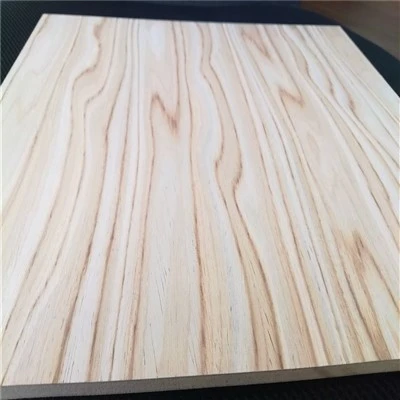
Let’s start at the beginning: how each of these products is made, because that’s where all their differences stem from. Plywood is what’s known as an engineered wood panel, and it’s built from thin layers of wood called veneers. Each veneer is cut (usually via a rotary lathe, which spins a log against a sharp blade to peel it into a continuous sheet) to a consistent thickness—usually between 1/25 of an inch and 1/8 of an inch. The key here is the grain direction: each layer, or ply, is rotated 90 degrees from the one before it. So if the top layer’s grain runs left to right, the next one runs front to back, and so on, until the panel reaches its desired thickness. These plies are then glued together with a water-resistant or waterproof adhesive, depending on the grade, and pressed under high heat and pressure. For most structural plywood, you’ll see an odd number of plies—3, 5, 7, even 9—because that helps balance the panel, preventing it from warping or twisting as it ages. That cross-grain construction is non-negotiable for plywood; it’s what makes it stronger than solid wood of the same thickness.
Laminboard, on the other hand, is a different beast. It’s also an engineered panel, but it’s made from strips of solid wood, not thin veneers. These strips are usually cut from slower-grown logs or smaller diameter logs that wouldn’t work for veneer production, and they’re milled to be uniform in width and thickness—typically 1 to 2 inches wide, and 1/8 to 1/4 inch thick. Unlike plywood’s cross-grain plies, laminboard strips are all laid parallel to each other, with their grain running in the same direction. Once the strips are aligned, they’re glued together under pressure to form a solid, dense panel. Some lower-grade laminboard might have gaps between the strips, which are filled with wood filler; higher-grade versions are tightly fitted for a smoother surface. There’s no strict rule about the number of layers, but most laminboard panels are thicker than standard plywood, making them feel more like solid lumber than a panel.
Right away, that manufacturing difference leads to distinct performance characteristics, and that’s where most of the practical choices happen. Let’s talk about strength first, because that’s a big one for structural applications. Plywood’s cross-grain construction gives it exceptional dimensional stability and strength in both directions. If you were to place a 3/4-inch plywood sheet across two supports, it will hold far more weight than a solid wood board of the same thickness, because the alternating plies distribute the load evenly. That’s why it’s the go-to for subfloors, wall sheathing, and roof trusses—applications where you need strength in multiple directions. Laminboard, with all its strips running parallel, is strong only along the grain of the strips. If you put a load across the grain (say, spanning a frame the other way), it will bend or break much more easily than plywood. I’ve seen this mistake dozens of times: a contractor used laminboard for a subfloor, and within six months, there were sagging spots and creaking floors, because the load ran against the grain of the strips.
Then there’s moisture resistance, which is make-or-break for outdoor projects or spaces like bathrooms and basements. High-grade plywood, specifically exterior-grade, uses waterproof adhesive (usually phenolic resin) and is made with rot-resistant veneers, like pine, fir, or marine-grade plywood that uses tropical hardwoods like meranti or okoume. It can withstand rain, snow, and high humidity without delaminating— a huge reason it’s used for decking, exterior siding, and boat hulls. Laminboard, for all its density, is far less moisture-resistant. The gaps between strips (even when filled) can absorb water, causing the strips to swell or separate over time. The adhesive used for most laminboard is usually urea-formaldehyde, which is water-resistant but not waterproof, so prolonged exposure to moisture will make it break down. I once had a customer who tried to use laminboard for a backyard garden bench; within a year, the strips were warped, and the glue had bubbled out at the seams. Plywood would have lasted 10 times longer in that scenario.
Surface finish is another area where the two products differ, and it matters a lot for cabinetry, furniture, and interior trim. Laminboard’s parallel strip construction means it has a very consistent, smooth surface if it’s a high-grade product. The strips create a linear grain pattern that’s popular for modern or minimalist designs, and it can be sanded and stained evenly, much like solid wood. Some cabinet makers even prefer laminboard for door fronts because it doesn’t have the thin veneer layer that can chip or peel if it’s nicked. Plywood, though, has a face veneer that can be rotary-cut (giving a continuous, smooth grain) or sliced (which produces a more decorative, uniform grain), but it’s still a single layer, so you might see small knots or grain variations that aren’t as consistent as laminboard. Lower-grade plywood might also have voids in the inner plies, which can show through if you’re using a bare, uncoated surface. That said, plywood has a huge range of face grades: there’s A-grade (smooth, knot-free) for high-end interior finishes, B-grade (minor knots) for cabinet sides, and C-grade (more knots) for structural work. So while laminboard is often seen as the more “polished” interior option, plywood can match that with the right face grade.
Cost is probably the most common question I get next, and it’s where people often assume one is always cheaper than the other—but it depends on the grade. Standard, structural plywood (like CDX, the common exterior subfloor plywood) is very affordable, often running $15 to $25 for a 4×8 foot sheet, depending on thickness. High-grade interior plywood, like A-A or B-B, can be more expensive, but it’s still comparable to mid-range laminboard. Laminboard, on the other hand, is almost always more expensive than plywood of the same thickness, because it uses solid strips of wood that require more processing than plywood’s thin veneers. Low-grade laminboard (with visible gaps and filler) might be slightly cheaper than low-grade plywood, but the good stuff—what’s used for furniture and high-end cabinets—costs 20 to 30 percent more than equivalent plywood. That’s why I always tell small business owners: if you’re on a budget for a structural project, plywood is the clear choice, but if you’re building custom furniture where finish and solid feel matter, laminboard might be worth the extra cost.
Let’s also talk about common use cases, because that’s where the line between “when to use which” gets clear. Plywood is for structural, load-bearing, or outdoor applications: subfloors, wall sheathing, roof underlayment, decking, fencing, and even formwork for concrete. It’s also used for things like shipping crates, pallets, and storage units, because it’s strong, lightweight, and resistant to damage from rough handling. Laminboard, though, is for non-structural, interior applications: cabinet boxes, drawer sides, furniture frames, interior trim, and decorative panels. It’s not meant to hold heavy loads or be exposed to the elements, but it’s ideal for projects where you want a solid, smooth surface that’s easy to finish. I once had a client who was building a custom kitchen; he wanted the cabinet boxes to be solid, so we used high-grade laminboard for the sides and plywood for the backs, which was a perfect balance of durability and cost.
Now, I should mention the common misconceptions that even seasoned tradespeople get wrong. Some people think plywood is only for structural work, but there are decorative plywood options that are perfect for interior finishes. Others think laminboard is just a type of plywood, but no—they’re entirely different manufacturing processes, even if both are engineered wood. Another big mistake is assuming that thicker is always stronger: a 1/2-inch structural plywood is stronger than a 1-inch laminboard when it’s spanning a frame, because of plywood’s cross-grain construction. I’ve seen that mistake lead to a shelf that collapsed at a boutique store, because the owner used 1-inch laminboard instead of 1/2-inch plywood.
As a plywood supplier, I spend a lot of time working with customers to match the right product to their needs, and that’s why I always encourage people to ask questions beyond just “which is cheaper.” If you tell me you’re building a deck, I’m not going to recommend laminboard— I’m going to point you to our exterior-grade plywood, with its waterproof adhesive and rot-resistant veneers. If you’re building a set of bookshelves for a kid’s room, I might suggest a combination: plywood for the sides (to hold the weight of books) and laminboard for the face (for a smooth, easy-to-wipe surface).
At the end of the day, the choice between plywood and laminboard isn’t about which is “better” — it’s about matching the product to the job. Plywood’s cross-grain design makes it unbeatable for strength, stability, and durability in demanding conditions. Laminboard’s parallel strips give it a consistent, solid feel that’s ideal for interior, non-structural projects where finish is key.
Whether you’re a contractor working on a new build, a woodworker building custom furniture, or a hobbyist tackling your first home project, I’m here to help you navigate that choice. If you have questions about grades, thicknesses, or which product will work best for your space, don’t hesitate to reach out to discuss your specific needs. We can provide samples, answer technical questions, and help you get the right materials for your project, no matter how big or small.
Film Faced Plywood References
- Forest Products Laboratory. (2010). Wood Handbook: Wood as an Engineering Material. U.S. Department of Agriculture.
- American Plywood Association. (2018). Plywood Design and Application Standards. APA – The Engineered Wood Association.
- Wood Industry Manufacturers Association. (2021). Engineered Wood Panels: Types, Manufacturing, and Performance. National Woodworks Association.
- Laminboard Technical Guide. (2019). Wood Products Association of North America.
Lisen Wood Industrial Shouguang Co., Ltd.
Lisen Wood Industrial Shouguang Co., Ltd. is one of the most professional plywood manufacturers and suppliers in China, featured by quality products and low price. Please rest assured to buy discount plywood from our factory. Welcome to contact us for quotation and free sample.
Address: Nongsheng road, shouguang,shandong province, china
E-mail: lucia@lisenboard.com
WebSite: https://www.sglswood.com/
