If you’ve ever walked past a commercial bakery first thing in the morning, noticed the crisp, condensed droplets on the outside of a cold can of soda on a hot day, or even enjoyed a jar of honey that’s been thickened to just the right spreadable consistency, you’ve encountered the work of an evaporator—even if you didn’t know it. As someone who’s spent the last 12 years supplying custom evaporator systems to manufacturers, food processors, pharmaceutical labs, and industrial plants across North America, I can tell you this piece of equipment is far from a one-trick “steam and pan” tool many people assume it to be. It’s not just about boiling off liquid; it’s about precision, energy efficiency, and protecting the quality of the product you’re working with, whether that’s a batch of life-saving antibiotic or a bulk shipment of maple syrup. Let’s break down what an evaporator actually does, how that function shapes everything from small-batch production to global supply chains, and why choosing the right one isn’t just a matter of cost—it’s a matter of getting your product right. Evaporator
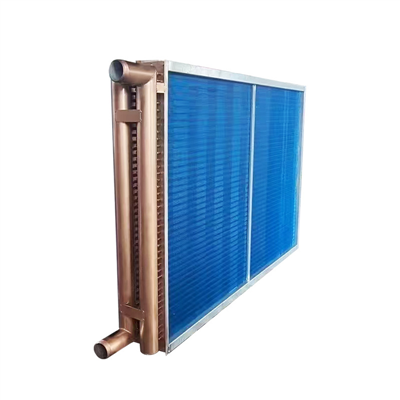
At its core, an evaporator is a thermal separation device: it takes a liquid solution (usually water-based, though not always) and heats it enough to turn the solvent (most often water) into vapor, then removes that vapor to leave behind a concentrated, solid or semi-solid product. The key word here is “separation”—it’s not just boiling away liquid for the sake of reducing volume. For example, in the pharmaceutical industry, many drugs are manufactured as dilute solutions after synthesis; you can’t pack a 10,000-gallon vat of 5% active ingredient and 95% water into shipping containers, so you use an evaporator to pull out the water until you’re left with a concentrated powder or paste that’s stable for transport and storage. In food and beverage, that same principle turns 40 gallons of maple sap (which is 98% water) into one gallon of maple syrup, or concentrates tomato paste so it doesn’t spoil during long-haul shipments without added preservatives.
But here’s what most people outside the industry don’t realize: not all evaporators work the same, and their function changes dramatically based on the product being processed and the constraints of the operation. Let’s walk through a few common use cases to make this concrete. Take a craft coffee roaster that wants to make liquid coffee concentrate for cold brew cans. If they use a traditional single-effect evaporator—where the liquid is heated once in a vessel, the vapor is released, and that’s it—they might end up with a burnt, bitter taste. Why? Because the process requires high temperatures (often 212°F, or higher at atmospheric pressure) which break down the delicate volatile compounds that give coffee its flavor. Instead, most specialty food producers use a rising-film or falling-film evaporator, which operates under partial vacuum. Lower pressure means water boils at a lower temperature—sometimes as low as 100°F—so the coffee’s flavor compounds stay intact. The function here isn’t just concentration; it’s gentle concentration that preserves quality.
For industrial users, like a textile manufacturer that processes dye baths and needs to recover both water and excess dye to reduce waste, evaporators take on another layer of function: waste reduction and resource recovery. Dye baths are loaded with chemicals that are expensive to replace, and discharging them into wastewater violates environmental regulations in most parts of the world. An evaporator here doesn’t just concentrate the leftover dye—it condenses the pure water vapor, which is then reused in the dyeing process, cutting water use by up to 90% and reducing chemical waste by 85%. In this case, the evaporator’s function crosses into sustainability, turning a costly waste stream into a valuable resource.
Another critical function of modern evaporators is energy efficiency, a priority for every operation right now as utility costs continue to rise. The oldest evaporator designs, single-effect, use about 1 pound of steam to evaporate 1 pound of water—meaning a facility processing 10,000 gallons of water a day would burn through thousands of dollars in steam costs monthly. Multi-effect evaporators, though, connect two or more vessels: the vapor from the first (hotter) vessel is used to heat the second (cooler) one, so you only need steam to heat the first vessel, cutting steam use by 50% for two effects, 70% for three, and so on. For high-volume operations, like a corn wet-milling plant that processes millions of gallons of corn steepwater daily, this can translate to hundreds of thousands of dollars in annual energy savings. As an evaporator supplier, I work closely with plant engineers to calculate not just what capacity they need, but what energy profile will deliver the lowest total cost of ownership over 10 or 15 years. That’s part of the function too: an evaporator isn’t just a piece of equipment—it’s an investment in ongoing operational efficiency.
I’ve seen first-hand what happens when a user picks the wrong evaporator for their specific job. A few years back, I worked with a small craft jam maker in Vermont who had purchased a cheap, off-the-shelf single-effect evaporator to cut down their production time. They were making strawberry jam, which relies on natural pectin to set, and they’d always made it in small batches on a stove. When they scaled up, they thought a generic evaporator would do the trick—but the high heat of the single-effect system broke down the pectin, so their jam came runny, no matter how long they cooked it. They lost three months of production runs before they called me, and we swapped their system for a vacuum falling-film evaporator that operated at lower temperatures, preserving the pectin and getting them back on track. That’s when I realized how much detail goes into this: the solute’s thermal stability, the required concentration level, the desired processing time, even the output’s consistency requirements all define what an evaporator needs to do for a specific business.
Another less talked-about function of evaporators is sanitation, especially in industries like pharmaceuticals and food, where product purity is non-negotiable. Evaporators used for these applications are designed with CIP (clean-in-place) systems that allow them to be fully sanitized without disassembly, meeting FDA and EU food safety standards. For a biotech company producing monoclonal antibodies, which are used to treat cancer and autoimmune diseases, even tiny traces of residual solvent or contaminants in the final product can be dangerous. Our evaporator systems for biotech clients are built with stainless steel interiors, smooth finishes, and air-tight seals that prevent external contaminants from getting in, plus they’re designed to remove the bulk of the water while leaving the antibody’s structure completely intact. That’s a core function I don’t see enough suppliers highlight: protecting product safety and integrity as much as they focus on separation and concentration.
Let’s also talk about the hidden functions that happen outside the evaporator vessel itself. The vapor that’s pulled off during the evaporation process doesn’t just disappear—it’s condensed into liquid, which is often reused or discharged, depending on the application. In desalination plants, for example, the evaporator’s vapor is condensed into pure drinking water, turning saltwater into something safe to consume for millions of people. In power plants, evaporators are used to pre-treat water for boilers, removing minerals that would cause scale and damage equipment. In both cases, the evaporator’s function is a gateway to other critical processes: water purification, power generation, public health.
As an evaporator supplier, my job isn’t just to sell equipment—it’s to help clients understand what their evaporator needs to do, beyond the basic boil-off function. I’ve worked with startups that are developing new plant-based protein powders, helping them pick an evaporator that won’t denature the protein. I’ve worked with municipalities on wastewater treatment projects, designing evaporators that reduce the volume of sewage sludge so much that transport and disposal costs drop by 70%. Every project is different, which is why we don’t offer one-size-fits-all evaporators. We custom-engineer each system to match the exact capacity, temperature requirements, purity standards, and energy goals of the client.
If you’re a plant manager, a food producer, a pharmaceutical researcher, or anyone who’s working with a liquid solution that needs to be concentrated, purified, or made stable for transport, you know how critical it is to have the right equipment. A bad evaporator doesn’t just waste energy—it ruins product batches, delays production, and costs you thousands of dollars in lost revenue. I’ve been in this business long enough to know that choosing an evaporator isn’t about picking the cheapest option or the most powerful one—it’s about picking one that understands your product, your goals, and your bottom line.
If you’re looking to upgrade your current evaporation process, are dealing with quality issues in your concentrated product, or just want to learn more about how an evaporator could help your operation run more efficiently, I invite you to reach out to discuss your specific needs. We’ll walk through your current challenges, review your production volumes and product requirements, and help you design a system that delivers exactly the function you need—no hidden surprises, no one-size-fits-all solutions, just a system that works for you.
Finned Tube References
- Smith, C. J. (2021). Thermal Separation Processes: Evaporators and Distillation for Industrial Applications. Industrial Press.
- Larsson, M., & Rydberg, J. (2019). Energy Efficiency in Industrial Evaporation Systems: A Guide for Plant Engineers. Journal of Industrial and Chemical Engineering, 72, 112-125.
- U.S. Food and Drug Administration. (2020). GMP Requirements for Evaporation and Concentration Processes for Food and Pharmaceutical Products. FDA Center for Food Safety and Applied Nutrition.
- Patel, R. N., & Kumar, S. (2022). Wastewater Recovery via Evaporator Systems: Environmental and Economic Impacts. Journal of Sustainable Water in the Built Environment, 8(3), 04022018.
Xiangshui Derkang Refrigeration Equipment Co., Ltd.
As one of the most professional evaporator manufacturers in China, we’re featured by quality products and low price. If you’re going to buy discount evaporator, welcome to get quotation from our factory. We also accept customized orders.
Address: No. 2, Xiaojian Town Entrepreneurship Park, Xiangshui County
E-mail: 505745223@qq.com
WebSite: https://www.xsderk.com/
